
Italy is pushing back against the idea that the Arctic is a distant, niche theatre. In a message released Monday alongside the presentation of Rome’s new Italian Strategy for the Arctic, Prime Minister Giorgia Meloni framed the High North as a frontline of global competition — with implications for trade, energy, security, and Europe’s strategic balance.
The big picture
- Italy sees the Arctic as a strategic region, not a peripheral one, where climate change, new maritime routes, energy resources, scientific research, and security dynamics increasingly overlap.
- Meloni described the government’s approach as “360 degrees”, bringing together diplomacy, defence, research, industry, and multilateral cooperation.
- The timing matters: Arctic governance and security have climbed the agenda amid renewed geopolitical pressure in the High North, including growing attention to Greenland and polar sea lanes.
What Rome is saying. In her message, Meloni laid out three core ideas:
- New routes, new risks:
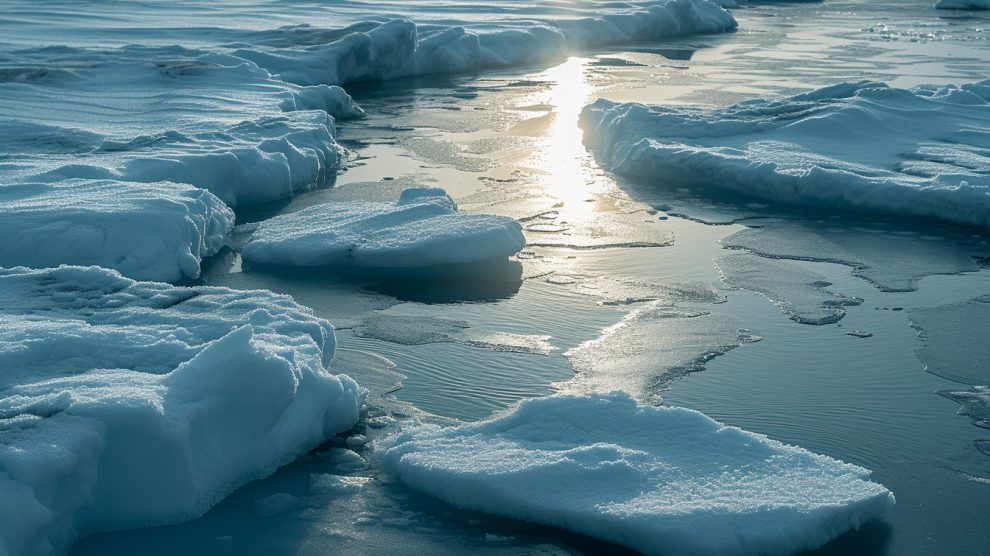
- Climate-driven ice melt is accelerating the development of Arctic maritime corridors. The Northern Sea Route could significantly shorten Asia–Europe trade routes, potentially reshaping global shipping and reducing dependence on chokepoints like the Suez Canal.
- Resources and infrastructure:
- The Arctic is believed to host around 30% of undiscovered global gas reserves and 13% of oil reserves, alongside critical minerals and opportunities for energy-intensive infrastructure such as data centres, with significant challenges related to connectivity, security, and environmental impact.
- Security is now central:
- What was once framed mainly as an environmental or scientific space is increasingly shaped by military posture, deterrence, and strategic signalling.
Italy’s strategic posture. Italy is a non-Arctic state, but an observer in the Arctic Council, and says it intends to act as a reliable, stabilising partner.
- Rome emphasises strict adherence to international law, starting with the UN Convention on the Law of the Sea.
- The government argues the Arctic should become a higher priority for both the European Union and NATO, calling for a coordinated Euro-Atlantic presence to deter tensions and counter external interference.
What Italy is not doing: Rome does not seek a permanent or autonomous military presence in the Arctic.
- Instead, it aims to contribute through multilateral deterrence, defence, and crisis-prevention initiatives, aligned with NATO and EU frameworks.
- Defence Minister Guido Crosetto has openly dismissed proposals to deploy small, symbolic European contingents to Greenland, signalling scepticism toward ad-hoc military gestures.
Science, industry, and diplomacy. Italy highlights a long-standing Arctic footprint in scientific research, from early expeditions to today’s polar observation networks.
- Rome points to national champions already active in the region across energy, aerospace, shipbuilding, and defence, and sees room for growth in renewables, infrastructure, critical minerals, biotechnology, and the broader “blue economy.”
- Foreign Minister Antonio Tajani has announced plans for a dedicated Arctic business platform to support Italian firms’ internationalisation.
- In early March, Rome will host the Arctic Circle Rome Forum, which aims to connect policymakers, researchers, and industry.
The bottom line: Italy’s Arctic strategy is less about flag-planting and more about positioning: defending multilateral rules, reinforcing NATO and EU coherence, and ensuring Italian economic and scientific interests are protected as the High North becomes more crowded—and more contested.
- As Meloni put it, what happens in the Arctic is no longer remote. It increasingly shapes Europe’s security, prosperity, and future leverage in a changing global order.