Why it matters: Italy will take a seat — albeit as an observer — at President Donald Trump’s new Board of Peace for Gaza, signaling cautious support for the U.S.-led initiative while navigating constitutional limits and domestic political backlash.
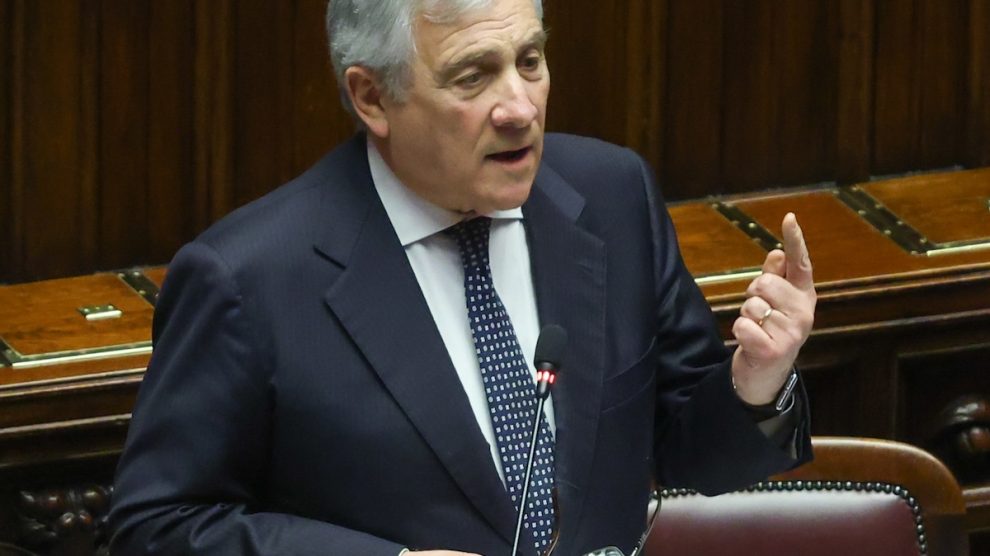
What’s happening: Foreign Minister Antonio Tajani told Italy’s Lower House that Rome will attend Thursday’s inaugural meeting in Washington after receiving an invitation from the U.S. administration.
- Prime Minister Giorgia Meloni delegated Tajani to represent Italy.
- Italy will participate only as an observer, a formula the government says respects constitutional constraints.
- Minister Tajani argued that staying away from a peace forum on the Mediterranean would contradict Article 11 of Italy’s Constitution, which rejects war as a tool for resolving disputes.
- “The Peace Plan for Gaza was born under the UN auspices, as was the Board of Peace, a body called to monitor the implementation of the stabilisation process in the area. Italy, in keeping with its tradition and prominence in the Mediterranean area, cannot remain on the sidelines, and that is why we will attend the Washington meeting of the Board of Peace as observers,” he said.
Zoom in: Italian presence. Rome says its presence is tied to its long-standing support for a two-state solution and its operational role on the ground.
- Italy trains Palestinian security forces and participates in EU missions supporting Palestinian police and border management.
- Carabinieri will soon train 50 Palestinian security officials in Jordan for deployment to Gaza.
- Italian personnel are also involved in coordination efforts for humanitarian aid and essential services in the Strip.
- Tajani framed these contributions as proof Italy deserves a seat — even a limited one — at the table shaping Gaza’s future.
The big picture: The Board of Peace aims to oversee stabilization and reconstruction in Gaza before expanding to other global conflicts, according to U.S. officials.
- Italy notes that the European Union will also attend as an observer, alongside major regional players including Egypt, Jordan, Saudi Arabia and Qatar, as well as Indonesia.
- Italy’s absence from the first meeting of the Peace Board “would mean denying the leading role our country has played in the ceasefire since the beginning of the crisis, always with the goal of achieving two states living together in peace and security.”
- “The European Union has already confirmed its participation with the rotating Presidency of the Council and a representative of the Commission,” Tajani said.
- The Italian government views Gaza not only as a humanitarian crisis but as a direct national security issue.
- Tajani warned the conflict affects regional balances, stability in the wider Mediterranean and the safety of trade routes — noting that about 40% of Italy’s exports pass through the Red Sea, a corridor also vital to the India-Middle East-Europe Economic Corridor (IMEC).
Between the lines: Minister Tajani used the announcement to restate Italy’s positions on sensitive issues:
- Condemning any Israeli annexation of the West Bank.
- Urging Israel to curb extremist settler violence.
- Stressing dialogue with both Israel and the Palestinian Authority.
- He also said Rome has repeatedly pressed Washington to respect Italy’s constitutional principles and parliamentary oversight in all discussions.
Yes, but: The initiative is controversial at home.
- Opposition figures accuse Meloni’s government of aligning too closely with Trump and undermining Italy’s diplomatic tradition, arguing the Board risks sidelining the United Nations and Palestinian representation.
- “From the oppositions I heard a lot of criticism, but not a single concrete, alternative proposal for the peace plan for Gaza. I’m sorry,” Tajani concluded.
What we’re watching: Italy is betting that observer status allows it to shape outcomes without full political exposure — a balancing act between Atlantic loyalty, constitutional constraints and domestic skepticism.
- Whether that strategy yields real influence will become clear as the Board moves from symbolism to implementation.