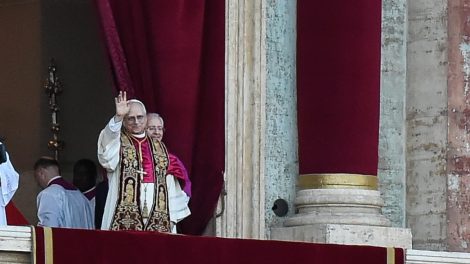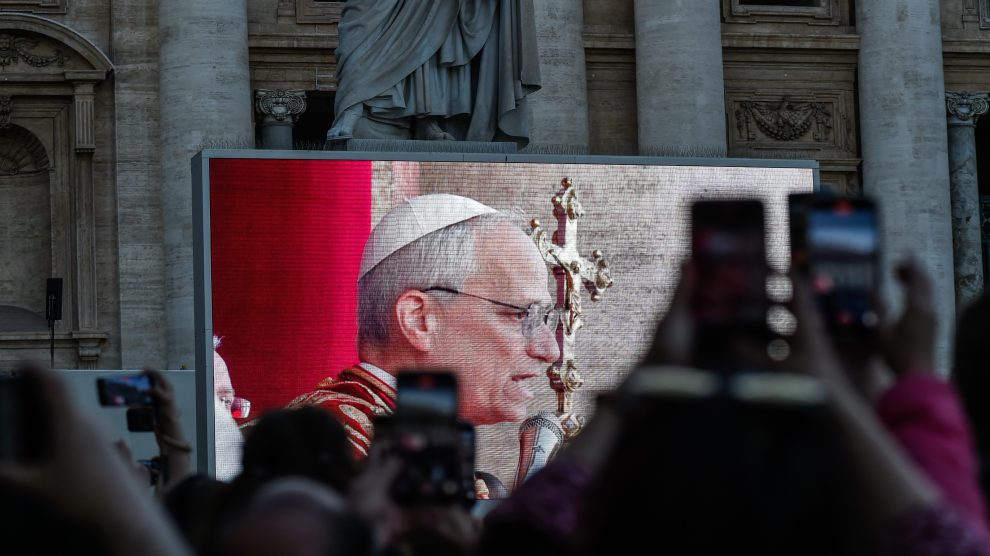
Decoding the news: The Holy See is signalling it is not in a position to carry out high‑level mediation with Washington — a constraint tied to the lack of solid ties between Pope Leo XIV and the Trump administration, despite the pontiff being American.
- Robert Francis Prevost follows the path of his predecessor Jorge Mario Bergoglio, creating operational limits for Vatican diplomacy, especially on dossiers considered by the United States as matters of national interest — such as Cuba, which sits squarely in the Western Hemisphere.
What’s happening: Rome is turning into a centre of diplomatic activity on Cuba following the Feb. 25 arrival of Foreign Minister Bruno Rodríguez Parrilla, who — as first reported by Agenzia Nova — is seeking to explore possible Vatican mediation on the United States’ maximum economic pressure policy against the island. The Holy See has given attention to the dossier, but has not made formal commitments.
- U.S. chargé d’affaires in Havana Mike Hammer is also in the Italian capital, fueling speculation about indirect contacts.
- Hammer discussed the situation in Cuba with Archbishop Paul Richard Gallagher, the Vatican’s secretary for relations with states and international organisations, in a meeting attended by U.S. Ambassador to the Holy See Brian Burch, during which the Catholic Church’s “important role” on the island was emphasised.
- The U.S. diplomat also met in Rome with the Cuban bishop of Guantanamo‑Baracoa, Monsignor Silvano Pedroso Montalvo, who had recently received an audience with Pope Leo XIV.
Between the lines: In Vatican circles, there is recognition that the Holy See’s ability to mediate major geopolitical crises has diminished, also due to relations described as “complex” with the White House.
- The chill is underscored by the pontiff’s decision to travel to Lampedusa on July 4 and to decline an invitation to Washington for the 250th anniversary of U.S. independence, delivered personally by Vice President James David Vance.
- The Holy See recently declined to join the “Board of Peace” promoted by the Trump administration, a decision the White House called “deeply unfortunate,” further highlighting the distance between Washington and the Vatican.
- This makes it difficult for the Vatican to present itself as a credible intermediary with Washington, to the point that the Holy See’s preferred interlocutor remains Secretary of State Marco Rubio.
The precedent: The Holy See unsuccessfully tried to influence U.S. decisions in Latin America, seeking to avert the U.S. military operation in Venezuela last January.
- The effort did not prevent the intervention that led to the capture of Caracas strongman Nicolas Maduro, reinforcing doubts about the Vatican’s actual leverage with the White House.
Complicating factor: Secretary of State Pietro Parolin, the chief architect of Vatican diplomacy, is advanced in age and could leave office in the foreseeable future. His potential departure would deprive the Holy See of a key figure just as its mediation capacity appears under strain.
The big picture: Pope Leo XIV has repeatedly expressed concern for the humanitarian situation in Cuba, echoing appeals from the island’s bishops about the risk of social collapse. However, moral authority alone is not enough to compensate for the lack of effective political channels with Washington.
What to watch:
- Whether Rodríguez’s extended stay in Rome will produce concrete Vatican engagement.
- How the U.S. will respond to these dynamics.
- A possible role for Italy as a secondary facilitator.
- Any signals of a new Vatican diplomatic strategy.
The bottom line: The Cuba dossier highlights a broader reality: the Vatican still aspires to act as a global mediator, but difficult relations with Washington — and a potential leadership change in its diplomatic corps — are narrowing its room for manoeuvre across multiple crises.