Why it matters: Italy is positioning itself as a pragmatic European interlocutor in Venezuela’s fragile transition — balancing humanitarian concerns, economic interests and political dialogue.
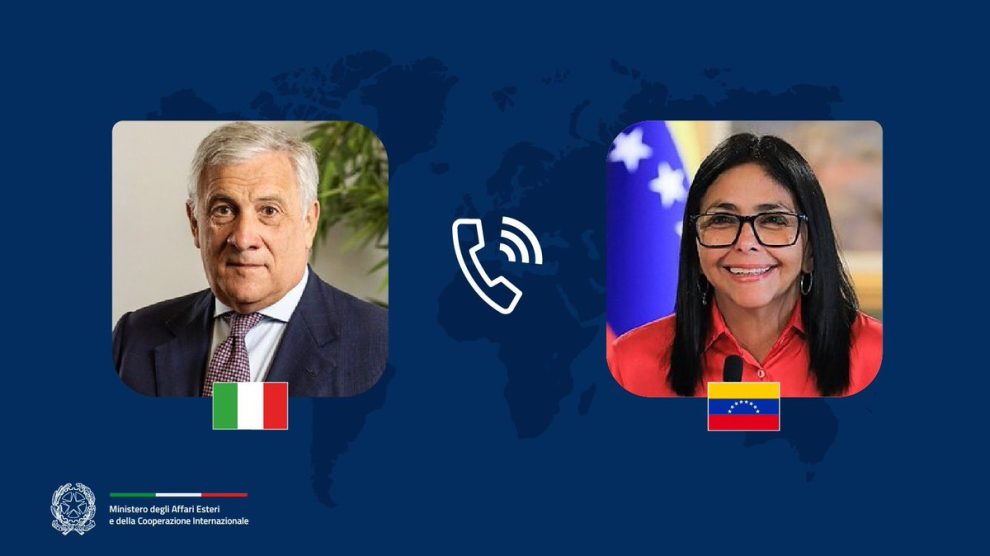
What happened: Italian Foreign Minister Antonio Tajani held a lengthy phone call on Feb. 25 with Venezuela’s interim president Delcy Rodríguez, focusing on detained Italian nationals, economic ties and political stabilization.
- FM Tajani stressed Italy’s “strong historical and cultural ties” with Venezuela, citing the large Italian diaspora.
- He said Rome has reinforced its diplomatic presence in Caracas to support citizens and Italian companies.
- The minister urged the immediate release of Italians detained for political reasons, asking Caracas to give the issue “maximum priority.”
- Tajani also called for solutions to outstanding commercial disputes and renewed economic dialogue.
Italy signaled readiness to support Venezuela’s internal pacification during what it described as a “transitional political phase.”
The other side: Rodríguez described the conversation as “respectful and constructive,” saying the two discussed key aspects of bilateral cooperation and a shared economic agenda to boost trade and investment.
Between the lines: Rome appears to be pursuing a dual-track approach:
-
- Humanitarian: securing the release of detained nationals
- Economic: reopening channels for trade and investment
- Political: encouraging stabilization without overt alignment in Venezuela’s internal conflict
The big picture: Italy has longstanding links with Venezuela due to migration flows dating back decades, giving Rome leverage that many European partners lack.
- The outreach comes as Western countries reassess engagement strategies with Caracas amid shifting geopolitical and energy dynamics.
What we’re watching: Whether Italy’s engagement produces concrete results on detainees — often the most sensitive bilateral issue — will determine how far Rome can expand economic cooperation.
(Photo: X, @antonio_tajani)