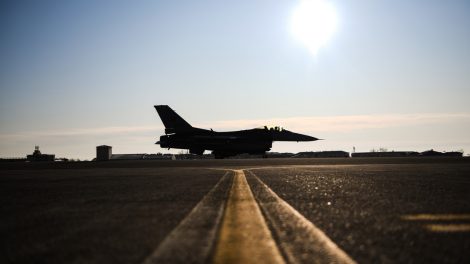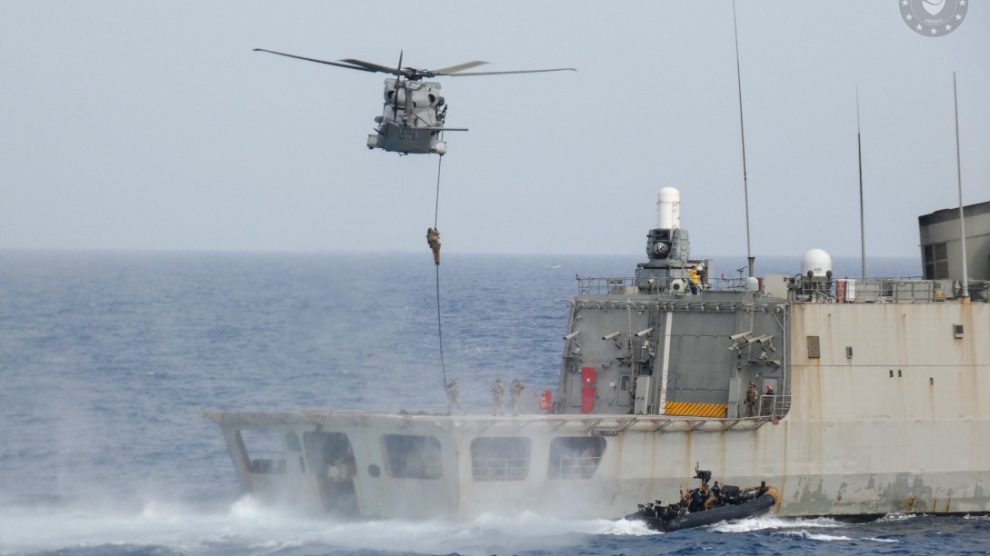
What happened: The Italian frigate Luigi Rizzo and the Greek frigate HS Hydra conducted a joint naval exercise, including complex maneuvers and simultaneous flight operations, in the Red Sea theater.
Why it matters: The drill is not only routine. It comes at a moment of rising uncertainty over a possible resumption of Houthi attacks on commercial shipping — potentially linked to ongoing or future Iranian retaliatory actions against U.S. and Israel — a scenario that could hit global energy flows harder than disruptions in Hormuz.
Why the Houthis: The Houthis are a Yemeni Shiite insurgent movement controlling much of northern Yemen, aligned with Iran through military support and strategic coordination.
- Since the Gaza war, they have framed attacks on Israel and Red Sea shipping as part of a broader anti-Western axis targeting key Indo-Mediterranean maritime routes, with renewed threats in recent weeks tied to regional escalation.
- Dynamics that the ongoing Trump-Iran truce can only pause.
The EU line: defensive, but present: European sources stress that EUNAVFOR Aspides operates under a strictly defensive mandate.
- Its mission: protect civilian shipping
- Its logic: safeguard global commons
- Its framing: contribute to regional stability, not escalation
- In short, Brussels is trying to balance deterrence with de-escalation — projecting presence without signaling offensive intent.
Zoom in: a fragile maritime equilibrium. The Red Sea is entering a volatile phase.
- The Houthis have:
- launched multiple drone and missile attacks against Israel (all intercepted so far)
- signaled readiness to resume attacks on shipping
- linked their posture to Iran and the broader regional conflict
- These are not yet large-scale operations — but nuisance attacks with strategic signaling value.
The real risk: Bab el-Mandeb, not Hormuz. If attacks resume, the chokepoint to watch is the Bab el-Mandeb, not the Strait of Hormuz.
- What’s important:
- Over 5 million barrels/day of Saudi crude transit southbound
- This flow is critical for Asian energy security
- Disruption here would hit supply stability, not just prices
- In short: Hormuz shocks markets. Bab el-Mandeb risks systemic disruption.
Military balance: deterrence exists — but is fragmented. A strong naval presence can keep shipping lanes open. EU forces under Aspides are already deployed from Djibouti, supported by additional European naval and air assets.
- However:
- U.S. Central Command may lack bandwidth to lead
- Destroyer Squadron 50 is heavily engaged elsewhere
- This creates gaps in intelligence, command and control, and coordination
- Capability exists, but leadership remains uncertain.
The Saudi factor: a hidden escalation trigger. A renewed Houthi campaign would:
-
- threaten Saudi Arabia’s last viable export route
- risk ending the fragile ceasefire in place since 2022
- Saudi naval involvement would likely follow, potentially alongside Egypt under their strengthened bilateral cooperation.
- This would transform a contained threat into a broader regional naval confrontation.
The bottom line: The Italian-Greek exercise is a small signal of a bigger shift:
- Europe is positioning itself as a maritime security actor
- The Red Sea is becoming a test case for non-U.S.-led naval coordination
- The next phase will depend less on capabilities and more on who takes command