Three core messages emerged: preserving Western cohesion, consolidating Italy’s economic performance, and pushing back against recurring speculation over government instability. Opposition reactions highlighted a familiar divide—calls for a more pragmatic energy approach, including reconsidering Russian gas, alongside broader political positioning against the government.
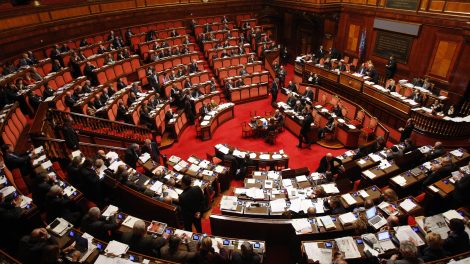
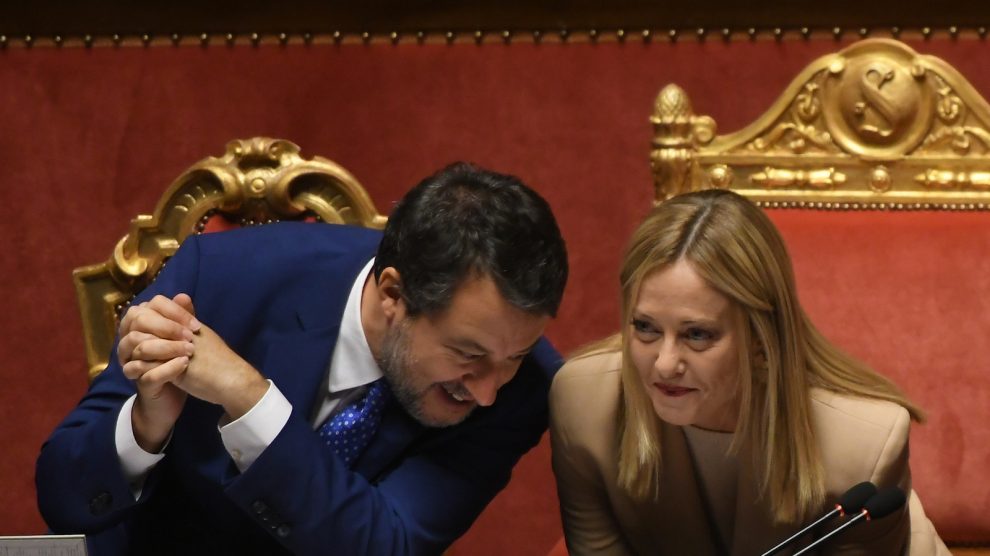
No “phase two”. In her address to the Parliament, Meloni rejected the idea of any political reset. There is no “phase two, three or four,” she said, stressing that the judicial reform—put to a confirmatory referendum and rejected by a wide majority of voters—was nonetheless a commitment made to the electorate, and that the outcome, despite a highly polarized campaign, must be respected.
- She framed talk of political maneuvering as “palace alchemy” belonging to past governments, insisting instead on responsibility and continuity.
- The broader context, she argued, leaves little room for distraction, calling on the opposition to engage on substance rather than rhetoric.
Iran crisis and the Italy–U.S. axis. Italy’s international positioning, Meloni noted, is not a recent construction but reflects an 80-year alignment with the United States. The remark was also a preemptive rebuttal to recurring accusations of subordination to U.S. President Donald Trump.
- On the Iran crisis, Rome backed ongoing diplomatic efforts, including talks hosted in Islamabad under Pakistani Prime Minister Shehbaz Sharif, with support from regional actors.
- Italy’s priorities remain clear: a permanent ceasefire, an end to attacks on Gulf countries, a halt to military operations in Lebanon, Iran’s renunciation of its nuclear program and regional threats, and the full restoration of freedom of navigation in the Strait of Hormuz.
Hormuz and the security coalition. Freedom of navigation is identified as Italy’s primary interest. Meloni stressed the need to restore conditions predating the start of U.S. and Israeli military operations against Iran on February 28 in order to stabilize energy markets, critical raw materials, and essential goods.
- Rome is part of a UK-led coalition of over 30 countries aimed at securing the Strait of Hormuz and ensuring uninterrupted maritime flows. The initiative reflects the growing centrality of chokepoints in global economic security.
Europe, the U.S., and strategic drift. Meloni acknowledged tensions in transatlantic relations but argued that the current U.S. posture is the continuation of a longer-term shift — across both Republican and Democratic administrations — towards the Indo-Pacific and strategic competition with China.
- In her view, Brussels has failed to anticipate this trajectory, as have previous Italian governments more focused on symbolic alignment than strategic positioning.
The “two pillars” of the West. The Prime Minister described the West as resting on two pillars — Europe and North America. If they move in different directions, she warned, paralysis and irrelevance follow.
- Italy’s role, she argued, is to keep the two sides aligned while maintaining the ability to disagree when necessary—whether on trade tariffs, military engagements, or specific geopolitical dossiers such as Ukraine, Greenland, or the use of bases like Sigonella.
Energy, economy, and EU flexibility. Energy security remains central. Meloni pointed to recent visits to Saudi Arabia, the UAE, and Qatar, alongside partnerships with Algeria and upcoming engagement with Azerbaijan, as part of a broader effort to secure supplies — particularly oil — from regions covering roughly 15% of Italy’s needs.
- On the European front, she called for a response comparable in scale to the pandemic, including a temporary, EU-wide suspension of the Stability and Growth Pact rather than country-specific derogations.
Conte’s opening on Russian gas. Among the first opposition voices, former Prime Minister and Five Star Movement leader Giuseppe Conte argued for a pragmatic reconsideration of Russian gas imports, framing them as economically more viable than U.S. alternatives — a position consistent with a party that has long expressed more critical or ambivalent views toward Western alignment. The position underscores a broader political divide on how to balance economic pressures with geopolitical alignment.
The bottom line: PM Meloni’s speech blends domestic consolidation with a clear geopolitical line — Atlantic continuity, strategic realism, and a strong focus on economic security. The real fault line is not government stability, but how Italy positions itself between energy needs, transatlantic ties, and shifting global power dynamics.