Tensions between Washington and the Vatican are entering a new phase: less dramatic in tone, but more consequential in substance. While the reported confrontation at the Pentagon appears to be receding, the divergence between the Trump administration and Pope Leo XIV is becoming more structural.
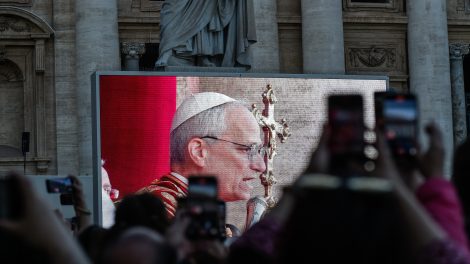
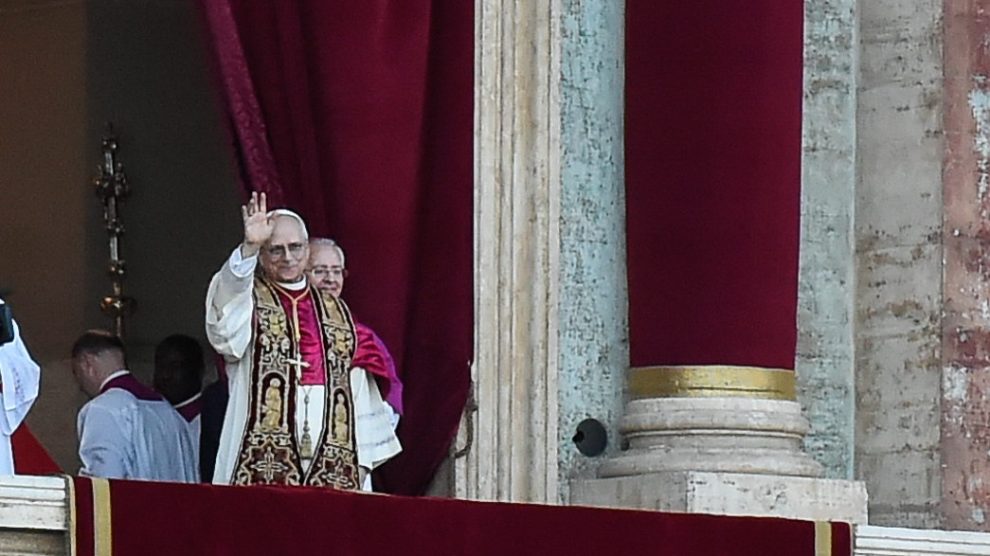
An episode that is deflating. Initial accounts of a heated January exchange between US defense officials and Cardinal Christophe Pierre, then apostolic nuncio to Washington, have been progressively revised. The Pentagon described the meeting as “respectful and professional,” while US ambassador to the Holy See Brian Burch said Pierre himself called it “frank but cordial.”
- Intermediate sources offer a more nuanced view. According to The Pillar, a US-based Catholic outlet generally seen as conservative, the discussion was at times “tense” and “aggressive,” but involved no coercion or threats. In other words, not a formal institutional clash — but not a routine meeting either.
The Pope hardens his line. As the episode softens, the Vatican’s position is hardening. Pope Leo XIV has intensified his language on war, arriving at a stark formulation as the Pentagon story filled headlines: “God does not bless any conflict.”
- This goes beyond a critique of how wars are fought to a challenge to their moral legitimacy. The pontiff has insisted that those who follow Christ are “never on the side of those who wield the sword or drop bombs,” placing his message in direct tension with any religious justification for conflict.
Religion and power in Washington. This stance collides with a growing narrative within the Trump administration, where religious language is increasingly intertwined with military discourse.
- From the White House to the Pentagon, references to divine providence and a moral mission have accompanied the framing of the war, particularly in relation to Iran.
- The result is a friction that is not only political but theological: on one side, force as a legitimate instrument; on the other, its moral delegitimisation.
A structural divergence. Taken together, developments over recent weeks suggest not an isolated incident but a broader divergence, unfolding across at least three levels.
- First, a normative one: the Pope’s appeal to postwar principles against a diplomacy “based on force.”
- Second, a theological-political one: a challenge to the very idea of just war.
- Third, a domestic US dimension, where the Vatican’s position intersects with a fragmented religious landscape.
Washington lowers the temperature. The US response has sought to contain the episode. The official line stresses normality and dialogue: “routine” meetings, “constructive” exchanges, continued engagement on foreign policy issues.
- This reflects a dual concern: avoiding symbolic escalation with the Holy See, and limiting domestic fallout, particularly among Catholic voters.
- In this context, the April 9 meeting in Rome between the new nuncio to the United States, Archbishop Gabriele Giordano Caccia, and US ambassador Brian Burch has been read as a signal of continuity in dialogue and an attempt at normalisation.
The Vatican holds its ground. The Vatican, for its part, has avoided direct confrontation but has not shifted its position. Vatican spokesman Matteo Bruni effectively redirected attention away from the meeting and back to the Pope’s words, underscoring that Leo continues to speak clearly on war and peace.
- Broader diplomatic signals reinforce this line, from the postponement of a potential US visit to the symbolic choice of Lampedusa for July 4.
The US political dimension. In this context, even seemingly marginal developments take on significance. The visit to the Vatican by David Axelrod, a veteran Democratic strategist, points to how Leo XIV is entering the US political conversation in a more direct and cross-cutting way.
- The Pope is no longer just a religious or diplomatic interlocutor, but a moral reference point that different political actors are watching — and, potentially, seeking to engage.
Beyond the episode. The result is a more complex and less predictable relationship. The Pentagon episode, initially framed as a direct confrontation, now appears reduced in factual terms.
- But that very reduction highlights a more important point: the distance between Washington and the Vatican does not hinge on a single meeting, but on diverging views of power, war and moral legitimacy.
- If the episode is fading, the rift is consolidating. And it is on this deeper terrain — rather than on isolated incidents — that the future of US–Holy See relations is likely to be shaped.