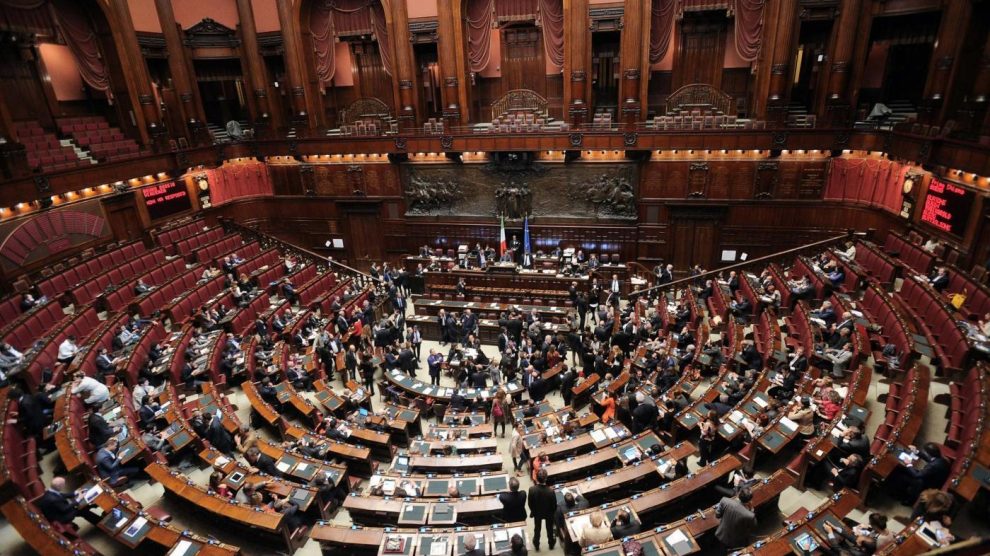
Italy’s Chamber of Deputies approved a framework law on nuclear energy on Wednesday, moving the government one step closer to creating the legal basis for a new generation of nuclear power plants.
The bill passed with 155 votes in favor, 86 against and eight abstentions. It now heads to the Senate for final approval.
Why it matters: The vote marks Italy’s most significant legislative move toward nuclear energy in decades.
- The bill would empower the government to draft the rules governing a future nuclear sector, including advanced reactors and nuclear-powered hydrogen production.
- Rome sees nuclear energy as part of a broader strategy to meet rising electricity demand while supporting decarbonization goals.
- The measure also aims to position Italian industry within emerging nuclear technology supply chains.
The big picture: The bill does not authorize the construction of nuclear plants.
- Instead, it delegates authority to the government to issue implementing decrees within one year of final parliamentary approval. Those decrees would establish the regulatory framework for what the government describes as “sustainable nuclear energy,” nuclear fusion research and radioactive waste management.
- Italian officials increasingly frame nuclear power as a complement to renewable energy rather than a replacement for it.
Zoom in: What the bill covers. The future government decrees would address:
- The construction and operation of nuclear facilities, including Small Modular Reactors (SMRs), Advanced Modular Reactors (AMRs) and microreactors.
- Nuclear-powered hydrogen production.
- Spent fuel management.
- Nuclear safety and radioactive waste management.
- A reorganization of governance and the responsibilities of relevant agencies.
The legislation also requires the government to follow specific principles, including maintaining the highest safety standards, protecting public health, simplifying authorization procedures, providing compensation mechanisms for host communities and supporting the participation of Italian industry in the sector.
Energy first: Environment and Energy Security Minister Gilberto Pichetto Fratin said the government aims to move quickly if the Senate approves the bill.
- “By Christmas we will have the implementing decrees on nuclear energy,” Pichetto said after the vote. He said the government’s goal is to provide Italy with a legal framework capable of supporting long-term energy planning.
- According to Pichetto, the first operational reactors in Italy could arrive in 2034-2035.
- The minister also linked the nuclear push to expected growth in electricity consumption. “All experts foresee an explosion in demand, due to data centers and industry,” he said.
- Pichetto argued that nuclear power should be integrated with renewables and hydrogen, adding that the government’s energy plan foresees nuclear accounting for between 11% and 22% of Italy’s future energy mix.
Between the lines: The government is presenting the initiative through three interconnected arguments: energy security, industrial competitiveness and decarbonization.
- Pichetto stressed that the proposal concerns only civilian nuclear power. “The bill concerns only civilian nuclear energy,“ he said.
- Foreign Minister Antonio Tajani described the parliamentary vote as “a first historic step toward Italy’s energy independence.”
- Tajani argued that next-generation nuclear technology could help deliver cleaner energy, more competitive prices for households and businesses, and greater security for the country.
What to watch:
- The Senate vote, which is required for final approval.
- The drafting of implementing decrees expected by the government within months.
- How Italy structures nuclear governance and oversight.
- The future debate over reactor locations, local compensation mechanisms and public acceptance.
- Whether Italy can build a domestic industrial role in emerging nuclear technologies.
The bottom line: The vote does not restart nuclear power in Italy on its own. But it creates the legislative pathway the government wants to use to bring nuclear energy back into the country’s long-term energy mix, alongside renewables and hydrogen.