Italy’s foreign minister Antonio Tajani and defense minister Guido Crosetto leveraged a parliamentary hearing on overseas missions to outline Rome’s assessment of an increasingly unstable international environment, linking Ukraine, the Middle East, the Red Sea, the Indo-Mediterranean and Africa as interconnected theaters of a broader security challenge.
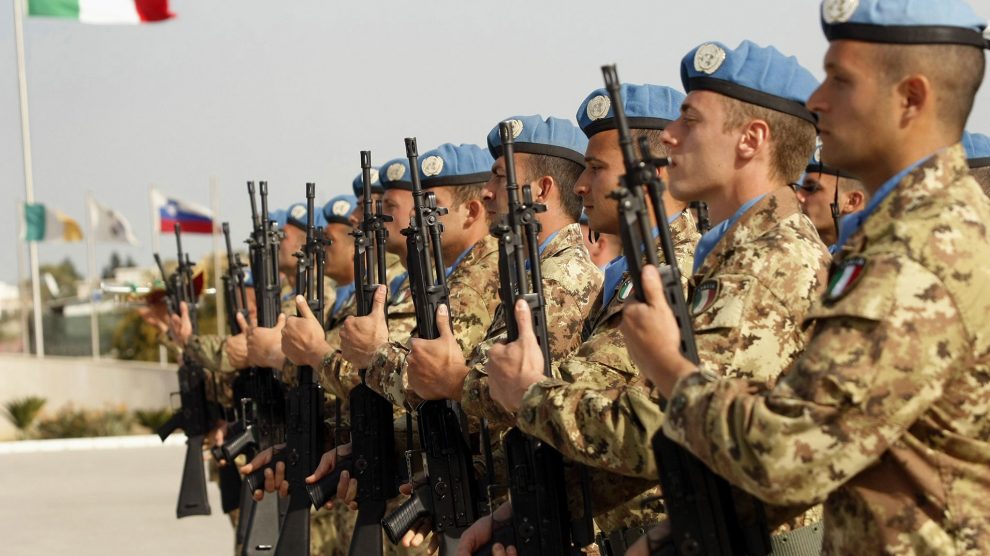
The hearing accompanied the government’s annual missions package, which renews 50 existing operations and adds two new bilateral deployments — one in Iraq and one in Somalia, when conditions allow — alongside a Guardia di Finanza mission in Tunisia. Italy currently deploys around 7,500 personnel abroad, with authorization for up to 12,000 troops, supported by 37 naval assets and 147 aircraft.
The debate offered a snapshot of how the Italian government views a rapidly deteriorating strategic environment while highlighting persistent questions over oversight, mission effectiveness and the future direction of Italy’s international military engagements.
Why it matters: Italy remains one of Europe’s most active contributors to international missions, with deployments spanning NATO, UN, EU and bilateral operations.
- The government increasingly views developments in Ukraine, the Middle East, the Red Sea and the Sahel as interconnected security challenges rather than separate crises.
- The parliamentary debate reflected a growing emphasis on deterrence and military readiness alongside traditional stabilization missions.
- Questions over parliamentary oversight, mission evaluation and the flexibility of geographic mandates remain unresolved.
How and where. The overall allocation amounts to roughly €1.38 billion, down by nearly 6% compared with the previous year.
- The missions framework is organized around 16 geographic areas, including Eastern Europe and the Balkans; the Mediterranean and the Middle East; the Red Sea and the Horn of Africa; North, West and East Africa; the Gulf region; Central Asia; and several maritime security theaters.
- Together, they cover operations stretching from NATO’s eastern flank to Africa and the broader Indo-Mediterranean space.
A world of interconnected crises. Presenting the government’s strategic assessment to lawmakers, Crosetto described an international environment marked by “widespread instability and increasingly interconnected crises.”
- “Every crisis extends well beyond its own region, feeding a global dynamic in which instability, conflict and strategic competition reinforce one another,” he said.
- The defense minister pointed to the war in Ukraine, military operations involving Iran, the broader Middle East crisis and the deteriorating security situation in countries including Nigeria, Somalia and Mali, where jihadist groups continue to strengthen their territorial and social presence.
- Crosetto also warned that “the atomic threat that we had relegated to history books is becoming relevant again,” placing the remark within a broader reflection on the return of high-intensity geopolitical competition.
Ukraine remains central. Both ministers reaffirmed Italy’s support for Ukraine during the hearing.
- Tajani said Rome supports “every negotiating effort” aimed at achieving a “just and lasting peace,” while arguing that Moscow has yet to demonstrate a genuine willingness to negotiate.
- Crosetto offered a stark assessment of the war’s human cost, saying available estimates suggest the total number of killed and wounded on both sides could approach two million by the end of the year.
- According to the minister, the conflict continues to generate levels of destruction and violence unseen in Europe since World War II.
Lebanon and regional stability. Lebanon emerged as one of the most sensitive dossiers discussed by the two ministers.
- Tajani said the government’s priority remains the safety of the more than 1,000 Italian personnel deployed in the area, including within the UNIFIL peacekeeping mission.
- “We have made it clear to all parties: peacekeepers must not be touched,” he said. The foreign minister added that Italy has raised with both the United Nations and European partners the issue of the future security architecture along the Blue Line separating Israel and Lebanon.
- Crosetto described the situation in Lebanon as “desolate” and praised both the Lebanese government’s efforts to restore stability and the work carried out by Italian personnel despite the difficult security environment.
- The ministers also highlighted concerns about wider regional escalation. Tajani warned that any disruption of maritime traffic through the Bab el-Mandeb Strait would further aggravate an already fragile international situation.
Tensions with Israel. The hearing also touched on recent tensions involving Israeli National Security Minister Itamar Ben Gvir following remarks directed at Italy after reports that he was under investigation by prosecutors in Rome.
- Tajani described the comments as “unacceptable” and “not worthy of a minister.” While reiterating that Italy considers Hamas’ disarmament a priority and remains a friend of Israel, the foreign minister also condemned settler violence in the West Bank and defended Italy against what he described as attempts to delegitimize the country’s position.
Between the lines: The debate also highlighted broader reflections on the evolution of Italy’s international engagements. Lawmakers discussed the scope of some mission mandates, the role of Italian forces in partner countries, and the need to ensure effective monitoring of ongoing operations.
- The discussion further reflected a wider trend within NATO, with greater emphasis on deterrence and collective defense alongside traditional crisis-management and stabilization missions.
The bottom line: The renewal package largely confirms continuity in Italy’s overseas commitments. Yet the hearing revealed something broader: a government increasingly convinced that Ukraine, the Middle East, the Red Sea and the Sahel form part of the same strategic landscape. That assessment is shaping both Italy’s diplomatic posture and its military presence abroad.