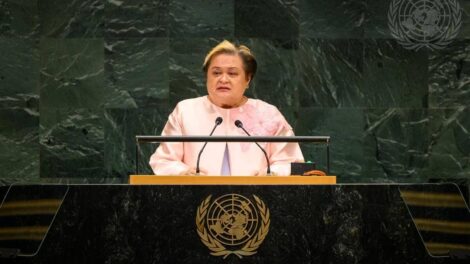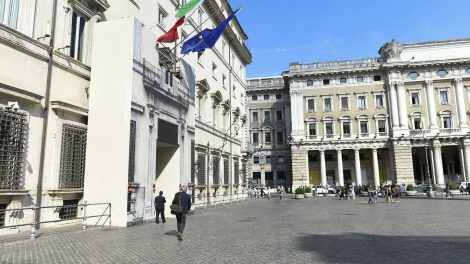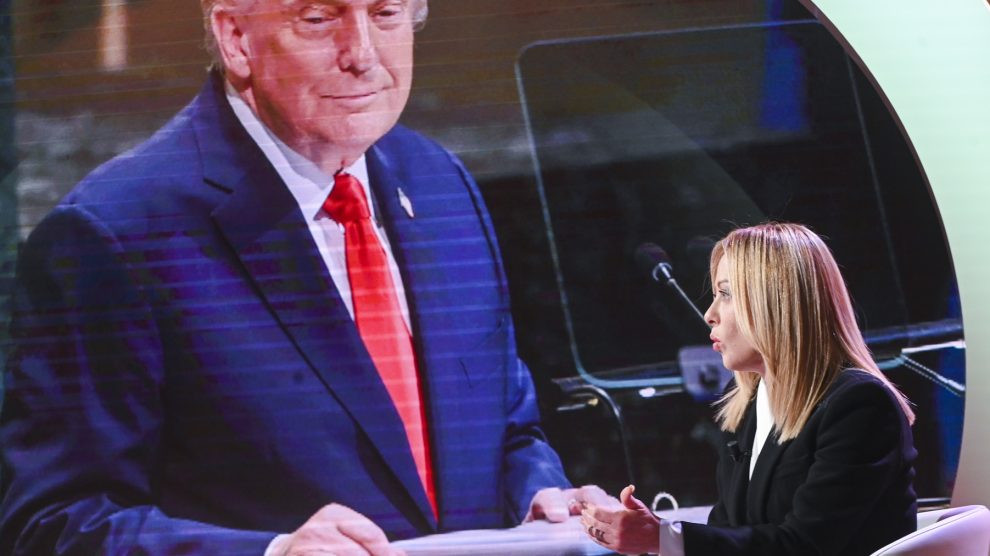
For Brian Katulis, Senior Fellow at the Middle East Institute, “leaders in Moscow and Beijing likely welcome this dispute between two leaders of major democracies, happy to see two countries divided and distracted.” In his view, that is the broader strategic risk behind the public clash between Italian Prime Minister Giorgia Meloni and U.S. President Donald Trump.
More broadly, Katulis sees the episode as a reminder that domestic political pressures often shape the behavior of leaders on the international stage. Yet he cautions against overestimating the significance of personal disputes when compared to the larger strategic interests that continue to bind the two countries together.
In this interview with Decode39, Katulis discusses Trump’s handling of the controversy, Meloni’s response, the potential implications for U.S.-Italy relations, and whether the episode could have any impact on the atmosphere surrounding the upcoming NATO Summit.
Q: What, if anything, do you think Trump miscalculated in handling this episode?
A: President Trump is at the weakest point he has ever been during his two terms in office. The Iran war and its fallout, including inflationary pressures, have driven his domestic political standing to its lowest levels so far. Trump often uses incendiary and offensive language to distract from his own weaknesses and vulnerabilities, and he has an inclination to target women more than men.
- He does this with journalists and politicians in the United States, and he sometimes demeans or attacks foreign leaders as well. At the core of these statements is a leader who is desperate and weaker than ever before.
Q: How do you evaluate Meloni’s reaction and broader strategy?
A: Meloni’s decision to respond and fight fire with fire demonstrates that she has a strong personality and is a proud leader. She had been facing criticism within Italian politics for aligning too closely with Trump during the first year of his presidency, and in recent months she had begun to move in a somewhat different direction.
- She has also been quite adept at shaping Italy’s geopolitical strategy in Asia, the Middle East, and Europe in ways that reinforce the country’s natural strengths. In this instance, Trump’s remarks appeared designed to diminish her, giving her an incentive to push back. Quite often, other leaders simply ignore him. But Trump is deeply unpopular in Italy, particularly after the Iran war, and she likely saw some advantage in responding as forcefully as she did.
Q: What impact could this dispute have on U.S.-Italy relations in the short, medium, and longer term?
A: The main impact on bilateral relations is that it serves as a distraction from the important work the two countries can do together to strengthen their position in the world.
- The common interests and values that America and Italy share at a time of profound geopolitical and geoeconomic uncertainty are far more important than this overly personalized dispute. The wisest course for both countries would be to double down on the joint security, economic, and energy initiatives that benefit both Italy and the United States.
- Let us hope that cooler heads prevail in the coming days, because there is much important work for our two countries to accomplish together.
Q: Could these dynamics influence the atmosphere and outcomes of the upcoming NATO Summit?
A: It seems unlikely to me that this personal squabble will distract from the important work to be done at next month’s NATO Summit. It would be irrational for this episode to go much further than what we have already seen.
- Trump has made these statements because he knows, on some level, that he is in a weaker position and is seeking to distract attention from his own mistakes. He does this all the time.
- The sooner Italy and the United States return the discussion to the serious issues they face together—the threat Russia poses to Ukraine and the rest of Europe, the global economic fallout from war and instability in the Middle East, and the continued rise of China as a global competitor to both countries—the better off both nations will be.