
The NATO summit in Ankara comes at a time marked by tensions between Washington and some European allies, questions over the continuity of support for Ukraine and discussions over the new financial commitments required of Alliance countries. Also on the table are the rebalancing of responsibilities between the United States and Europe, the strengthening of the defense industry and the attention to be devoted to crises in the Mediterranean and the Middle East.
Decode39 spoke with Giangiacomo Calovini, a Brothers of Italy MP, member of the NATO Parliamentary Assembly and chairman of the Mediterranean Commission, to understand Italy’s priorities going into the summit, how much space the southern flank can gain and how relations between Europe and the United States within the Alliance may evolve.
Q: How does Italy arrive at the NATO summit in Ankara, also in light of recent tensions with the United States and President Trump’s latest attack on Prime Minister Meloni?
A: Italy arrives well equipped, with a stable government, especially compared with other international partners, at a particularly complex geopolitical moment. This is not a secondary factor. In the dynamics of foreign policy, international relations and defense, our country has become a very important interlocutor.
- We arrive at the summit aware of how fundamental the Atlantic Alliance is. It is not always easy to explain this politically, but the task of the government and of those who represent voters is to make people understand that investing in NATO means directly protecting the interests and security of citizens.
- The government has the ability to engage with everyone. Italy’s weight has also grown stronger in Brussels, particularly within the European Council. It is clear, however, that relations with Washington are not at their best at the moment. The majority and the government must nevertheless continue to work in the interest of national security, without allowing the controversies, although they exist, to influence the government’s actions.
Q: On support for Ukraine, should we expect a less involved NATO and a Europe called upon to compensate for a possible American pullback, or will continuity in assistance to Kyiv prevail?
A: Beyond some bombastic statements, it seems to me that NATO continues to operate in continuity with what it has done in recent years. A summit of this importance comes after intense preparatory work and, on the Ukrainian issue, the line appears to be substantially confirmed.
- Italy has also set some conditions on the modalities of the intervention, but there is no lack of commitment from Allied countries to support Kyiv, with around €70 billion in aid. Several issues have been addressed, and Italy has focused in particular on the energy sector, where it can offer a concrete contribution and on which direct requests have come from Ukraine.
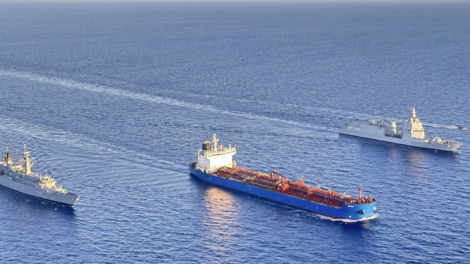
- The Alliance, however, cannot deal only with the eastern front. As a member of the NATO Parliamentary Assembly and chairman of the Mediterranean Commission, I believe it is necessary to pay attention also to the southern front, instability in the Mediterranean, the Middle East and migration phenomena. NATO must have the ability to address all these challenges simultaneously.
Q: Looking specifically at the Mediterranean, the summit is taking place in Turkey, a country that is increasingly central to the balance within the Alliance. How much can the choice of Ankara help enhance NATO’s southern flank, where Italy can claim a strategic role?
A: Italy can play a decisive role. It has succeeded in bringing the Mediterranean and the southern front, in several respects, back to the center of the national and international political agenda. It raised the migration issue in Brussels, contributing to the approval of a different approach compared with the past, and relaunched relations with the African continent through the Mattei Plan.
- This is a plan that does not have only a communicative value but is producing concrete projects. Numerous international interlocutors are looking with interest at the way Italy is working on the African continent. Thanks to its relations with African and Mediterranean countries, Rome has therefore succeeded in strengthening its position.
- Turkey, for its part, is a country of primary importance. It is so within the Alliance because of the contribution it provides in terms of personnel, troops and capabilities. It is also important because it has become a fundamental actor for understanding what is happening in the Mediterranean and, above all, in the Middle East.
- The fact that Italy has good relations with Ankara at this stage is decisive. This also helps enable our country to have a seat at the tables that matter in a particularly complicated international context.
Q: Military spending will be a central issue. Will the debate between Europe and the United States concern only the level of investment, or also the priorities to pursue, the capabilities to develop and the strengthening of the European defense industry? What direction could emerge from the summit?
A: In The Hague, historic commitments were made to bring investment by the 32 NATO countries up to 5%. For a country like Italy, which has traditionally stood at around 1.5-1.7%, this is a Copernican revolution.
- The political objective is to reach that level by 2035. Before then, a review is also planned, scheduled for 2029. It will therefore be a gradual path, which Italy intends to approach as a serious country, taking into account both the needs of the national budget and those of domestic politics.
- We are convinced that we can reach the objective one step at a time, engaging with other countries, institutions and the private sector. Italy also has important industrial players in the defense sector.
- These investments are not being made because someone hopes for a return to war or wants to attack other countries. They are needed to defend against possible aggression, including hybrid attacks, and to protect Italy and its citizens.
Q: What should concretely emerge from the summit for Italy to be satisfied? And what kind of NATO could we find at the end of the summit?
A: We could find an Alliance with a stronger European drive, also in light of the desire to reduce American involvement that seems to be emerging in some circles in Washington. I do not believe, however, that this orientation is as pronounced as it might appear from President Trump’s statements.
- I often travel to Washington and speak with members of the U.S. Congress. I have found a widespread conviction that the Atlantic Alliance and Western unity still represent the fundamental framework within which to operate.
- For Italy, it would be important to see a NATO more engaged on Mediterranean issues and the southern front. This is a request that our country has been pursuing for some time, and I am convinced that several allies could support it.
- Greater political involvement by the Alliance would also be needed. In recent years, as a parliamentarian in the NATO Assembly, I have perceived the need to better explain what it is and what purpose it serves. The misleading message that NATO exists only to attack or provide weapons must not take hold.
The bottom line: “The Alliance,” said Calovini, “serves first and foremost to defend what we have and our daily lives. Hybrid attacks do not necessarily require bombs or tanks, but they can concretely affect our societies. NATO must therefore also understand and address the challenges related to artificial intelligence and the protection of infrastructure, trains, airplanes and all essential services. The commitment of politics, at the national and international levels, must move in this direction.”