Why it matters: The headline issue may be higher European defense spending. But Andrea Gilli, a lecturer in Strategic Studies at the University of St Andrews and non-resident fellow at the NATO Defense College, argues that the summit points to broader changes in NATO’s political, military and strategic balance.
Five reasons stand out.
1. Trump is winning the burden-sharing argument. For the second year in a row, Gilli writes, the summit is delivering a political victory for U.S. President Donald Trump inside NATO.
- European allies are increasing military spending at unprecedented levels.
- In Gilli’s reading, Trump’s threats have proved more effective at moving allies than the diplomatic approach of his predecessors.
- His conclusion: whatever the controversies surrounding Trump’s style and domestic policies, his pressure tactics have produced results on transatlantic security.
2. NATO now has to rethink its forces. Higher European spending and a reduced U.S. military presence raise a harder question: what should NATO’s European force and command structure look like?
- NATO has said that many of the capability gaps created by the reduced U.S. presence have already been filled.
- Between the lines: Gilli argues that the central issue remains unresolved: how to redesign the size, composition and command of European forces to make deterrence more credible.
- That will not be easy. European allies have historically struggled to agree on such questions, while existing structures may no longer fit the alliance’s changing balance.
3. Trump still holds leverage over Europe. Defense is only one part of Europe’s external dependence.
- Gilli points to energy, technology, finance and trade as other areas where European countries remain exposed. His assessment is that Trump’s demands on allies are therefore likely to increase over the medium term.
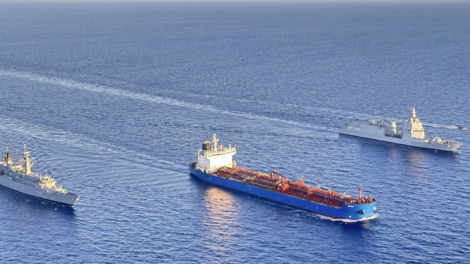
- The bigger picture: Europe, he argues, needs to think beyond deterring Russia. It also needs military forces capable of protecting the trade routes that are critical to its economy.
4. NATO summits are increasingly shaped by domestic politics. Foreign policy is becoming not only a tool to defend national interests, Gilli writes, but also a way for leaders to strengthen their position at home.
- He cites Trump and Spanish Prime Minister Pedro Sánchez as examples of how domestic political calculations can shape alliance debates.
- Why it matters: That trend could make consensus inside NATO increasingly difficult.
5. Watch Turkey. The host country may represent the summit’s most important long-term story.
- Turkey and NATO have both changed significantly since the alliance’s 2004 Istanbul summit. If the U.S. reduces its presence — and with it some of its influence — other allies will inevitably gain weight.
- Turkey, Gilli argues, is among the clearest beneficiaries of that shift.
The bottom line: The Ankara summit is not just about higher defense spending. It is about the emergence of a different NATO — one in which America’s role is changing and the alliance’s political, military and strategic balance is changing with it.