
ROME — U.S. Ambassador to Italy Tilman Fertitta sought to reassure that relations between Washington and Rome remain solid despite recent political frictions, while delivering some of his strongest public warnings yet on China’s strategic ambitions and the risks posed by Russia.
Why it matters: Fertitta’s remarks, made in an interview with Il Messaggero conducted by Francesco Bechis, outline the Trump administration’s priorities toward Italy: preserving the transatlantic alliance, pressing European allies to shoulder more of NATO’s defense burden, and maintaining vigilance toward Beijing and Moscow.
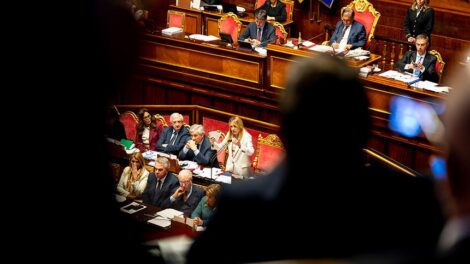
The big picture: Fertitta rejected suggestions that recent disagreements between President Donald Trump and Prime Minister Giorgia Meloni have undermined the bilateral relationship.
- He described Meloni as “no longer just an Italian leader but a world-class leader” and said her government remains “very strong.”
- On Italy’s role during the U.S. operation against Iran, the ambassador dismissed any suggestion of disappointment in Washington. “Not at all. They are doing what is required of them, and we are doing the same.”
- He also said he is unaware of any plans to reduce the U.S. military presence in Italy and would not be surprised if troop levels increased over the coming years.
Zoom in: China. The sharpest language was reserved for Beijing.
- Fertitta argued that China is “slowly trying to conquer everything” by seeking control over strategic infrastructure and said Italy, like other NATO members, should remain vigilant against Chinese efforts to build critical infrastructure in the country.
- He also reiterated concerns over alleged Chinese police stations operating abroad, recalling a similar case uncovered in New York.
- “I don’t think it is appropriate for one country to operate inside another sovereign state with activities of this kind without declaring them publicly. So yes, I do think they are a problem.”
- The warning is timely. A new Pew survey shows that Italians now view China more favorably than the United States for the first time in nearly two decades of polling.
- President Trump will allege Chinese meddling in U.S. elections during his primetime speech Thursday night.
On Russia. Asked whether Moscow could interfere in Italy’s next elections, Fertitta stopped short of making a direct accusation but said that if Russia has the capability to interfere in U.S. elections, it could do so elsewhere.
- He added that understanding those risks in advance allows countries to strengthen their defenses.
NATO and burden sharing. The ambassador repeated Washington’s call for European allies to spend more on defense, saying the United States wants NATO members to reach 5% of GDP.
- While welcoming Italy’s increased spending commitments, he argued it is unfair for the United States to bear what he described as 55% of the Alliance’s costs.
- On military support for Ukraine, however, Fertitta said Italy contributes in ways that other allies do not and stressing that such decisions belong to the Italian government.
Eyes on Libya. Fertitta praised Italy’s diplomatic role in Libya, describing the Foreign Ministry as well equipped to manage the dossier and pointing to opportunities for greater cooperation on energy production and economic ties.
- The Trump administration is pushing a power-sharing deal between Libya’s rival leaders to end years of political division and restore unified governance. Italian role in these dynamics is crucial.
Hormuz on the lens. On the planned deployment of Italian minehunters to the Strait of Hormuz, he said the decision rests with the Italian government, while broader U.S. policy would be determined in Washington.
- He added that Trump wants to ensure freedom of navigation through the strategic waterway.
- The military and diplomatic outcomes of the conflict are uncertain, but the crisis is already accelerating investments aimed at reducing the world’s dependence on the Strait of Hormuz.
Between the lines: Asked about opposition leaders Elly Schlein and Giuseppe Conte, Fertitta revealed he has never held a dedicated meeting with either of them.
- “Believe it or not, I have never had a meeting with either of them.”
- This relative distance from minority leaders is somewhat unusual given that Fertitta has been in office for months, but the Ambassador nonetheless stressed that whoever governs Italy must recognize the importance of the relationship with the United States.
The bottom line: Fertitta’s message combined reassurance and strategic warning: Washington continues to view Italy as a key ally despite recent disagreements, but expects Europe to do more within NATO while remaining alert to challenges posed by China and Russia.
- He closed with a broader appeal for transatlantic unity. “America will never turn its back on Europe. But Europe cannot turn its back on America. We want NATO to roll up its sleeves and do its part. Europeans and Americans are friends and will remain friends.”
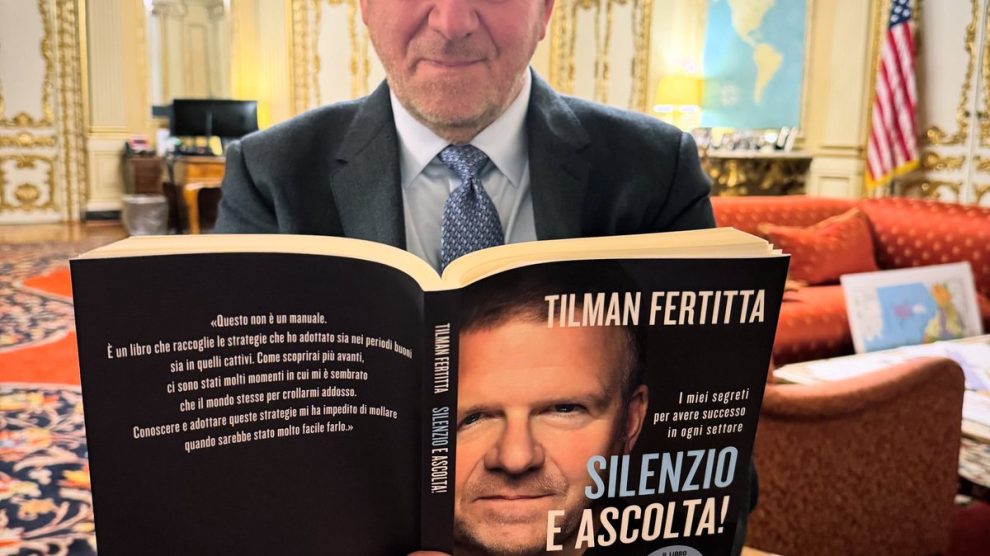
(Photo: X, @TilmanJFertitta)