As Western democracies grapple with questions of political legitimacy, technological change and shared values, a gathering in Rome brought American and Italian thinkers together to examine whether the classical tradition can still provide a moral compass.
The classical heritage is emerging as a point of reference in the transatlantic debate over the foundations of Western democracy. At a time when political authority, individual rights and technological innovation are raising new questions about the limits of power, scholars and policymakers from the United States and Italy gathered in Rome to explore what ancient ideas can still offer contemporary societies.
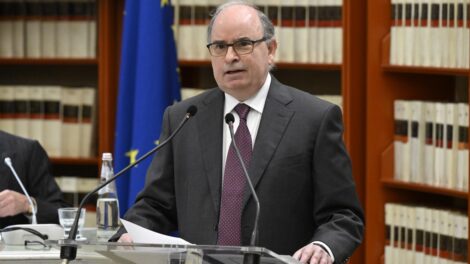
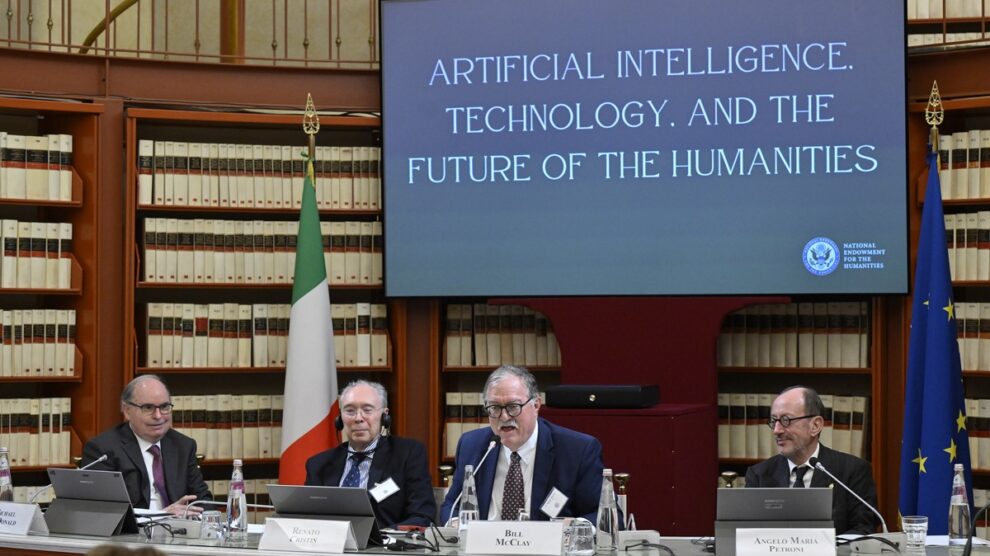
Driving the news: The conference “Classical Foundations and Moral Authority”, organised by the National Endowment for the Humanities (NEH) with the support of the Wilson Center, brought together academics, diplomats, legal experts and political figures at Palazzo San Macuto, part of the Italian Chamber of Deputies.
- The central argument was that the Western humanistic tradition, from classical antiquity to the present, remains more than a shared cultural inheritance. It can also serve as a framework for understanding political responsibility, institutional legitimacy and the relationship between individual freedom and the common good.
Why it matters: The discussion comes as Western democracies face growing pressure to reconcile their founding principles with contemporary political and technological challenges.
- The classical tradition provides a common intellectual language connecting Europe and the United States.
- Questions about the origins of rights and the limits of political authority remain central to democratic governance.
- Artificial intelligence is adding urgency to the debate over human judgment, education and the preservation of independent thinking.
The transatlantic dimension: Opening the conference, Lorenzo Fontana, President of Italy’s Chamber of Deputies, emphasised the importance of the humanities in rediscovering and preserving the values rooted in classical civilisation.
- Fontana argued that political communities depend on responsibilities as well as rights, and that government authority must recognise limits that precede political decisions.
- He also pointed to a forthcoming agreement between the NEH and Italy’s National Research Council (CNR), aimed at encouraging researcher mobility and the exchange of knowledge.
The initiative gives the broader intellectual discussion a practical dimension, strengthening cooperation between American and Italian research institutions.
The authority question: A central theme was the distinction between potestas and auctoritas, two Roman concepts separating the exercise of power from the legitimacy that sustains it.
- Angelo Maria Petroni of Aspen Institute Italia, who moderated the opening panel, argued that contemporary political systems increasingly emphasise power while the concept of authority is gradually disappearing.
- Former Italian Senate President Marcello Pera developed the argument by questioning whether liberal states can remain stable after distancing themselves from the religious and moral foundations that influenced America’s founding generation.
- Pera pointed to a fundamental constitutional question: if human rights are recognised by the state rather than created by it, where do those rights originate?
- He suggested that contemporary political thought has largely stopped asking that question because it struggles to provide an answer.
The American perspective: Brian Burch, US Ambassador to the Holy See, focused on the role of civic virtue in sustaining democratic institutions.
- His argument was that civic responsibility cannot be produced through legislation alone. It develops within families, schools, religious communities and personal relationships.
- For Burch, the challenge is not to restrict freedom but to cultivate citizens capable of exercising it responsibly.
Another view: Margherita Cassano, former First President of Italy’s Supreme Court of Cassation and the first woman to hold that position, approached the debate from a constitutional perspective.
- She argued that fundamental rights derive their authority from the Constitution, which reflects the different traditions and sensitivities of a political community.
- But constitutional rules alone cannot guarantee democratic stability.
- Cassano stressed that the integrity of individuals and institutions ultimately determines whether constitutional systems function properly. Even strong constitutions can be undermined by dishonest behaviour, while imperfect legal frameworks can remain workable when supported by responsible citizens.
- She also warned against the growing tendency to transform individual expectations and desires into claims of fundamental rights.
The AI challenge: The debate extended beyond political philosophy to the implications of artificial intelligence for Western societies.
- Renato Cristin of the University of Trieste connected the discussion to the anniversary of the fall of the Berlin Wall on November 9, warning that technological developments could create new forms of technocratic domination.
- Cristin questioned the very expression “artificial intelligence”, suggesting provocatively that the technology could instead contribute to a process of intellectual impoverishment.
- Wilfred McClay of Hillsdale College offered a more nuanced assessment.
- While acknowledging AI’s usefulness for research, McClay highlighted its limitations in the humanities. Large language models, he argued, tend to reproduce prevailing interpretations and established knowledge, while intellectual progress often requires challenging conventional wisdom.
The bigger picture: Across the conference’s two-day programme, the discussion connected classical philosophy, constitutional law, political legitimacy and technological change.
- The underlying question was whether Western democracies can preserve their intellectual and moral foundations while adapting to a rapidly changing international environment.
- For the American and Italian participants, the classical tradition offered a common starting point for that conversation.
The bottom line: The debate in Rome suggested that the relevance of classical thought extends well beyond universities and cultural institutions. Questions about authority, responsibility and human judgment remain directly connected to how democracies govern themselves, respond to technological disruption and define the principles they seek to preserve.