Developing a coherent national strategy for Ukraine proved complex for several structural reasons. France and Germany had been directly involved since 2014 in the peace negotiations between Russia and Ukraine through the “Normandy Format”, giving both countries (as well as the United States) long-established diplomatic teams and an existing Ukraine policy framework. By contrast, countries such as the United Kingdom, the Nordic states and the Baltic republics adopted an immediate and unequivocal stance in support of Kyiv, reflecting their longstanding strategic concerns regarding Russian military assertiveness.
Italy entered the crisis with a very different set of priorities. Ukraine had never been a major focus of Italian foreign policy. For Italian diplomats, Kyiv was traditionally considered a less prestigious post than Moscow, which for decades maintained significant importance for Italian export interests. This created a significant internal tension: supporting Ukrainian independence necessarily implied the deterioration of Italy’s historically cordial relationship with Russia.
Two external events ultimately catalysed a strategic shift: a diplomatic setback in Lugano and a dramatic attack on Odessa.
The Lugano Diplomatic Setback
In early July 2022, just days before Mario Draghi’s resignation, the Lugano Conference on Ukraine’s reconstruction took place—under the optimistic assumption that the war might be short-lived.
During the event, Ukrainian Prime Minister Denys Shmyhal presented a large map assigning different Ukrainian regions and major cities to partner countries expected to assume responsibility for reconstruction projects. It was, in effect, a proposed “allocation model” based on national interests.
Italian officials were taken aback by the placement of the Italian flag on Rivne—a small city near the Belarusian border—and on Donetsk, the latter obviously an unrealistic proposition given its occupation by Russia since 2014.
Meanwhile, major strategic cities such as Kyiv, Odessa, Dnipro, Lviv, Zaporizhzhia and Kharkiv were assigned to other countries. Most strikingly, Odessa—historically and culturally close to Italy—was attributed to Switzerland and France.
This allocation signalled a limited perception of Italy’s diplomatic and economic weight and suggested a prioritisation of other partners (including the US, UK, Germany, France, Canada, Switzerland, Poland and Turkey). The Ukrainian proposal was intellectually stimulating but lacked the preparatory consultations expected in complex international planning.
The absence of any Italian role in Odessa was particularly awkward given the city’s deep cultural links with Italy and the relevance of Italian expertise in shipbuilding, maritime logistics and port infrastructure—areas not reflected in the Ukrainian framework.
Restoring Italy’s Position: The Role of the Embassy
Italian Ambassador to Kyiv, Pierfrancesco Zazo—highly respected in Ukraine for being the last EU ambassador to leave Kyiv during the near-encirclement of the capital, and among the first to return in April 2022—worked actively to repair the diplomatic oversight.
Zazo engaged Ukrainian authorities to highlight the strategic opportunities of an Italian–Ukrainian partnership centred on Odessa. His efforts coincided with a wider Italian reassessment of its posture in the Black Sea region.
In 2023, to reaffirm Italy’s renewed engagement, a new Honorary Consulate was inaugurated in Odessa—the first Italian consular presence there since the Second World War. The opening symbolised Italy’s intention to anchor part of its Ukrainian strategy around the Black Sea port and to strengthen economic and cultural ties with the region.
The Missile Strike on Odessa’s Orthodox Cathedral: A Second Turning Point
The second major catalyst occurred on 23 July 2023: a night-time missile strike on Odessa’s Orthodox Cathedral of the Transfiguration, which destroyed the roof and heavily damaged the interior. Within hours of an attack that traumatised the entire citizenry, both Prime Minister Giorgia Meloni and Foreign Minister Antonio Tajani announced that Italy would take responsibility for the restoration of the church. Coincidentally, a delegation from the Italian Chamber of Deputies’ Foreign Affairs Committee was visiting Odessa that very day and witnessed the still-smouldering ruins first-hand.
What began as an immediate act of solidarity quickly evolved into the starting point for a more structured Italian strategy toward Ukraine.
From Emergency Response to Strategic Planning
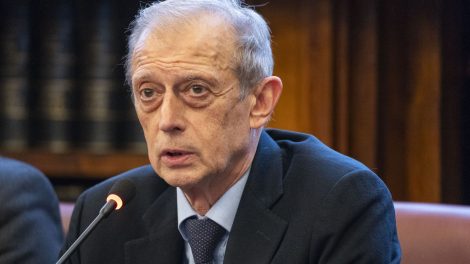
In September 2023, Odessa hosted the first visit of Italy’s Special Envoy for Ukraine, Davide La Cecilia—former Ambassador to Kyiv until 2020—accompanied by the head of UNESCO’s Kyiv office, Chiara Dezzi Bardeschi, and two prominent figures from Italian cultural institutions: Alessandro Giuli, then President of the MAXXI Museum in Rome (and today Italy’s Culture Minister), and the architect Stefano Boeri, President of the Triennale in Milan.
This initial mission triggered a planning process that culminated on 11 June 2024 in Berlin, where Foreign Minister Tajani and Ukraine’s Minister for Infrastructure Development, Vasyl Shkurakov, signed the Memorandum on the “Italian Patronage for the Reconstruction of Odessa and Its Region”, in the presence of Odessa’s mayor, Gennadiy Trukhanov.
Several months earlier, Italy had opened an office of the Italian Agency for Development Cooperation (AICS) in Kyiv to coordinate humanitarian assistance and monitor its effectiveness—another sign of Italy’s institutional consolidation in Ukraine.
The Memorandum of Understanding set out Italy’s new strategic framework for Ukraine. In addition to continued military support, the plan included a structured portfolio of humanitarian, cultural and economic-development initiatives centred on Odessa and its wider region. The overarching aim was to create an environment conducive to Italian investment and industrial partnerships, laying the groundwork for post-war reconstruction.
Ukraine Rediscovers Italy
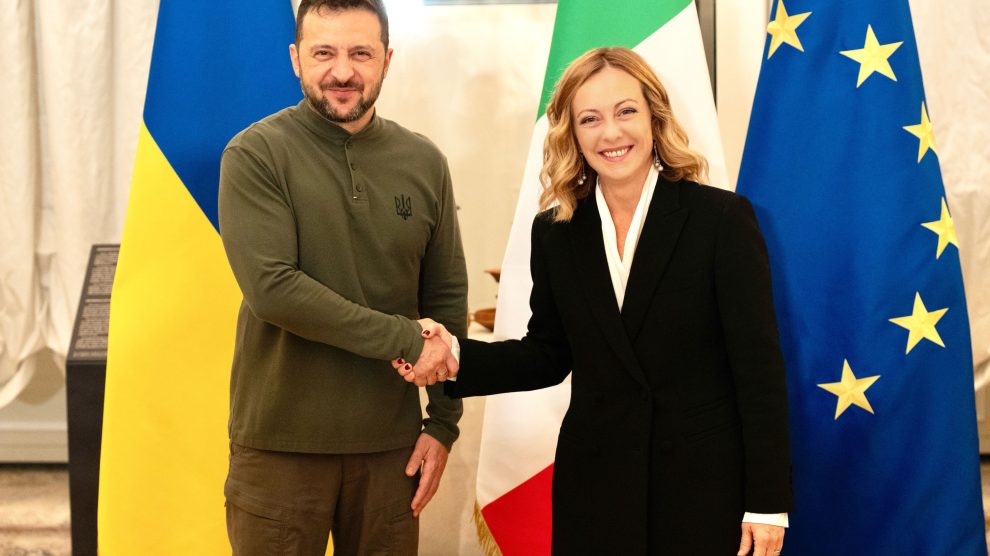
Alongside these developments in Italian foreign policy, Ukraine’s political engagement with Italy intensified. President Volodymyr Zelensky’s increasingly frequent visits to Rome—where he met Prime Minister Meloni, President Sergio Mattarella and both Popes Francis and Leo XIV—reflected this growing closeness.
Moreover, several senior officials within the Office of the President of Ukraine have served at the Ukrainian Embassy in Rome and have long-standing expertise in Italy–Ukraine relations. Former Foreign Minister Dmytro Kuleba himself lived in Italy for years.
Italy has gradually become a point of political stability for Ukraine at a time when France, Germany and the United Kingdom have experienced recurring governmental turbulence. Furthermore, the particularly cordial relationship between the Meloni government and the new Trump administration offers Italy the potential to act as a moderating interlocutor in the increasingly complex triangle of Ukraine–US relations.
It is also important to note the unique role played by the ambassadors of the G7 in Kyiv. They are deeply involved in Ukraine’s reform process and meet regularly with Ukrainian ministers, monitoring legislation and maintaining an institutionalised right to comment—a rare example of G7 influence in an international crisis, in which Italy participates as a full stakeholder.
Following the tenure of Pierfrancesco Zazo, in July 2024, Italy appointed Carlo Formosa as its new ambassador to Kyiv. Formosa is an experienced diplomat serving in difficult countries such as Iran and Afghanistan, and previously served as Vice-President of Leonardo, Italy’s leading defence and aerospace group, bringing valuable expertise for deepening the Italian–Ukrainian defence partnership.
Why Odessa?
The selection of Odessa was initially informed by historical and cultural considerations. The city was founded in 1794 by the Neapolitan commander José de Ribas, serving under Catherine the Great, and Italian immigrants mainly from the Kingdom of the Two Sicilies constituted its first governing class. Many of Odessa’s major architectural landmarks were designed by Italian architects.
However, the choice of Ukraine’s maritime capital also aligns closely with Italian national interests. Odessa’s significance—making it a primary target of Russian military strategy—rests on several factors:
- Economy. The seven ports of the Odessa region constitute the gateway for 90 per cent of Ukraine’s exports. Whoever controls Odessa effectively controls the country’s economy. Italy is a major importer of ferrous materials and is well positioned to become the principal entry point for exports of Ukrainian “green steel”. Several Italian industrial sectors also depend on Ukrainian agricultural commodities. During the Russian naval blockade of Ukrainian ports in 2022, the Italian livestock sector was severely affected by the shortage of Ukrainian corn used in animal feed, while the interruption of wheat imports negatively impacted Italian pasta producers.
- Culture. Odessa is the most internationally renowned Ukrainian city, represented in cinema, literature, music and the arts. The name “Odessa” functions as a powerful brand, widely used in design and industrial marketing. Among all Ukrainian cities, Odessa offers the greatest international visibility to those who launch initiatives there.
- Society. Since its foundation, Odessa has embodied cultural, religious and linguistic tolerance. It represents a multicultural model of Ukrainian development, in contrast to more mono-linguistic nationalist approaches. This makes it an ideal setting for fostering dialogue around the country’s reconstruction—both physical and moral.
- Sea Security. Ukraine’s maritime posture, aimed at safeguarding commercial traffic, has turned Odessa into the principal guardian of the Black Sea, displacing the role of Sevastopol, which has been effectively left by the Russian fleet. Today, the city serves as one of the world’s most advanced workshops for new naval military technologies.
- Maritime and military education. Odessa has been instrumental in shaping Ukraine’s ability to navigate the seas and also to fight. Its naval academies train the highest global proportion of merchant navy officers of European origin. Moreover, Ukraine’s leading military figures—Generals Zaluzhny and Budanov—graduated from Odessa’s military school of infantry.
The Ukraine Reconstruction Conference (URC2025)
“Italy has chosen to take responsibility for some of the symbolic places that form the identity mosaic of the Ukrainian nation: that place is Odessa.” With these words, Prime Minister Giorgia Meloni opened the Ukraine Reconstruction Conference, highlighting the role of cultural diplomacy and non-profit cooperation as a pathway to facilitating Italian private-sector engagement. In fact, some national industrial champions broke the ice.
During URC2025 in Rome, Fincantieri, Europe’s largest shipbuilding group, announced a pilot project for the defence of the port of Odessa, based on innovative above-water and underwater technologies. The initiative aligns with the city’s strategic relevance in Black Sea security and with Italy’s broader industrial ambitions in the naval sector. It is notable that in January 2025, Fincantieri completed the acquisition from the Leonardo Group the company UAS Underwater Business, specialising in the protection of port infrastructure from submarines, naval drones, and torpedoes.
Moreover, Italy’s largest construction firm, Webuild, signed three agreements:
- a €2 billion contract with Automagistral, an Odessa-based road construction company;
- a €600 million agreement with Ukrhydroenergo for energy production projects;
- a cooperation framework with the Ukrainian Agency for Restoration.
Foreign Interests in Odessa
Italy enters a landscape in Odessa that is already partially occupied by significant foreign investments, primarily concentrated around the region’s major ports—Odessa, Chornomorsk, and Yuzhny. The principal international actors include:
- Germany. The largest German infrastructure investment in Ukraine is the CTO–Container Terminal Odessa, operated by HHLA, Germany’s leading port operator, whose majority shareholder is the City of Hamburg. HHLA also operates terminals in the ports of Tallinn and Trieste.
- Dubai (United Arab Emirates). DP World, the flagship port logistics company of Dubai, controls TIS Group, the largest private operator in Ukraine’s primary port, Yuzhny, located north of Odessa.
- United States. The largest US investment in Ukrainian logistics—USD 150 million—is the Neptune Grain Terminal, completed in 2018 inside the port of Yuzhny and owned by the Minneapolis-based Cargill group.
- China. Chinese state-owned firms like COFCO invested in facilities in Chornomorsk and Yuzhny to boost grain exports, though overall Chinese FDI in Ukraine remains relatively modest compared to other partners. China is the largest importer of Ukrainian corn and barley (20% of total exports in 2021) and the second-largest one of sunflower oil (15 %).
- Switzerland. The two major Swiss companies with operations in Odessa are: Risoil S.A., an agro-industrial holding and the main operator of the port of Chornomorsk; and the Mediterranean Shipping Company (MSC S.A.), the world’s largest shipping firm. Both companies are legally headquartered in Geneva, although neither is Swiss-owned.
- Italy. The most relevant direct Italian investment is the unified communications company Wildix, although the aforementioned MSC belongs to the Neapolitan Aponte family.
- Singapore. The Asian city-state’s main direct investment is Delta Wilmar Group, a Ukrainian company part of the Wilmar International transnational agro-industrial corporation. The Group includes two plants in the Odessa region for oilseeds and tropic oils processing.
- The Netherlands. The Louis Dreyfus Company (LDC) owns a major terminal in Odessa’s sea port. The historic French mercantile group, active in agriculture, finance, food processing, and international shipping, is headquartered in Amsterdam with operational offices in Rotterdam. Additionally, the Dutch Entrepreneurial Development Bank—51 per cent owned by the Dutch state—holds a stake in Allseeds Black Sea, one of Ukraine’s largest private exporters of sunflower oil, which operates a new oil-loading terminal in Yuzhny port.
Odessa as an Ideal Environment for Italian Investment
Italy’s emerging strategy toward Ukraine marks a notable departure from the traditional patterns of its foreign policy. First, Italy demonstrates a new readiness to articulate its national interests openly, including through the mobilisation of major industrial actors. This new style of Italian diplomacy is consistent with the new “Action Plan for Italian Exports to Non-EU Markets” launched in May 2025. Ukraine falls into this category.
Second, choosing to focus on a specific territory—Odessa and its region—represents an approach not seen since the distant era in which European powers held concessions in foreign cities (such as Italy’s concession in Tianjin, China). Crucially, Odessa’s geographical position and cultural environment provide an exceptionally favourable setting for the combined application of cultural projects, humanitarian aid, and national economic interests. These conditions make the city and its region particularly well suited to advancing Italy’s strategic objectives in Ukraine.
The author, Ugo Poletti, is the Special Representative for Ukraine of Med-Or Italian Foundation and Founder of The Odessa Journal