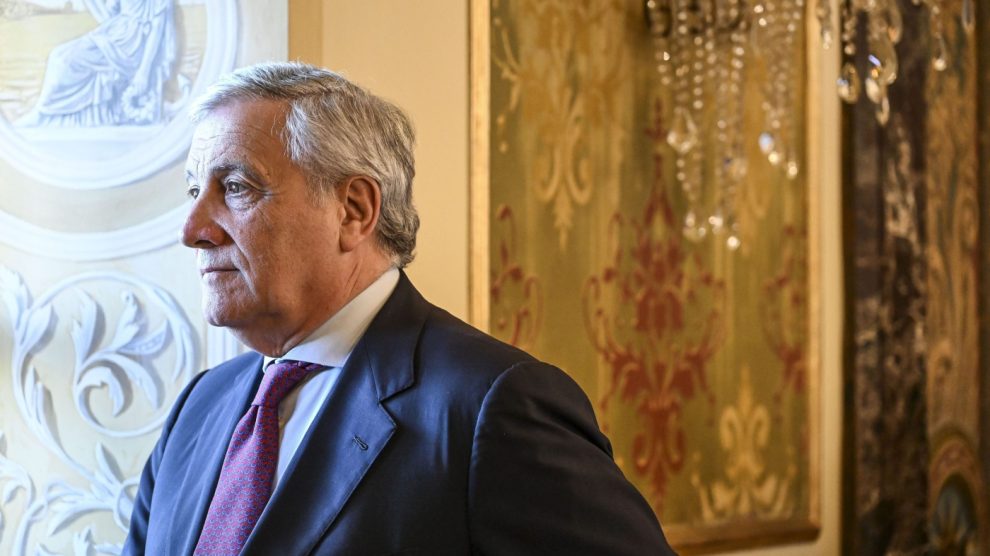
Decoding the news: From Iran to Olympic security, and from public opinion to critical raw materials, Italy’s foreign minister Antonio Tajani is increasingly acting as a political balancer between Washington and European societies showing growing skepticism toward U.S. power under Donald Trump.
Iran: Italy aligns with the US. On Thursday, EU foreign ministers will vote on whether to designate Iran’s Islamic Revolutionary Guard Corps (IRGC) as a terrorist organisation. Italy has emerged as one of the strongest backers of the move.
- Italy’s shift: Rome has announced it will push for the designation, citing the violent repression of protests in Iran. Tajani described the events as “a massacre,” stressing that the Iranian regime produced “thousands and thousands of deaths.” “This is unacceptable,” he said.
- Transatlantic alignment: Italy’s position brings Rome closer to Washington and to several Gulf countries that already regard the IRGC as a destabilising and terrorist actor.
- EU split: Germany supports the Italian proposal, while France remains the main holdout, warning that blacklisting the IRGC would further shrink diplomatic space with Tehran and would be largely symbolic.
- Iran responded by summoning Italy’s ambassador in Tehran, a move Tajani interpreted as a deliberate political signal aimed at testing European cohesion and Rome’s alignment within the transatlantic framework.
ICE and the Olympics: defusing a political storm. A similar balancing effort is visible in the controversy surrounding the presence of U.S. Immigration and Customs Enforcement (ICE) at the Milan–Cortina Winter Olympics.
- Tajani’s line: The foreign minister sought to calm tensions, stressing that “it’s not as if the SS are coming,” explicitly rejecting comparisons with historical paramilitary forces.
- He also underlined that “these are not the ones who were on the streets of Minneapolis,” distancing the Italian government from U.S. domestic deportation practices.
- Technical clarification: Interior Minister Matteo Piantedosi explained that only Homeland Security Investigations (HSI), ICE’s investigative branch, will be involved, with no public-order role.
- According to U.S. authorities, HSI will support the State Department’s Diplomatic Security Service and Italian counterparts in vetting and mitigating risks linked to transnational criminal organisations, including trafficking and cybercrime.
- All security operations remain under Italian authority, with a U.S. operations room confined to the Milan consulate. Italy’s own security posture will rely on around 6,000 officers, with the planned use of drones and aerial surveillance.
- Not only ICE: The U.S. presence will not be unique.
- Qatar has also deployed a dedicated security force to Italy to contribute to securing the Milan–Cortina 2026 Winter Olympic Games, operating in coordination with Italian authorities after completing readiness preparations in line with the highest international standards.
- The comparison underscores how multinational security cooperation is a routine feature of major global events — not an exceptional concession to Washington — and one in which Italian security forces themselves regularly participate abroad when allies host major international events.
Domestic backlash and political polarisation. Despite these clarifications, the issue has triggered a strong domestic reaction.
- Local opposition: Milan mayor Giuseppe Sala and several centre-left and left-wing figures have said ICE is “not welcome,” framing the issue in terms of values and human rights.
- Public mood: Petitions and protests suggest the controversy resonates beyond party politics, tapping into broader unease about the current U.S. administration.
- Polling signal: A late-January SWG poll shows a significant share of Italians believe global politics is increasingly shaped by the “law of the strongest,” and that Donald Trump’s approach is putting European diplomacy under strain.
The Trump factor and the risk of anti-American sentiment. The ICE case fits into a wider pattern.
- Repeated frictions: From tariff threats to Greenland, and from migration policy to rhetoric targeting allies, Trump’s posture has fuelled tensions with European public opinion.
- Afghanistan precedent: Days ago, Trump’s remarks minimising NATO allies’ role in Afghanistan prompted a rare public rebuke from the Italian government, which recalled Italy’s responsibility for Regional Command West and the cost of 53 fallen soldiers, warning that “friendship requires respect.”
Public opinion as a strategic constraint. For European governments, the challenge is no longer confined to diplomatic palaces.
- The democratic variable: “This is a question of people, not of government buildings,” a diplomatic source explains.
- Democratic pressure: SWG data show that one Italian in three believes the current international climate seriously endangers global peace, while majorities see coercive power politics as a lasting trend rather than a temporary phase.
- Tajani’s role: Managing the U.S. relationship today means preserving strategic alignment without alienating domestic audiences increasingly wary of American leadership.
What we’re watching: Washington and critical raw materials. Tajani will travel to Washington next week.
- Key date: On Wednesday, 4 February, he will attend a U.S.-convened ministerial meeting on critical minerals at the Harry S. Truman Building.
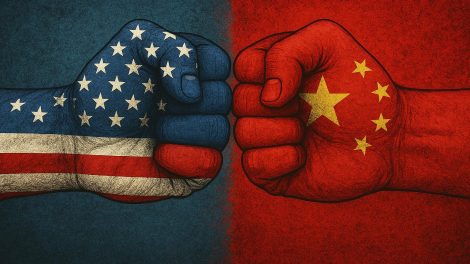
- Bigger picture: The United States is building a closed-loop economic security architecture around critical raw materials — often described as Pax Silica — aimed at de-risking from China’s dominance across strategic supply chains.
Italy inside the ring:
- Strategic necessity: For Italy, remaining outside this emerging system is unrealistic, given its impact on advanced manufacturing, the energy transition and future technologies.
- Delicate balance: Governments must weigh public sentiment against the tangible benefits produced by the transatlantic alliance.
- Message to Washington: In democratic societies, strategic leadership requires not only power, but sustained attention to allies’ public opinion.