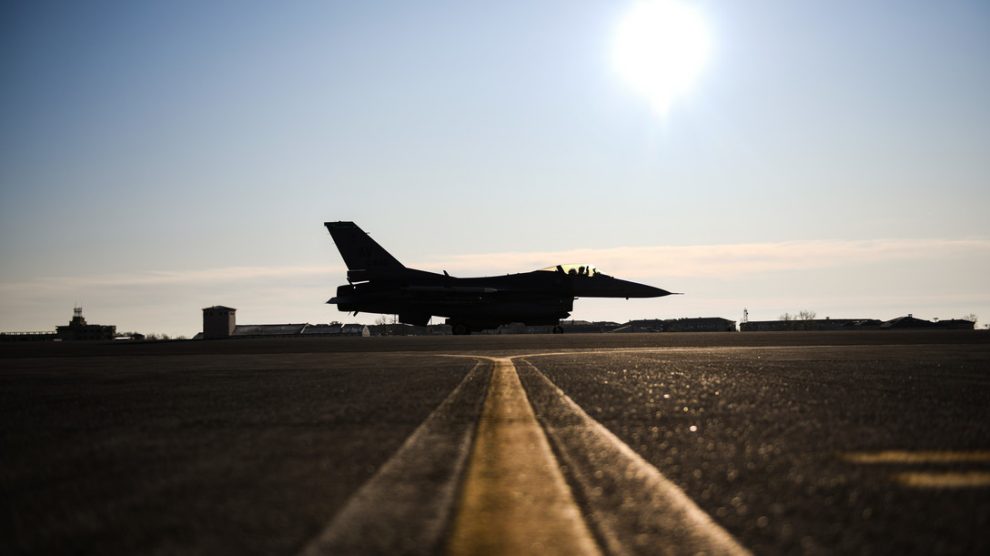
In recent hours, news emerged that Italian authorities refused to authorize the use of the Sigonella air base by U.S. bombers. According to available information, the aircraft were not engaged in logistical or technical activities already covered by existing agreements, making a specific authorization necessary—one that had not been requested. But was there more behind this decision?
Q: How do you interpret what happened last Friday?
A: As a simple procedural flaw. Most likely, the required notification had not been provided in time, as our defense minister indicated—and I believe that to be the case.
- There may have been ambiguity in how access rules were interpreted, and it is likely that the Italian minister opted for a formal approach, prioritizing respect for national sovereignty and the agreements in place with the United States. That is the formal side of the story. The substantive side is different.
Q: What does the substantive side imply?
A: Substantively, it is clear that the government is adopting a position more aligned with domestic consensus. Essentially, it is a position against Trump—or more precisely, against the war in the Gulf, and also against Israel.
- The results of the March referendum show that alignment with the United States has become politically costly across a broad segment of the population, especially among younger voters.
- It does not surprise me, therefore, that the government is seeking to assert national sovereignty in a way that also signals distance from the Trump administration.
Q: Do you think this episode could negatively affect U.S.-Italy relations?
A: No, I don’t think so. My sense is that the formal gesture has been significantly softened at the informal level. The reality is that Italy cannot afford an excessive divergence from the United States, for a variety of reasons.
- That is why I believe that alongside the formal denial, there was likely a more conciliatory informal communication.
Q: So should this not be seen as a broader repositioning of Rome, perhaps closer to other European actors?
A: It is evident that Italy is currently moving toward greater convergence with Germany, France, and the United Kingdom, as it sees value in strengthening alignment within the European Union.
- Italy’s position vis-à-vis the United States is one of distance regarding the war, but within a broader framework of friendship and limited divergence. Again, the underlying driver is domestic politics.
- The government is in a somewhat tense phase following a significant defeat in the referendum, and there may be uncertainty about how to manage relations with the U.S. administration—an administration that, incidentally, has recently shown particular courtesy toward Italy.
Q: Are these uncertainties being exploited by the opposition?
A: This is entirely normal. The opposition, buoyed by the referendum result, is energized and naturally more aggressive. The governing majority, sensing electoral risk, tends to lower the tone and present itself as a responsible force.
- These are standard dynamics of domestic political competition and should not be overstated. They are part of the normal democratic process.
Q: In the public imagination, Sigonella often recalls the events of 1985—a parallel quickly drawn by many media outlets. Do you think this comparison is valid?
A: It seems like a stretch to me—nothing more.