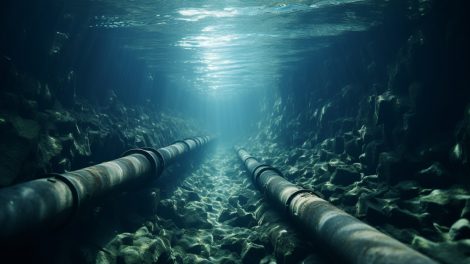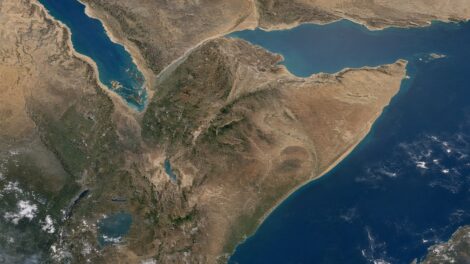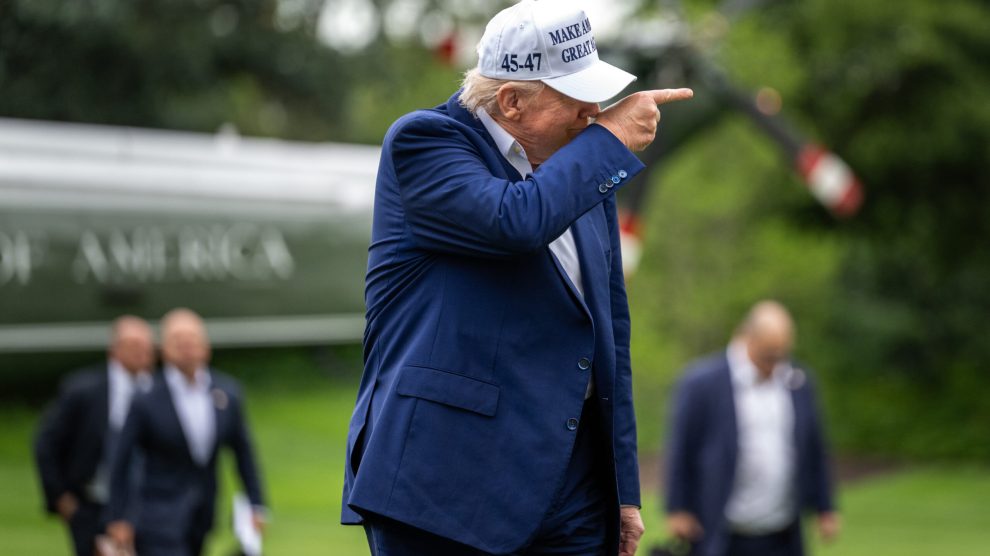
The United States has decided to impose a naval blockade on the Strait of Hormuz, marking a sharp escalation in its confrontation with Iran following the collapse of high-level negotiations in Pakistan. The move, which came after talks led by vice-president JD Vance stalled, underscores the growing difficulty faced by Donald Trump in translating military pressure into a sustainable political outcome.
A shift from diplomacy to coercion. Washington’s stated objective is to curb Iran’s ability to finance its war effort through oil exports. Yet the instrument chosen — an embargo targeting one of the world’s most critical energy arteries — introduces risks that extend far beyond the bilateral crisis.
- A significant share of global oil supply passes through Hormuz, making any disruption a source of systemic instability with repercussions already being felt across global markets, from Europe to Asia.
- According to the Pentagon, the blockade will be “enforced impartially against vessels of all nations entering or departing Iranian ports and coastal areas, including all Iranian ports on the Arabian Gulf and Gulf of Oman,” a formulation that highlights both the scope and the potential geopolitical sensitivity of the operation.
A fragile ceasefire at risk. The decision also threatens to undermine an already precarious ceasefire. “The ceasefire is, to put it mildly, fragile. It could collapse at any moment with a resumption of hostilities,” said Giorgio Cafiero, chief executive of Gulf State Analytics, a Washington-based firm advising companies and governments on Gulf dynamics.
- According to Cafiero, Tehran remains deeply sceptical of Washington’s intentions, shaped by recent rounds of inconclusive negotiations.
- “The Iranians have concerns about the U.S. and Israel agreeing to this pause simply as a means of buying some time to re-strategize before resuming their military operations,” he noted, adding that Iran’s leadership seriously questions whether the United States — particularly under Trump — can negotiate in good faith.
- This mistrust has direct implications for escalation dynamics. Cafiero warned that, should hostilities resume, Iran would be unlikely to distinguish between US and Israeli targets in its response.
- “If the ceasefire suddenly falls apart… I doubt that Tehran will distinguish between the two when it responds,” he said. “I expect Iranian retaliation… to entail Tehran hitting Israel much harder and with less concern for loss of civilian life.”
- At the core of this posture is a strategic imperative to restore deterrence.
- Tehran, Cafiero explained, is determined to avoid becoming “another Lebanon” or “another Gaza,” where periodic strikes become normalised. If the war resumes, Iran will seek to “do all it can to try to re-establish its deterrence capacity.”
A competing view: Iran under pressure. This assessment contrasts with a different interpretation emerging in Washington policy circles. Zineb Riboua of the Hudson Institute argues that the trajectory of the conflict points towards a progressively weakened Iran.
- “I think that we’re going towards one specific scenario: Iran gets weakened, cornered, and isolated,” she said, citing mounting economic pressure, sanctions, and declining coordination with regional proxies as key indicators.
- While acknowledging that the Islamic Revolutionary Guard Corps continues to project defiance, Riboua stressed that its operational position has deteriorated.
- She observed that the United States is consolidating its military presence to prevent Iran from gaining leverage over Hormuz, effectively compelling Tehran to choose from a limited set of options.
- “I suspect that Trump is pressing them towards total surrender,” she said, adding that sustained pressure is exposing structural vulnerabilities within Iran’s security apparatus. In her view, the IRGC “has never been so weak.”
Strategic uncertainty and escalation risks. The divergence between these two readings highlights a broader uncertainty over the effectiveness of Washington’s strategy. While the blockade aims to constrain Iran’s options, it may simultaneously reinforce Tehran’s incentive to escalate asymmetrically, leveraging the strategic centrality of Hormuz.
- The risk of horizontal escalation further complicates the picture. The enforcement of the blockade — particularly against vessels linked to third countries — could trigger tensions with major powers such as China or India, expanding the geopolitical scope of the crisis.
- At the same time, the move marks a departure from earlier US efforts to stabilise energy markets by tolerating limited Iranian exports.
A widening Western divide. Beyond the military dimension, the crisis is also exposing political fractures within the West. Donald Trump has publicly attacked Pope Leo XIV, accusing the pontiff of weakness and interference, while the Vatican has warned against the moral implications of the conflict and the risks of escalation.
- In remarks reported by Reuters, the Pope said he would not stop “speaking out against war,” reinforcing a broader tension between a power-based approach centred on coercion and a normative framework emphasising restraint and proportionality.
- For a deeper look at the growing confrontation between the Trump administration and the Vatican, see our “Vatican Archives” here.
A narrowing path forward. Ultimately, the naval blockade represents an attempt by Washington to regain the initiative after the failure of negotiations.
- Yet it also narrows the margin for manoeuvre. If it fails to produce concessions, the United States risks becoming more deeply entangled in a conflict in which Iran — despite mounting pressure — retains the capacity to shape the tempo and direction of escalation.
- The confrontation with the Vatican, meanwhile, points to a growing sense of political strain, suggesting that the administration’s approach may face challenges not only abroad but also within its broader international and domestic constituencies.