
Italy has ended its military deployment in Iraq after 12 years, Defense Minister Guido Crosetto told Avvenire, describing the withdrawal as a shift toward a new phase of security cooperation rather than the end of Rome’s engagement with Baghdad.
Why it matters: The last Italian personnel have now left Iraq, closing the country’s deployment within the anti-ISIS coalition. But Crosetto says Rome intends to maintain defense ties through training, capacity building and bilateral cooperation, while two Carabinieri remain under the EU’s advisory mission.
What he’s saying: “Italy’s armed forces, together with those of the other coalition and NATO countries, left Iraqi territory by the end of September,” Crosetto told Avvenire.
- “Not because our presence is no longer necessary, but because we are entering a different phase, agreed with the Iraqi authorities and partner countries, which provides for Iraq to assume full responsibility for its security.”
- That transition, according to Crosetto, had already changed the nature of the Italian mission.
- “In recent years, Italian forces have participated in NATO’s Resolute Support operation and the anti-ISIS coalition in a role that has increasingly shifted toward advisory and capacity-building activities, without combat duties.”
Zoom in: Rome had planned to withdraw most of its personnel in March, but an attack on Erbil international airport in Iraqi Kurdistan accelerated the process.
- Crosetto said the last military personnel involved in the European logistics network have now also returned to Italy.
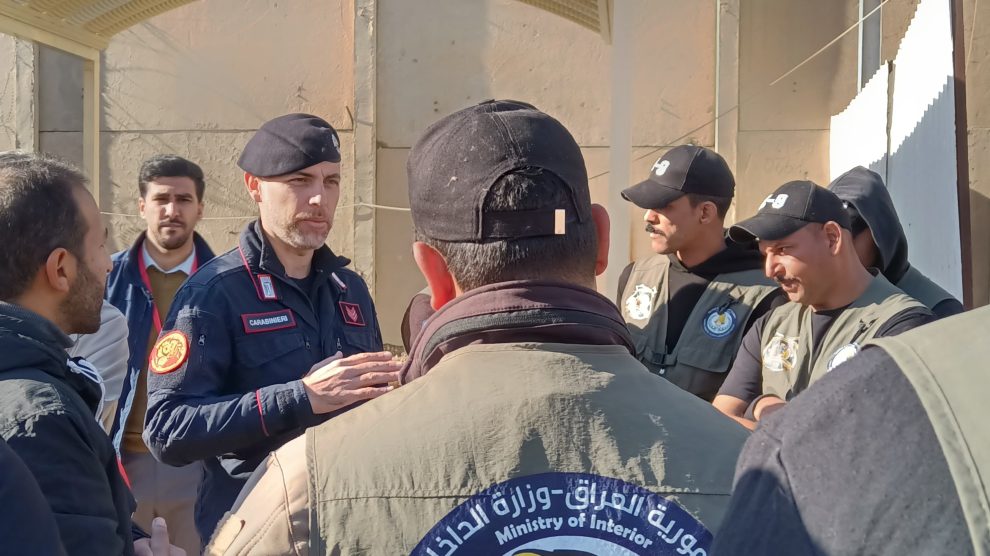
What stays: Italy is keeping a limited presence: two Carabinieri officers remain in Baghdad as part of EUAM-Iraq, the European Union’s advisory mission.
- And Crosetto stressed that the end of the contingent should not be read as the end of Italy’s security relationship with the country.
- “The withdrawal of the contingent does not mean the end of relations with an important and friendly country, nor does it preclude future forms of bilateral cooperation.”
- “On the contrary, we want to strengthen this relationship.”
What comes next: Crosetto laid out what that relationship could look like after the withdrawal.
- “The form of the relationship will change: fewer military personnel on the ground and more cooperation, training, exchanges of expertise and development of the capabilities of the Iraqi armed forces.”
- “Through this new phase, Iraq assumes increasingly greater responsibility for the security of its own territory, but Italy will continue to play its part,” Crosetto said.
- He added that Italy would remain alongside Iraq’s armed forces and those of Iraqi Kurdistan.
The bottom line: Crosetto framed the withdrawal as the completion of one phase of Italy’s involvement in Iraq and the beginning of another.
- “We will continue to stand alongside the Iraqi armed forces and those of Iraqi Kurdistan, in a relationship built over years of professionalism, spirit of sacrifice and a sense of responsibility.”
(Photo: X, @EuamIraq)