A call to exchange greetings on the last day of 2025, but above all, a diplomatic contact meant to shape the work of the year ahead.
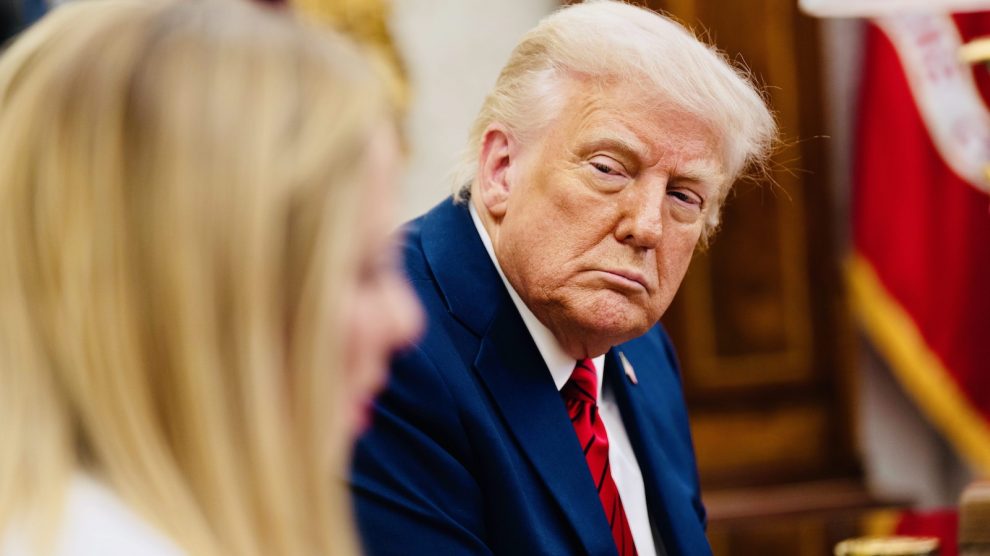
The phone call: Italian Prime Minister Giorgia Meloni speaks with U.S. President Donald Trump just hours before midnight: a brief call, yet substantive enough to allow an exchange of views on the main international crises and several bilateral issues of interest. At the centre of the conversation are the war in Ukraine, the crisis in Gaza, and Italy’s role in various multilateral frameworks.
The pasta deal: how the agreement came together. Among the first tangible outcomes highlighted by Palazzo Chigi is the US decision to sharply reduce tariffs on one of Italy’s flagship products: pasta. The decision was finalised in the final hours of the year, but the groundwork had been laid over months.
- The effort was coordinated by the Foreign Ministry, with the Ministry of Agriculture playing a key role.
- In Washington, Ambassador Marco Peronaci closely followed the dossier in dealings with the US administration and Congress.
- In Europe, Fratelli d’Italia’s head of delegation Carlo Fidanza helped maintain the political channel with American interlocutors, underscoring Italy’s weight as a reliable partner.
- A result Meloni explicitly recalled in her conversation with Trump.
Ukraine, Gaza, and the Quirinale.
- Ukraine: The most sensitive dossier remains Ukraine. Meloni reiterates to Trump several red lines: Italy does not intend to deploy troops on the ground, and any potential territorial concessions are a matter exclusively for Kyiv.
- This stance reflects domestic constraints and aligns with a position shared by several European allies. Italian support remains focused primarily on civilian assistance and the protection of energy infrastructure.
- Within this framework, Rome confirms its engagement in European security channels, while closely monitoring diplomatic initiatives that could emerge in the coming weeks.
- Gaza and the Middle East: In the Middle East, Meloni stresses Italy’s commitment to strengthening the truce in Gaza and calls for Rome to have a role in the future management board of the Strip.
- By the end of the month, the first Italian trainers could be deployed, while from January 50–100 Italian personnel are expected to be sent to Jordan to train Palestinian police forces, with the option of a later expansion.
- A different assessment applies to the possible deployment of troops for a peacekeeping mission: a scenario seen as highly problematic, both due to parliamentary hurdles and the lessons learned from Afghanistan.
L’Italia c’è! PM Meloni underscores to President Trump the value of Italy’s participation in humanitarian missions and the attention paid to young people and future (common) challenges, in a 2026 that will mark the 80th anniversary of the Republic and the so-called “250/165 Anniversary”.
- A message that reinforces the narrative of an Italy engaged internationally while remaining attentive to stability and domestic legitimacy.
Why it matters: The call does not resolve the strategic knots, but it clarifies Italy’s priorities and signals Rome’s determination to remain plugged into the key tables—balancing military caution, diplomatic activism, and careful management of the relationship with Washington.