
The objective is clear: to secure America’s immediate neighbourhood and the broader Western Hemisphere by limiting Chinese and Russian influence.
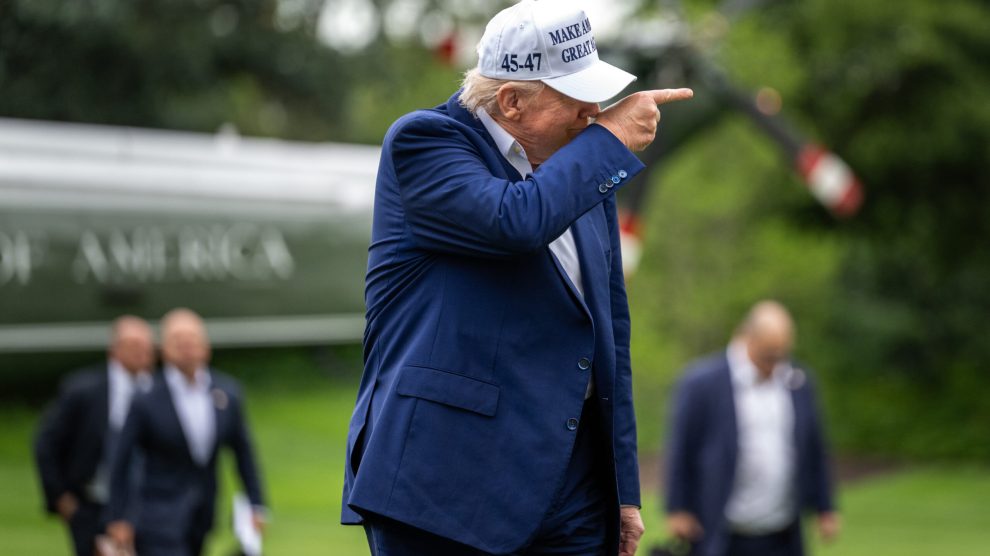
The big picture: U.S. policy is primarily driven by geopolitical and security imperatives and fits squarely within the framework of great-power competition. Shortly after the operation, U.S. President Donald Trump stated at a press conference, “We are reasserting American power.”
First, the operation was not sudden: The U.S. operation followed months of pressure on the Venezuelan regime to curb drug trafficking. In 2020, Maduro was indicted in the United States on multiple charges related to drug trafficking and associated criminal activities, including narcoterrorism.
- The U.S. District Court for the Southern District of New York federal indictment reflected longstanding U.S. allegations that Maduro’s government enabled large-scale cocaine smuggling in cooperation with criminal groups.
- The operation did not materialise overnight. It followed repeated warnings and long-standing signals that such action was likely. There was even a $50 million bounty on Nicolás Maduro for information leading to his arrest or conviction on drug-trafficking–related charges.
- The U.S. National Security Strategy explicitly defines drug trafficking as a national security threat, framing efforts to stop it not just as law enforcement, but as a core priority tied to homeland defence and great-power competition.
Second, the security implications are significant: This operation carries major implications for U.S., regional, and global security. The removal of an openly anti-U.S. dictator implicated in narcotics trafficking, drivers of irregular migration, and the granting of strategic access to China, Russia, and Iran in the Western Hemisphere represents a net gain for international stability.
- From this perspective, the operation is more than a signal to hostile governments in the hemisphere, such as Cuba and Nicaragua. It represents a broader reassertion of deterrence.
- That message will be clearly registered in Beijing and Moscow as evidence of the administration’s determination to uphold a security order aligned with U.S. interests.
- Washington has also signalled a long-overdue commitment to hemispheric security amid reports of Chinese PLA war games in the Western Hemisphere and Beijing’s refusal, in its new Latin America strategy, to acknowledge the region’s special importance to U.S. security.
Third, a potential democratic opening: The U.S. operation that removed Venezuela’s long-standing authoritarian regime — first under Hugo Chávez and then Nicolás Maduro — marks the beginning of a possible democratic restoration in the country.
- After decades of hardship and violence, Venezuelans are eager to reclaim their institutions. There is renewed hope that President-elect González, widely viewed as the legitimate winner of the 2024 elections, will assume office.
What this was not: This was not “regime change” in the way some portray it. Maduro was not recognised as a legitimate leader by much of the international community, was voted out in 2024, and had become increasingly isolated under international warrants and indictments.
- The International Criminal Court also has an ongoing investigation into alleged crimes against humanity in Venezuela that began in 2021.
- Rather than undermining multilateralism and international law, yesterday’s events highlight that multilateral efforts had already failed years ago to stop democratic erosion, criminality, and narcotics trafficking.
What comes next: From yesterday, Venezuela has entered a new and uncertain — but hopeful — phase, with an opportunity for better governance and a freer, more prosperous future.
The bottom line: The U.S. operation’s success opens a rare window for Washington to translate its security objectives into tangible strategic gains for the United States and the wider international community.
- For Venezuela’s opposition and civil society, this moment represents a narrow but pivotal turning point that will demand swift coordination and mobilisation to achieve lasting political change.
Key takeaway: Energy security will be equally critical to Venezuela’s future. The character of any transitional government, the broader security environment, the protection of oil fields and ports, and U.S. decisions on sanctions and revenue management will determine whether production can resume safely and sustainably — in support of both national recovery and global energy markets.