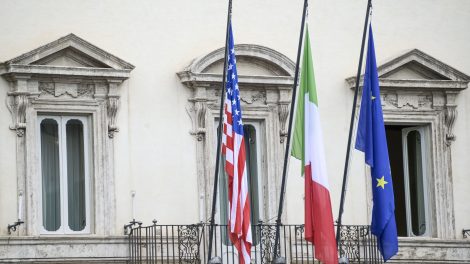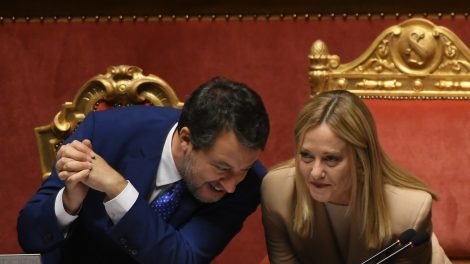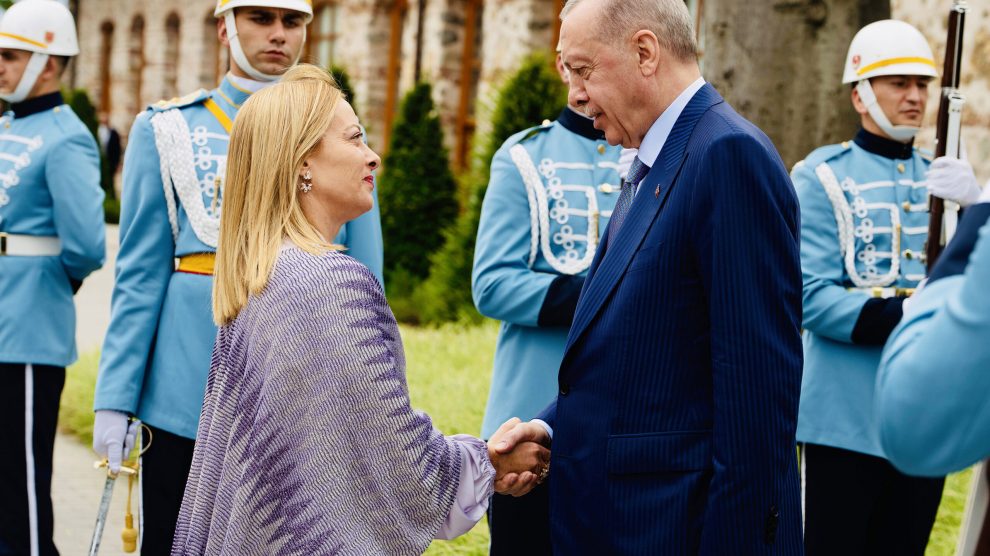
At the leaders’ level meeting of the Coalition of the Willing, scheduled for Tuesday afternoon in Paris, Italian Prime Minister Giorgia Meloni will reaffirm Italy’s stance on security guarantees, coordination with the U.S. plan, and the EU’s structural role in supporting Ukraine.
Who’s there: The summit, hosted by French President Emmanuel Macron, will bring together key European leaders, representatives from the United States, Ukraine, and NATO, alongside European Commission President Ursula von der Leyen and Turkish Foreign Minister Hakan Fidan.
Between the lines: For Rome, the core issue remains security guarantees, seen as a necessary political step to give credibility to Ukraine’s European path. The EU’s commitment is reflected not only in financial and military support, but also in the accession perspective as a long-term strategic framework.
Turkey’s move: Ankara is once again presenting itself as a key diplomatic actor.
- Foreign Minister Fidan will bring to the table Turkey’s position on the “need for concrete diplomatic steps toward a lasting peace” and will reiterate Ankara’s readiness to host new direct talks between Ukraine and Russia, building on the previous negotiation rounds held in Istanbul and the prisoner exchanges already carried out.
Black Sea factor: Security in the Black Sea remains a strategic priority for Turkey, particularly in light of drone attacks on ships and ports in the area.
- It is against this backdrop that the recent phone call between Recep Tayyip Erdoğan and Donald Trump should be read, focused on the war and its regional repercussions.
EU money: On the financial front, Brussels is accelerating. The Commission plans to disburse the first tranche of the €90 billion loan for Kyiv, agreed at the December European Council, by the second quarter of 2026 at the latest.
- The process requires a qualified majority vote in the Council and the consent of the European Parliament, alongside adjustments to the Multiannual Financial Framework.
The outlier: Hungary remains outside the standard line. Viktor Orbán has ruled out any contribution from Budapest to loans or military aid for Ukraine, reiterating opposition to what he describes as an EU push toward a “war economy.”
Between the lines: The summit is also significant because it will mark the first meeting of European leaders since the capture of the head of the Venezuelan regime, President Nicolás Maduro, by the United States.
The bottom line: As Brussels strengthens the European pillar of support for Kyiv and Rome continues to push security guarantees as a political linchpin, Ankara is seeking to carve out an autonomous yet complementary diplomatic role.
- Two different approaches, reflecting distinct interests, that are nonetheless set to intersect at the most delicate phase of the conflict.