At the Elysee’s meeting of the “Coalition of the Willing,” leaders aligned around a familiar but still fragile goal: building a durable security architecture for Ukraine that allows diplomacy to work without freezing instability in place. Around 30 Western leaders attended, along with two U.S. envoys, Steve Witkoff and Jared Kushner.
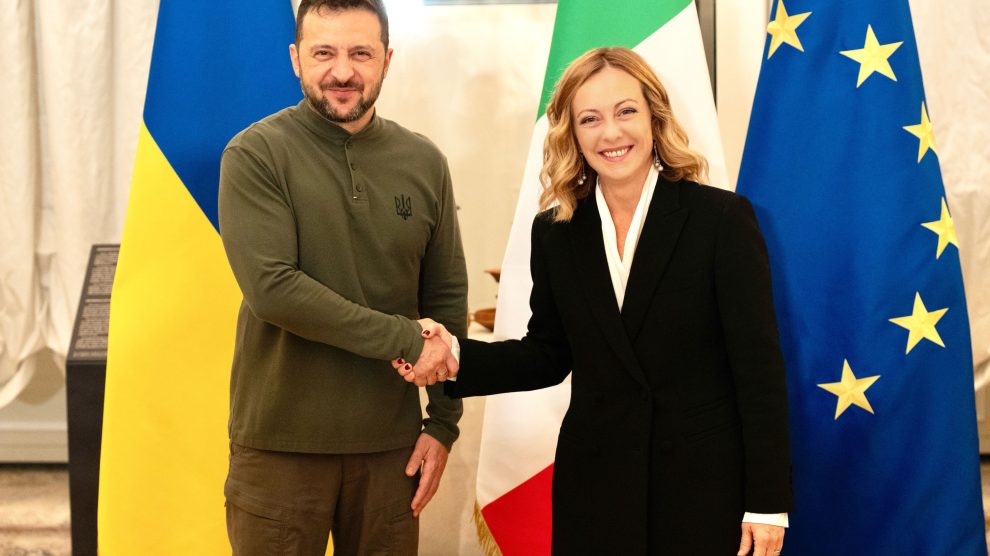
Italy’s angle: Italian officials describe the talks as “constructive and concrete,” noting a high degree of convergence among Ukraine, the U.S., Europe, and other partners. That convergence follows a line long promoted by Rome: security guarantees inspired by Article 5-style commitments, embedded in a broader package coordinated closely with Washington.
What Italy pushed:
- Security guarantees without escalation: Rome backed strong guarantees for Kyiv, while reaffirming limits—most notably, no automatic deployment of Italian troops on the ground.
- Voluntariness and constitutional clarity: Participation in any multinational deterrence force would remain voluntary, with full respect for national constitutional procedures.
- Monitoring and deterrence: Support for mechanisms to monitor a potential ceasefire alongside continued reinforcement of Ukrainian forces.
These elements were reflected in the final understandings, suggesting Italian priorities were absorbed rather than spotlighted.
Context: Ahead of the leaders’ meeting at the Élysée, Volodymyr Zelensky pressed for parallel progress on diplomacy and concrete military support, arguing that air-defence deliveries directly strengthen diplomatic prospects.
- In parallel, senior military officials from France, the UK, Ukraine and the U.S. held technical talks on how security guarantees could be implemented.
EU position: European Commission President Ursula von der Leyen emphasised the need for a layered approach, comprising strong Ukrainian armed forces, a multinational deterrence component, and binding partner commitments in the event of renewed Russian aggression.
Pressure stays on Moscow: Participants agreed to maintain collective pressure on Russia, framing deterrence and diplomacy as mutually reinforcing rather than sequential.
Beyond Ukraine: The meeting also produced a joint statement on Arctic security. Italian Prime Minister Giorgia Meloni joined other European leaders — from Denmark, France, Germany, Spain, the United Kingdom, and Poland — in reaffirming that Greenland is part of NATO, stressing sovereignty, territorial integrity, and coordination with the United States.
Bottom line: Italy helped shape the guardrails of the Paris talks. By reinforcing consensus around security guarantees while setting clear national limits, Rome positioned itself as a stabilising contributor rather than a headline-seeker. In a crowded diplomatic moment, that restraint may be its most credible signal.