Decoding the news. Europe’s trade policy is no longer just about tariffs and market access. It has become a strategic tool that ties together industrial policy, technological power, and national security.
- That shift was made explicit during a recent hearing in the Italian Senate, where trade, technology, and geopolitics converged into a single strategic debate.
Trade as a strategic instrument. The European Union is undergoing a profound redefinition of its commercial strategy.
- Brussels increasingly treats trade as a lever for industrial resilience, geopolitical positioning, and economic security.
- This evolving framework set the stage for a Senate hearing focused on the institutional dimensions of EU trade policy.
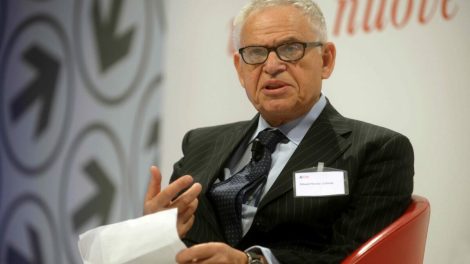
The expert’s take. Among the speakers was Roberto Baldoni, former director general of Italy’s National Cybersecurity Agency (ACN) and former deputy director of the Department of Information Security (DIS). Today, Baldoni serves as Senior Advisor for technology and cybersecurity policies at the Italian Embassy in Washington.
- His testimony pushed the discussion well beyond traditional trade concerns, directly linking commerce to technological dominance and national security.
A systemic competition. According to Baldoni, advanced democracies are facing unprecedented pressure.
- “Never before have organised autocracies so directly challenged our technological dominance,” he warned, framing the issue as a systemic competition rather than a conventional economic rivalry.
- At the centre of this confrontation are digital technologies. Cloud computing, 5G and 6G networks, and artificial intelligence now underpin critical economic functions, institutional operations, and security infrastructures. Control over these technologies, Baldoni argued, directly translates into power.
- “Technology is not neutral,” he told senators. “It does not consist only of algorithms and code. It also reflects the values, governance models, and power structures of the societies that research, design, produce, and use it.”
The battle over standards. Technological competition is also a battle over rule-making. Whoever leads innovation today will shape the global system tomorrow.
- “Those who win the technological race today will set the standards of the future, exporting their models of technological governance and surveillance,” Baldoni cautioned.
- For Europe, this means that trade decisions – such as partnerships, investments, and industrial alliances – will have long-term political implications.
Supply chains and trusted partners. Baldoni focused much of his analysis on technology supply chains. Competition does not occur only at the level of final products, but across entire industrial ecosystems. Supply chains determine innovation capacity, economic resilience, and strategic control.
- “Democracies must increase their presence in strategic technology supply chains through targeted industrial and economic policies,” he said, emphasising the need for greater strategic autonomy.
- This approach hinges on cooperation among “trusted countries”: advanced democracies capable of working together within shared industrial, technological, and regulatory frameworks.
- Supply chains thus become spaces of selective integration, built on institutional trust and regulatory compatibility.
Why scale matters. The transatlantic dimension is central to this vision. Baldoni stressed that technological competition requires scale – financial, industrial, and political.
- “Acting in a coordinated way among democracies is essential to reach the scale needed to compete with autocracies,” he argued, pointing out that this coordination is as much about security as it is about technology or trade.
- The alternative, he warned, is a technological trajectory shaped more by control than by freedom, with direct consequences for governance models, citizens’ rights, democratic prosperity, and long-term strategic autonomy.
- “No democracy can face this challenge alone, including the United States,” Baldoni added.
Rethinking technological sovereignty. In his concluding remarks, Baldoni dismantled a common misconception: technological sovereignty does not mean isolation.
- “Technological sovereignty is not independence, but strategic interdependence among trusted partners,” he said.
- Pursuing autonomy without sufficient scale, he warned, risks marginalisation in global competition and growing security vulnerabilities. In such a scenario, countries may end up relying, without control, on foreign technologies that their companies still need to remain competitive.
- Trusted technologies, Baldoni concluded, have systemic value. “They are the democratic multiplier: coordination, interoperability, and trust in diversity.”
The bottom line: Europe’s trade strategy now directly affects its credibility as a technological and geopolitical actor.
- Decisions on supply chains, partners, and standards will determine not only Europe’s autonomy, but also its influence in an increasingly fragmented global order.