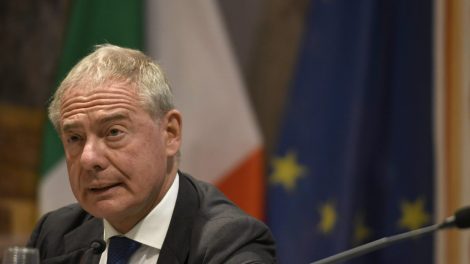

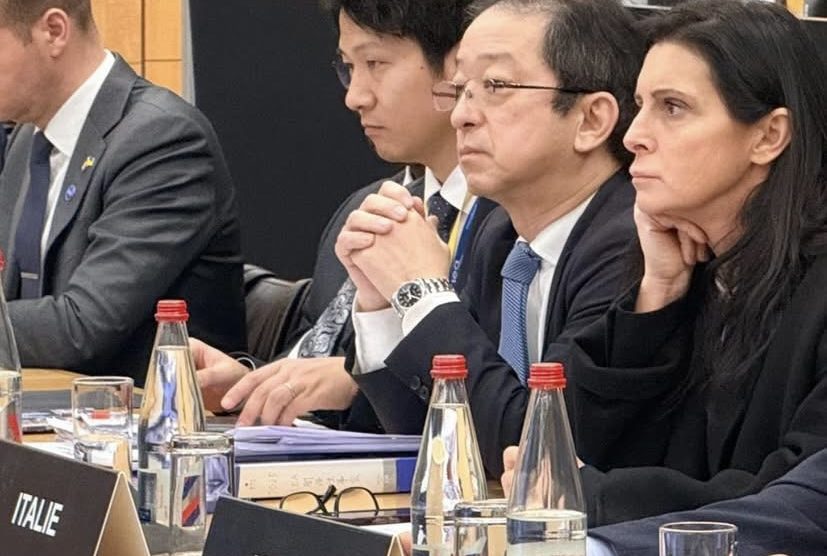
What happened: At the International Energy Agency’s ministerial meeting in Paris, Italy’s Deputy Minister for Environment and Energy Security, Vannia Gava, said energy security is now a strategic priority, underpinning both the competitiveness of Italy’s industrial system and the country’s broader economic stability.
- Her remarks reflect a broader shift in Italian policy since the energy crises triggered by war, market volatility, and supply fragmentation.
Driving the news: Italy is pushing to diversify energy supplies, expand infrastructure links, and secure critical raw materials supply chains.
- Rome is also framing energy as a pillar of economic security — not just a sectoral issue.
- Officials emphasise the need to protect supply chains for critical minerals, increasingly seen as the backbone of the energy transition and advanced manufacturing.
The big picture: Italy is positioning itself as a connector between Europe, Africa, and the Indo-Mediterranean energy space.
The government points to initiatives such as the Mattei Plan for Africa and strategic infrastructure corridors — including the Lobito Corridor — as tools to strengthen long-term energy resilience while deepening ties with partners across the Global South.
Between the lines: The push reflects Rome’s attempt to turn geography into leverage.
- Gava added that Rome must diversify supply sources, strengthen interconnections and secure critical supply chains — particularly for critical raw materials — while reaffirming Italy’s ambition to play a leading role in transatlantic cooperation and engagement with international partners, including through initiatives such as the Mattei Plan and infrastructure projects like the Lobito Corridor, which she described as essential to Italy’s economic and energy security.
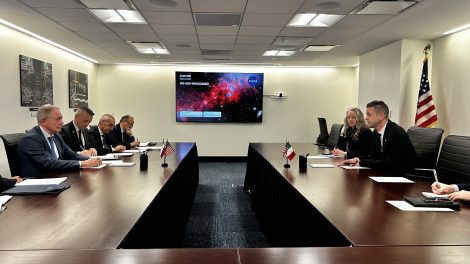
Zoom in: the meetings. On the sidelines of the Paris meeting, Gava held talks with U.S. Energy Secretary Chris Wright, EU Energy Commissioner Dan Jørgensen, senior European Commission officials, and Executive Vice-President Teresa Ribera — signalling alignment with both Washington and Brussels on supply security and energy transition policies.
What Rome wants:
- Stronger transatlantic coordination on energy security
- More resilient supply chains for critical raw materials
- Expanded infrastructure corridors linking Europe to Africa
- A leadership role in shaping Mediterranean energy routes
The bottom line: For Italy, energy security has moved from a technical policy field to a core instrument of foreign and economic strategy — one that Rome sees as essential to navigating an era of geopolitical instability.