As the crisis rapidly evolves, sustained analysis is critical for Italy, which projects its national interests and geopolitical outlook into the Indo-Mediterranean theater of conflict.
The Regional Impact. Emanuele Rossi analyzed the initial dynamics in real time through a conversation with Giuseppe Dentice, Middle East expert at Osservatorio Mediterraneo (Istituto per gli Studi Politici S. Pio V) and explored the regional repercussions in the Gulf with Cinzia Bianco, Gulf Region’s top expert at ECFR.
- Why the war is regional: General (ret.) Pasquale Preziosa explains why this war is regional and its implications
- Operations reshaping global balances: Operations “Epic Fury” and “Lion’s Roar” are rewriting global geopolitical balances adds General (ret.) Ivan Caruso.
- But how far will the escalation go, asks Marco Vicenzino, a global strategic advisor.
- According to analyst Mahmoud Allouch, Iran’s escalation against U.S.-linked targets in the Gulf stems from the perception of an existential battle, but risks proving strategically counterproductive and further isolating Tehran.
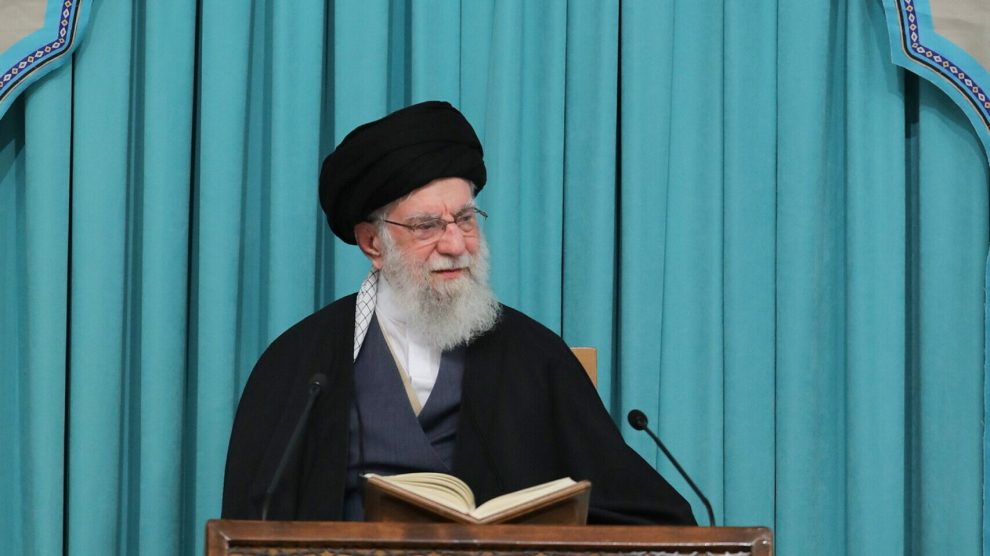
The post-Khamenei scenario. What should be expected after the death of Khamenei? “A leadership vacuum could temporarily slow Tehran’s external projection, but not necessarily weaken it structurally. Influence networks in Lebanon, Syria, Iraq, and Yemen are now institutionalized. The critical issue concerns deterrence toward Israel and relations with the Gulf monarchies,” commented Professor Antonio Teti, intelligence expert.
- Internal control and regime resilience: Iran’s control structure is accustomed to maintaining public order even with brutality, as shown by the thousands of young demonstrators killed by Security Forces — namely the Pasdaran and their auxiliaries. Both are fighting not only for power but also for their own welfare and are certainly not willing to relinquish it without strong resistance. The weakest point of Trump and Israel’s strategy lies in the lack of a clear endgame to the crisis, explains General (ret.) and Strategic Studies expert Carlo Jean in his analysis.
- Diplomatic reflections on the future. On this post-Khamenei future, former Ambassador Giovanni Castellaneta also reflects, considering as well the current phase of Trump.
Regime decapitation and opposition limits. Professor Luciano Bozzo reflected on the decapitation of the regime. Targeted attacks on leadership may be viewed favorably by parts of the population, as suggested by numerous images from the country, and could potentially fuel regime change — something hoped for by the U.S. president and by Israel.
- On the other hand, he writes in his analysis the military strength and economic weight of the Pasdaran remain a decisive factor, along with the absence of a real, solid opposition network.
Containment without total war. In an interview with Federico Di Bisceglie, former Ambassador Gabriele Checcia assessed that the action, while predictable, could aim to contain the missile program and militias supported by #Tehran without necessarily leading to a full-scale confrontation. Diplomacy remains central: Italy seeks to promote de-escalation and dialogue while supporting the Iranian people against a destabilizing leadership.
Trump’s economic doctrine. For Trump, moreover, “peace through commerce” represents the lever for an international order based on rules and economic interdependence, commented Simone Crolla, managing director of Amcham.
A changing international order. Russia’s war against Ukraine first, and Hamas’s attack on Israel later, have changed the rules, with the United States and Israel responding by raising the stakes. It is a new world in which the UN is simply no longer present, requiring a different space for international mediation — one that perhaps should arise under the aegis of the Pope, a structure distinct from the Holy See and its diplomacy but coherent with it, argues expert Francesco Sisci.