
Why it matters: Lagarde’s lecture suggests the economic framework used by policymakers for decades may no longer be sufficient. The global system itself is changing — meaning past data may no longer predict future outcomes.
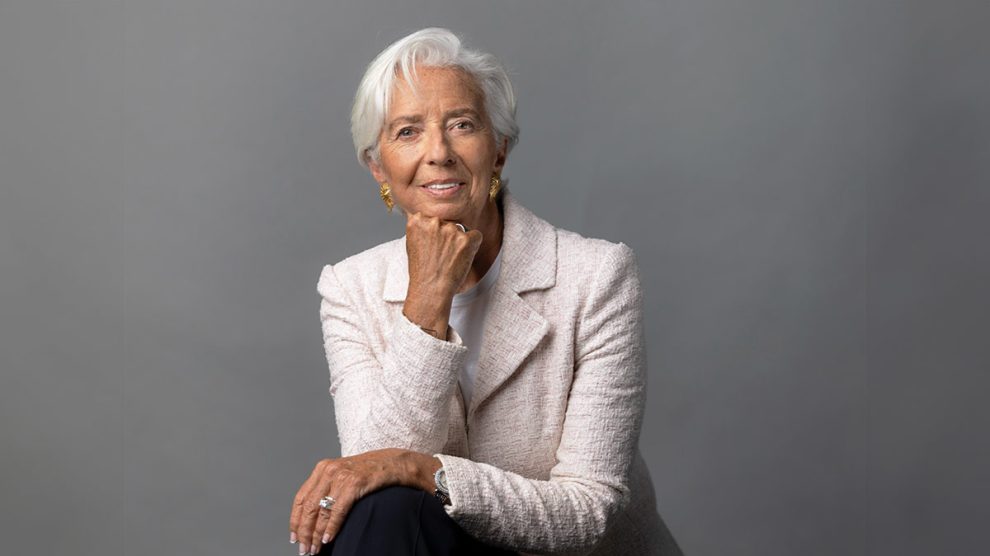
What she said: Speaking at the Robert A. Mundell Global Risk Memorial Lecture, Lagarde began by reflecting on the economist whose work shaped the debate over the euro.
- When the single currency was created, many critics used Robert Mundell’s theory of Optimum Currency Areas to argue that Europe was not suited for monetary union. They pointed to limited labour mobility, weak fiscal transfers between countries and structural differences across economies.
- But Lagarde noted that this interpretation ignored how Mundell’s thinking later evolved.
- His later work suggested that a common currency could itself drive integration — deepening financial markets and encouraging risk-sharing across borders.
Twenty-five years after the euro’s launch, Lagarde argued that this view has largely been vindicated
- A historical detour: Lagarde used Italy as a setting to highlight another intellectual turning point: the birth of the modern concept of risk during the Renaissance.
- Italian merchants introduced innovations that underpin modern economic systems — insurance contracts, double-entry bookkeeping and early quantitative methods for evaluating uncertainty.
- By systematically recording voyages and outcomes, they discovered that seemingly random events could reveal patterns. Risk could therefore be measured and priced.
- The work of the Franciscan scholar Luca Pacioli, published in 1494, helped formalise these practices and laid the foundations for modern finance and probability theory.
The big shift: According to Lagarde, this centuries-old framework — transforming uncertainty into measurable risk — may now be reaching its limits.
- For much of the past three decades, the global economy operated within a relatively stable system:
- multilateral trade rules
- credible central banks
- broadly predictable geopolitics
- Even major crises — from the Asian financial crisis to the 2008 global financial crisis — occurred within a stable international framework.
Today, that framework is changing. Lagarde invoked the concept of “Knightian uncertainty”, where the structure of the system itself is shifting and historical data becomes less reliable.
What is driving the change:
- Geopolitical shocks: Events such as the pandemic and Russia’s invasion of Ukraine have exposed vulnerabilities in global supply chains and encouraged reshoring or “friend-shoring”.
- Trade policy is increasingly used as a geopolitical instrument, with tariffs and restrictions affecting a growing share of global commerce.
- Technological disruption: At the same time, artificial intelligence is triggering a major technological transformation.
- Just a few years ago, publicly accessible generative AI models did not exist. Today, they are driving massive investment in computing infrastructure, data centres and energy systems.
Two possible futures: Lagarde argued that these forces could push the global economy in opposite directions.
- AI could raise productivity growth by up to 1.5 percentage points annually — the largest boost in a century.
- Severe geopolitical fragmentation could reduce global GDP by about 7% over a decade, roughly equivalent to the combined economies of France and Germany.
- For ageing societies with limited fiscal space, the difference between these outcomes is enormous.
The paradox: Artificial intelligence — despite appearing digital — depends heavily on global integration.
Lagarde identified three key channels:
- Supply chains: Key components of AI production are geographically concentrated — rare-earth refining in China, lithography machines in the Netherlands, chip design in the United States, and fabrication largely in Taiwan.
- Market scale: Training advanced AI models costs billions, meaning firms require global markets to recover those investments.
- Data flows: Large and diverse datasets are essential for improving AI systems. Restrictions on cross-border data flows weaken model performance.
- The result: fragmentation does not just slow trade — it can directly weaken technological progress.
The policy response: Lagarde outlined a three-layer approach to managing uncertainty.
- Reform global institutions: Bodies such as the IMF, the World Bank, and the WTO remain the broadest foundation for international cooperation.
- Deepen cooperation among allies: Trusted partners should strengthen collaboration on supply chains, technology and research.
- Maintain minimum cooperation among rivals: Even geopolitical competitors should preserve basic cooperation — for example, on critical supply chains or AI safety standards.
The bottom line: Lagarde closed with a historical reminder. In the 14th century, Genoese merchants created early insurance contracts to address piracy and geopolitical instability, enabling trade to continue despite uncertainty. Today’s global economy faces a similar choice.
- Either geopolitical fragmentation undermines technological progress — as happened in the interwar period — or countries pursue what Lagarde described as “resilient integration”.
- Robert Mundell himself, Lagarde noted, was never certain the euro would succeed. But he believed there was no viable alternative to integration.
- In a world of rising uncertainty, she suggested, that conclusion may still hold.
(Photo: X, @ecb)