
There is no diplomatic way to say it: the Holy See and the United States have rarely been this far apart, at least when it comes to international affairs. It is something of a paradox. At a time when the U.S. government champions several values that are traditionally close to the Catholic world — from family issues to the defence of life, and even the fight against so-called “woke culture” — there is nevertheless a clear divide regarding how international policy should be conducted.
Thus, U.S. actions in Venezuela and Iran, as well as the public-order emergency sparked by the killings of ICE officers in Minneapolis, have generated considerable unease across the Tiber. However, important distinctions must be made.
In the case of Venezuela, the Holy See had largely allowed the bishops to take the lead in expressing positions. They did so forcefully, going so far as to call for new elections following the re-election of President Nicolás Maduro, and even advocating constitutional reform and the restoration of the legitimacy of the popular vote. For a period, the nunciature in Venezuela — the Holy See’s embassy — was without a nuncio and was instead led by a chargé d’affaires. This reflected both the desire not to send just any profile and the need to keep relations with Maduro at a lower level, precisely to avoid full political legitimisation. At the same time, the Holy See never breaks diplomatic relations. The logic is to remain wherever people are in need, and its neutrality is also grounded in maintaining dialogue with whoever is in power.
As for Iran, the dialogue had been relatively close, though it rested largely on shared religious references. The Holy See did not ignore the existing problems, particularly those related to religious freedom. In 2021, the government in Tehran denied a visa to Sister Giuseppina Berti, a missionary who had served in Iran for more than thirty years, for reasons that were never clarified, provoking anger in the Vatican. Yet this never escalated into a formal diplomatic protest. Instead, diplomatic engagement continued at the highest levels and even intensified after the events of October 7, 2023. The Holy See was looking at all the actors in the Middle East, and dialogue with Iran was also seen as necessary to reiterate support for the two-peoples, two-states solution, as noted in a communiqué issued on October 30 following a phone call between Iran’s foreign minister, Hossein Amir Abdollahian, and his Vatican counterpart, Archbishop Paul Richard Gallagher.
Although the two situations are very different, the Holy See’s approach remains consistent in both cases. On the one hand, there can never be real and concrete support for a regime that lacks the consent of its people (as in Venezuela) or that jeopardises religious freedom (as in Iran). On the other hand, dialogue must always remain open, also because these are sovereign states recognised internationally and with which the Holy See maintains formal diplomatic relations.
For this reason, the two U.S. interventions were viewed with considerable concern in the Vatican. Indeed, Cardinal Pietro Parolin, the Vatican Secretary of State, addressed the issue directly in an interview with Vatican media on March 4. Asked about the Israeli and U.S. attack on Iran, he replied:
“I believe that peace and security must be cultivated and pursued through the possibilities offered by diplomacy, especially that exercised within multilateral institutions, where states have the opportunity to resolve conflicts in a bloodless and more just way. After the Second World War, which caused around 60 million deaths, the founding fathers, through the creation of the United Nations, wanted to spare their children the horrors they themselves had experienced. For this reason, the UN Charter sets out clear guidelines for the management of conflicts. Today, those efforts seem to have been undermined.”
In other words: negotiations must take place, violations of sovereignty should be avoided, and states should work together within multilateral institutions — beginning with the United Nations.
To be clear, this does not mean that the Holy See believes the United Nations has always succeeded. For years, proposals for reform of the UN system have circulated, particularly to strengthen its negotiating and multilateral mechanisms, and the limitations of UN processes have often been highlighted.
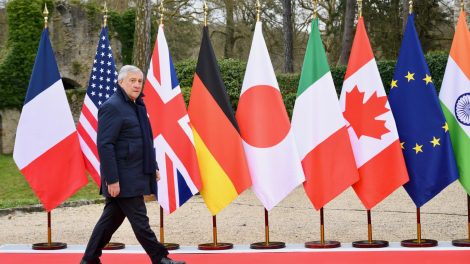
At the same time, however, the Holy See has never fully embraced the so-called “G-meetings” — the G7, G8, or G20 — which are often seen as gatherings of a few deciding on behalf of many, something akin to a club of friends that does not allow everyone to speak.
Based on these premises, it was therefore unsurprising that the Holy See declined to join the “Board of Peace” proposed by President Trump. The refusal was not only due to the enormous financial contribution expected — something the Holy See would never be able to afford — but also because it was perceived as an initiative in which a few actors would decide the fate of many. “A colonialist operation,” in the words of Cardinal Pierbattista Pizzaballa, the Latin Patriarch of Jerusalem.
Considering all these factors, it is inevitable that relations between the Holy See and the United States cannot be as smooth as they once were. A “holy alliance” based on shared moral values is no longer sufficient to counter what the Vatican perceives as American interventionism worldwide.
The U.S. ambassador to the Holy See, Brian Burch, has spoken in several interviews about two different degrees of goodthat often fail to align, particularly on crucial issues such as foreign policy and migration. There remains an effort to maintain dialogue, but it inevitably clashes with the Holy See’s need to respond to international crises in accordance with its own diplomatic principles.
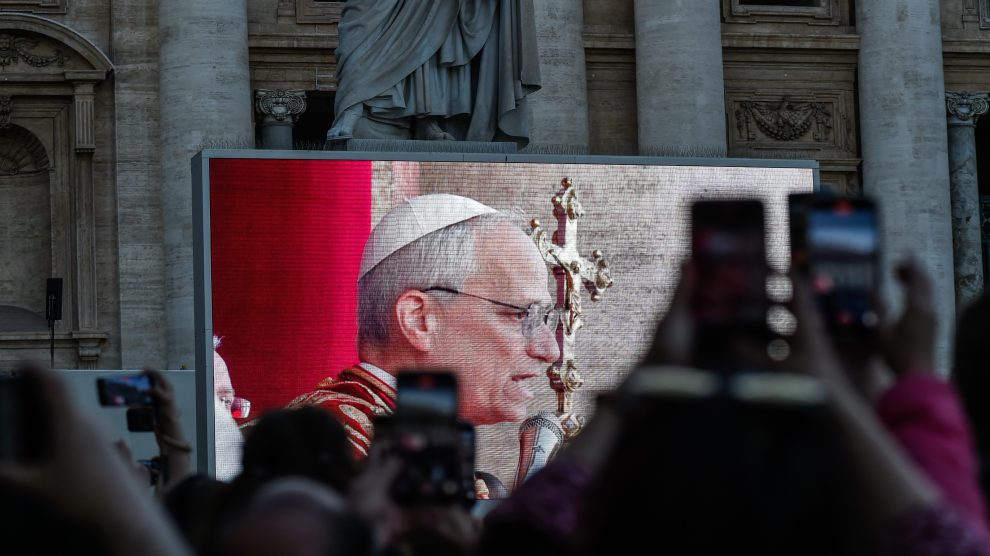
Indeed, during the Angelus on March 1, following the attacks in Iran, the Pope focused on themes of stability and peace. His silence regarding the killing of the Iranian leadership was in itself meaningful.
Ultimately, the Pope could never endorse a military intervention that violates the sovereignty of a people. At the same time, through his words, he made clear that the Holy See was not endorsing the way Ali Khamenei exercised power either.
The foreign policy style of the Trump administration is as far removed as possible from the diplomatic culture of the Holy See. Yet the Vatican continues to hold its positions patiently. Even when it disagrees, it remains ready to engage and to be present.
Because, in the end, the purpose of pontifical diplomacy is simply this: to always be there, no matter what.
Andrea Gagliarducci works for EWTN as a Vatican analyst for the National Catholic Register and as a Vatican correspondent for ACI Stampa. He also writes occasionally for the Italian newspapers Il Messaggero and Il Foglio, and has previously contributed to La Sicilia, Il Tempo, and Il Fatto Quotidiano. He is also one of the contributors to the online religious news portal Korazym.org.