With 2027 set to bring several major elections across Europe — including parliamentary elections in Poland, France, and Italy, as well as presidential elections in Germany — the stakes are particularly high. According to Coratella, these votes could produce “unprecedented consequences for the European project,” as they may significantly reshape the political landscape of the European Union.
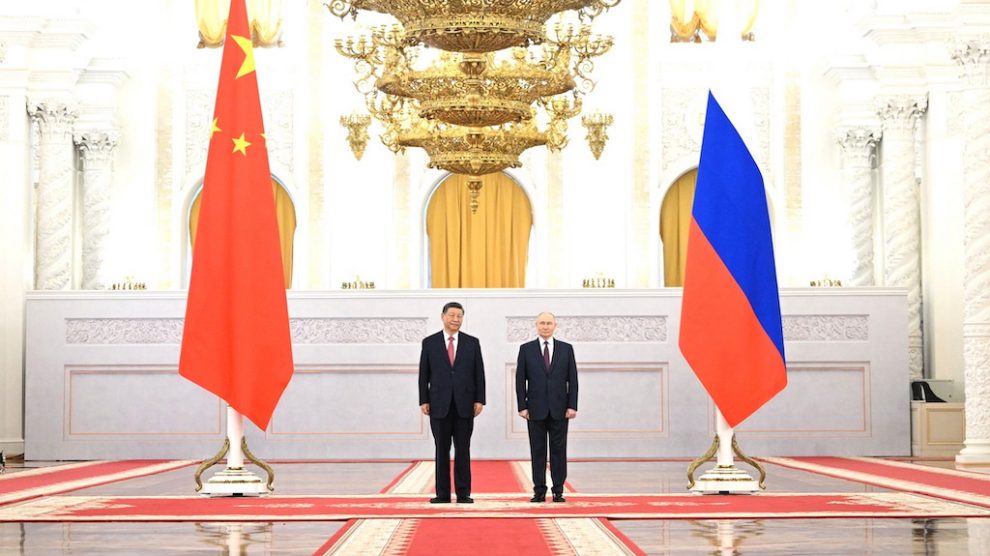
Russia, China and the targeting of European public ppinion. Russia and China remain the two primary hostile actors. “Moscow is pursuing a strategy aimed at politically and economically destabilizing the EU; Beijing is more focused on strengthening its economic and diplomatic presence,” Coratella explains. “However, despite their different objectives, both actors ultimately target European public opinion.”
- She notes that while electoral interference has long been a familiar tool—dating back at least to the Brexit referendum—these actors have gradually refined their methods. “Over the years, they have adapted and improved their playbook of interference, tailoring it to the vulnerabilities and pressure points of individual EU member states.”
- “In Italy,” the ECFR deputy director continues, “historical energy relations with Russia and the country’s past participation in China’s Belt and Road Initiative have for years created fertile ground for these destabilizing strategies.”
A Pentagon‑Style format for European cooperation. From this analysis emerges a concrete policy proposal. According to Coratella, Italy should take a more proactive role in countering hybrid threats.
- “On the one hand, Italy should draw on the experience and best practices of countries with a more established tradition in combating hybrid threats, particularly the Baltic states,” she argues. “On the other hand, as one of the countries most exposed to these dynamics, Italy should promote a new ‘Pentagonal’ format including France, Germany, Poland, and the United Kingdom.”
- This proposal is outlined in the policy note Narrative warfare e guerra ibrida nel disordine globale (“Narrative Warfare and Hybrid Conflict in Global Disorder”).
The note was authored by Teresa Coratella together with Mattia Caniglia, Affiliate Lecturer at the University of Glasgow and Senior Intelligence and Policy Analyst at the Global Disinformation Index (GDI). The two experts assess the impact of hybrid warfare in areas of strategic relevance for Italy.
- “Given Italy’s natural exposure to instability in Libya and across Africa—where Russia has become a major actor—the Italian government should push for greater attention from European partners to the urgency of reassessing Moscow’s hybrid activities in the region,” Coratella adds. “These activities are already present and deeply rooted, and they require new strategies and priorities.”
Italy’s Intelligence Perspective on Hybrid Threats. This assessment also finds confirmation at the institutional level. Hybrid threats feature prominently in Italy’s Annual Intelligence Report, presented to Parliament past week. The report identifies Russia and China—and the potential overlap of their activities—as one of the most significant dynamics shaping the landscape of hybrid warfare.
- Hybrid threats are described as coordinated sets of diplomatic, economic, informational, and cyber tools that operate persistently below the threshold of conventional armed conflict. This makes attribution difficult and complicates the formulation of an effective response.
From Disinformation to Cognitive Warfare. Technology has become the main enabling factor behind these strategies. The use of generative artificial intelligence, large language models, and deepfakes allows hostile actors to produce and disseminate manipulative narratives on a massive scale and at very low cost.
- These campaigns aim not only to influence what people think, but increasingly to shape how people think. By targeting cognitive and behavioral processes, such operations seek to amplify polarization and deepen social divisions within democratic societies.
- As Coratella stresses, this challenge must be addressed with the same level of urgency as cyber defense or the protection of critical infrastructure. Hybrid warfare, in this sense, represents a broad and systemic threat to democratic societies.