From March 1 to 7, a delegation from the NATO Parliamentary Assembly’s Partnership Committee visited New Delhi and Mumbai, taking part in the Raisina Dialogue—one of the world’s leading forums on international affairs—and meeting with Indian lawmakers, think tanks, and diplomatic representatives.
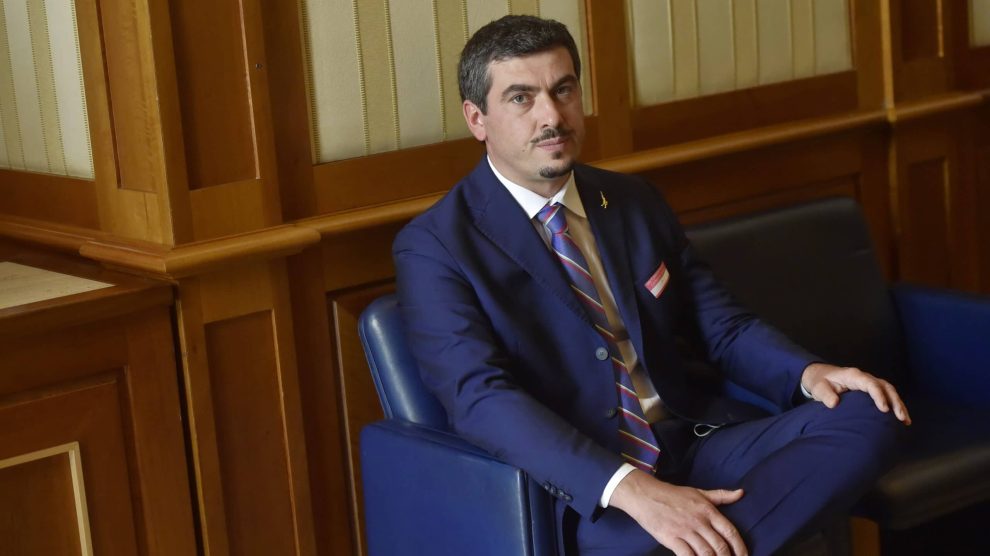
The parliamentary mission to India. The mission was led by the committee’s chair Lorenzo Cesa and included Italian MP Paolo Formentini (League) and Senator Simona Malpezzi (Democratic Party). The trip marked the first structured parliamentary visit by NATO representatives to India and was aimed at exploring how dialogue between the Atlantic Alliance and New Delhi could evolve in a rapidly changing geopolitical environment.
- Rather than discussing formal institutional ties between India and NATO, the conversations focused on identifying concrete areas of cooperation. In particular, two domains emerged as areas of strong convergence: maritime security in the Indian Ocean and counterterrorism.
A pragmatic approach to NATO–India relations “The objective of the mission was to understand on what basis a dialogue between NATO and India could be built,” Paolo Formentini, vice-chair of the Foreign Affairs Committee of the Italian Chamber of Deputies, told Decode39 after the visit.
- “We encountered a certain caution when NATO is mentioned directly,” he explained. “But on issues such as freedom of navigation in the Indian Ocean and the fight against terrorism, there is a very clear convergence.”
- According to the Italian lawmaker, who has been particularly active in promoting Indo‑Mediterranean relations, cooperation between the Alliance and New Delhi is unlikely to develop through formal integration. Instead, it may take shape through pragmatic cooperation on specific issues.
- “Several Indian interlocutors did not exclude, for example, forms of participation as observers,” Formentini noted. “But the key point is that no one imagines NATO expanding into the Indo‑Pacific. Rather, the focus is on practical forms of cooperation that can benefit both sides.”
- India, he added, continues to view the Indian Ocean as a kind of strategic “mare nostrum,” which explains its determination to preserve a high degree of strategic autonomy.
Interoperability and maritime cooperation. Within this framework, one key concept emerging from the discussions was interoperability between armed forces and security institutions.
- Italy and India have already strengthened operational cooperation in recent years, particularly in the maritime domain. A notable example was the deployment of the Italian aircraft carrier Cavour in the Indo‑Pacific and the exercises conducted with the Indian Navy in 2024.
- “Interoperability is a fundamental element,” Formentini said. “It means developing shared operational capabilities and building familiarity between military and institutional structures. This type of cooperation is often more effective than formal architectures.”
- Security cooperation is also linked to the broader stability of maritime routes connecting the Mediterranean with the Indian Ocean, an increasingly crucial corridor for global trade and energy flows.
Defence industry and strategic partnerships. Industrial cooperation represents another important dimension of the growing dialogue. During meetings in New Delhi and Mumbai, Indian officials showed significant interest in collaboration with the Italian defence industry.
- “We perceived very strong interest in Italy,” Formentini said. “India is investing massively in the modernisation of its naval capabilities and is looking carefully at European partners.”
- This interest has also emerged in recent institutional exchanges. Only days ago, Italian Undersecretary of Defence Matteo Perego di Cremnago hosted India’s Secretary for Defence Production, Sanjeev Kumar, further highlighting the strategic relevance of defence cooperation between the two countries. (Read the interview to Undersecretary Perego).
- The naval sector, including the expertise of companies such as Fincantieri, was frequently mentioned as a promising area for future collaboration.
Connectivity, corridors and the Indo‑Mediterranean. Beyond security issues, the discussions in India also touched upon economic connectivity between Europe and Asia. In a global environment where geoeconomics has returned to the forefront of international competition, infrastructure and logistics networks are increasingly intertwined with geopolitical dynamics.
- India continues to view the India–Middle East–Europe Economic Corridor (IMEC) as a key platform for reshaping trade routes between the Indo‑Pacific and the Mediterranean.
- “In bilateral meetings, we saw persistent interest in IMEC,” Formentini explained. “This is not just about logistics corridors, but about a broader network of economic and infrastructure connections linking the Indo‑Pacific to the Mediterranean.”
- The Italian lawmaker added that these corridors are becoming even more relevant in light of possible shifts in global trade routes, including the potential development of Arctic shipping lanes.
- “In this context, Italy can play an important role in connecting the Indo‑Pacific with Europe,” he said.
Italy’s strategic positioning. Italy has also been working to strengthen its own connectivity strategy. In January, the Foreign Affairs Committee of the Italian Chamber of Deputies approved a resolution—promoted by Formentini—inviting the government to assess Italy’s accession to the Three Seas Initiative and to develop operational synergies with IMEC and the Central European Initiative.
- The goal, according to the Italian MP, is to connect IMEC’s East‑West axis with the North‑South infrastructure spine linking the Baltic, Adriatic and Black Seas.
- “This would allow Italy to strengthen its role as a hinge between the Indo‑Mediterranean, Central Europe and the broader European market,” Formentini said.
- At the same time, negotiations toward a future EU‑India free trade agreement are being closely watched in both New Delhi and Mumbai.
- “There is strong interest in the future of economic relations with Europe and with Italy,” he added. “An EU‑India FTA could open a new phase in relations between the two regions.”
A modular partnership in a fragmented world. Overall, the NATO parliamentary mission to India suggests that relations between the Alliance and New Delhi may develop through a flexible and modular model of cooperation.
- In an increasingly fragmented international system, security partnerships need not be binary to be meaningful. They can instead be issue‑based, pragmatic and mutually enabling.
- In this context, India can provide a regional perspective and growing strategic capacity, while NATO can offer tested frameworks for cooperation and coordination. Italy—thanks to its geographic position and expanding role in the Indo‑Mediterranean—appears increasingly well positioned to act as a facilitator of this dialogue.