
TRIESTE – The United States sees the India-Middle East-Europe Economic Corridor (IMEC) as a geopolitical and economic opportunity for American companies — from energy and digital infrastructure to transport — and is pushing for the initiative to move quickly from concept to concrete projects.
That message emerged clearly during the international meetings hosted in Trieste over two days focused on connectivity between the Indo-Pacific, the Middle East and Europe
U.S. backing for IMEC. The U.S. approach discussed during the sessions emphasizes transforming IMEC into an economic engine supported by private investment and more streamlined trade procedures.
- In this framework, participants stressed the importance of avoiding bureaucratic delays and focusing on tangible operational outcomes along the corridor.
- Moving from conceptual planning to real transactions — from agreements to the development of infrastructure and integrated logistics chains — is widely seen as essential for giving credibility to the initiative.
From concept to concrete project. A central element of the debite concerned the regulatory dimension.
- Under the Washington’s vision, Governments should primarily focus on harmonizing standards and customs procedures across participating countries and reducing non-tariff barriers, while the corridor itself should remain largely driven by private investment.
Harmonizing trade and customs rules. One example highlighted during the meetings concerns logistics timelines along certain regional routes: today, a truck may take between nine and twelve days to travel from the United Arab Emirates to Israel.
- With synchronized customs systems and simplified procedures, that journey could potentially be reduced to three or four days, significantly lowering costs and improving supply-chain efficiency.
Economic security and resilient trade routes. For Washington, however, the strategic logic of IMEC goes beyond logistics.
- The project reflects a broader understanding — increasingly central in economic security debates — that resilient trade routes are a key component of national security.
- In this context, the corridor is not intended to replace existing infrastructure such as the Suez Canal, but rather to diversify and strengthen global trade connectivity.
- Reducing dependence on single logistical chokepoints or infrastructure designed by rival powers is widely viewed as one of the strategic motivations behind the initiative.
Trade as a pathway to regional stability. At the same time, discussions in Trieste also highlighted the political dimension of the project.
- Economic integration through trade corridors, rail links and energy and digital infrastructure is seen in Washington as a potential stabilizing factor for the wider region.
- Within this framework, countries such as Israel and Jordan play a central geographical and political role in linking the Middle East with the Mediterranean and Europe.
- IMEC therefore emerges not only as a connectivity project but also as a broader instrument to promote economic growth, regional integration and stability across West Asia.
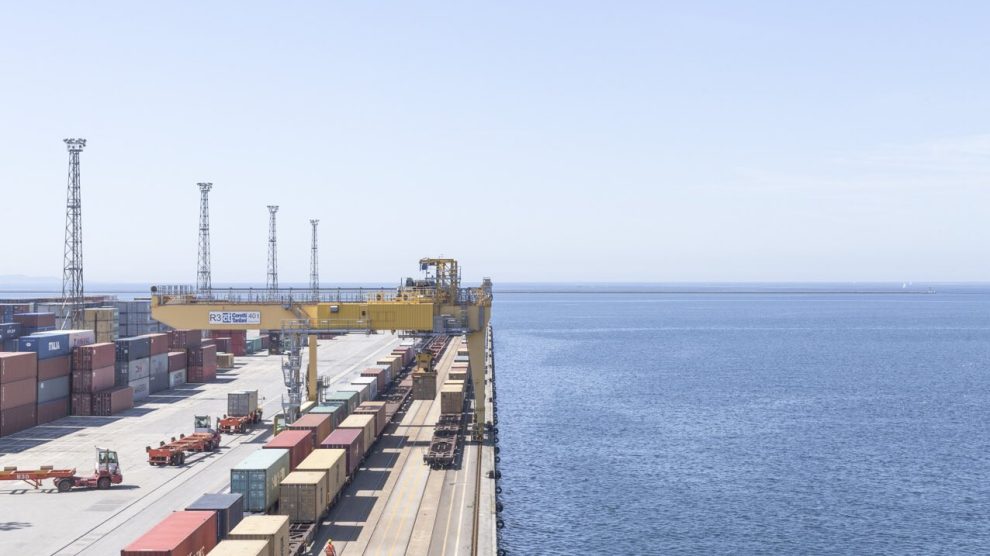
The bottom line: From Trieste — which is increasingly positioning itself as a European node in the evolving connectivity landscape linking the Indo-Pacific and the Mediterranean — a clear message emerged:
- The United States intends to remain actively engaged in advancing the corridor, first announced at the 2023 G20 summit in New Delhi, as it gradually shifts from a geopolitical concept toward a more operational framework, with ongoing discussions about governance structures and possible future ministerial meetings.