The latest: U.S. President Donald Trump has frozen planned attacks on Iranian energy infrastructure for five days, citing “very good and productive conversations” with Tehran. The move shifts the crisis from imminent and further escalation to conditional de-escalation — for now.
- Markets are watching for stability in energy flows — even small signals from Hormuz are enough to move prices.
- Iran retains leverage over traffic through the strait, managing flows rather than fully blocking them, while military options remain on the table — increasingly as negotiating tools rather than immediate actions.
- Iran’s foreign ministry denied talks with the U.S., but some regional countries tried to ease tensions. Tehran claimed Trump backed down to avoid energy price spikes and buy time for his military plans.
Zoom in: why Italy is exposed. The Iran-US-Israel war has already generated tangible market and supply-chain pressures, making the diplomatic pause not a secondary outcome but a consequential stabilizing factor. The exposure is not marginal but structural, reflecting how deeply Italy’s trade and industrial system is tied to Gulf-linked flows.
- €32bn+ in trade with Gulf countries at risk — a mix of exports and strategic imports tied to energy and industrial inputs;
- 13%+ of Italian exports tied to the region — with a strong concentration in high-value sectors;
- Core sectors: machinery, pharma, transport, advanced manufacturing — all dependent on predictable logistics and stable energy costs.
- In a nutshell: Hormuz is not a distant crisis. It directly affects Italy’s growth model, which is built on exports, energy imports and global supply chains.
The shock comes in three waves:
- Energy → higher costs
- Oil and gas volatility feeds directly into wholesale prices
- Even without a full closure, geopolitical risk alone increases premiums
- For Italy, this translates into higher production costs for industry and higher bills for households, with immediate inflationary pressure
- Logistics → longer routes
- Gulf tensions combine with Red Sea disruptions, creating a cumulative effect
- Detours via Cape of Good Hope add 10–15 days, tying up ships and capital
- Insurance costs rise sharply, while delivery schedules become less predictable — a critical issue for export-driven firms
- Industry → supply chain stress
- Italy’s manufacturing system relies on just-in-time production and limited inventories
- Delays force firms to hold more stock, increasing financing needs
- Two extra weeks at sea translate into billions in additional working capital, putting pressure especially on SMEs
The bigger picture: This is a systemic shock, not a sectoral one.
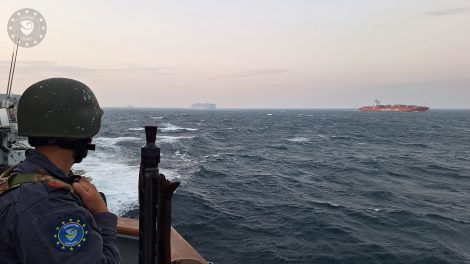
- Italy’s maritime trade is worth ~€500bn annually, making sea lanes a core national asset.
- Chokepoints like Hormuz are now geopolitical levers, not neutral passages.
- Disruptions cascade across energy, logistics and production simultaneously.
- If prolonged, the crisis risks:
- Reducing the Mediterranean’s role as a global hub as traffic shifts elsewhere;
- Marginalizing ports like Trieste, Genoa, Gioia Tauro in favor of alternative routes;
- Forcing companies to redesign supply chains at higher structural cost.
How Italians see the crisis: While exposure is rising, public opinion is moving in a different direction.
- Polling snapshot (Euromedia, by Alessandra Ghisleri):
- 53.6% oppose a mission in the Strait of Hormuz
- 58.1% favor withdrawing Italian troops from the Middle East
- 43.9% support reopening to Russian gas and oil — rising to over 54% among center-right voters and around 62.5% among Lega voters
- Support for reopening to Russia rises further among center-right voters.
- What does it mean: Italians prioritize economic stability over strategic engagement — a response shaped by cost pressures rather than geopolitical alignment.
Between the lines: Italian public opinion is driven by a cost-benefit logic.
- The conflict is perceived as geographically distant
- Its economic effects — energy prices, inflation, supply disruptions — are immediate and visible
- So the instinct is:
- Avoid escalation
- Limit exposure
- Stabilize prices — quickly, even through politically sensitive options
The tension:
- Securing sea lanes requires military presence, coordination and long-term investment.
- Lowering energy costs points to short-term solutions, including reopening channels that clash with broader strategic positioning.
- Result: a growing gap between:
- Systemic vulnerability (how the economy actually works)
- Public preference (how risk is politically perceived).
What’s at stake: Hormuz highlights a structural dilemma:
- Economic security cannot be separated from hard security.
- Energy, logistics and industry are tightly interconnected.
- Maritime chokepoints are increasingly politicized and selectively managed.
- Fragmented international responses strengthen actors able to exploit disruption.
What to watch: Whether Italy and the EU move toward a maritime resilience strategy, building on initiatives such as the joint declaration by 22 countries — including Italy — condemning attacks on maritime traffic.
- The evolution from ad hoc naval missions to more permanent protection frameworks.
- A renewed debate over energy pragmatism vs strategic autonomy.
The bottom line: Italy is being hit where it is strongest — its globally integrated, export-driven economy. But politically, the country is drifting toward the opposite instinct: less exposure, fewer commitments, faster fixes.
- At the same time, the opening of a negotiating phase — given the scale of interests at stake — creates operational space that Italy could leverage, especially as public opinion is more responsive to diplomatic pathways than to military engagement.