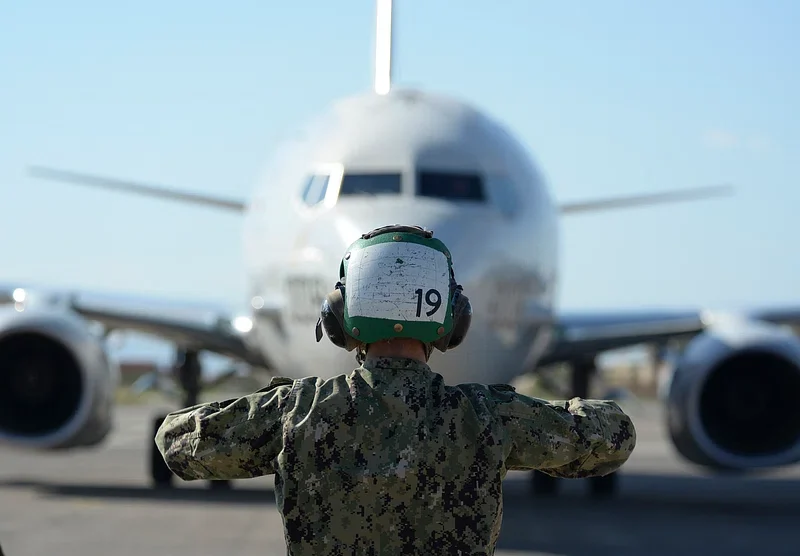
What happened: Italy denied access to the Sigonella air base to U.S. aircraft en route to the Middle East after determining the mission involved kinetic operations requiring prior approval.
- According to Corriere della Sera, the aircraft had included Sigonella in their flight plan without prior consultation, notifying Italian authorities only after takeoff.
- Italian leadership assessed the mission as combat-related — not logistics, refueling, or surveillance — and therefore not pre-authorized under existing agreements.
- Defense Minister Guido Crosetto instructed U.S. command that landing clearance would not be granted due to the lack of authorization.
What Rome says: From Palazzo Chigi, PM Meloni framed the decision as fully consistent with existing agreements and parliamentary guidance.
- According to an official statement, “Italy acts in full compliance with existing international agreements… The line of the Executive is clear, consistent and already fully shared with Parliament, without any change.”
- The government stressed that requests are evaluated “case by case” and that there are “no critical issues or friction” with partners, describing ties with the United States as “solid and based on full and loyal cooperation.”
Between the lines: The handling reflects a balance between alliance reliability and national sovereignty.
- The timing raises questions: the decision became public days after the fact, with no clear explanation for the timing — or the intended audience.
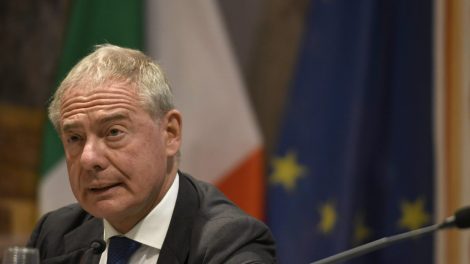
Crosetto recalibrates: Minister Crosetto rejected claims of a shift in policy: “Someone is trying to convey the message that Italy has decided to suspend the use of its bases to U.S. assets. This is simply false, because the bases are active, in use, and nothing has changed.”
- In a technical note on his personal X account, he added that agreements clearly distinguish between authorized activities and those requiring approval: “Tertium non datur.”
- Crosetto moved quickly to define the narrative, while Palazzo Chigi reiterated a more institutional and de-escalatory line — without explicitly shielding the defense minister.
- He later partially recalibrated his stance — a brief “TACO”-style adjustment — shifting to a more technical framing without changing the substance.
From the opposition: The political reading is reinforced by domestic reactions: opposition figures, including Democratic Party leader Elly Schlein, openly backed the denial of authorization — an unusual convergence with the government’s operational choice.
From DC: Against the backdrop of the case, U.S. President Donald Trump has signaled that European allies may need to shoulder more responsibility in managing the consequences of the war with Iran — including securing the Strait of Hormuz — while criticizing countries that have limited cooperation with U.S. military operations.
Domestic angle: The episode comes at a sensitive political moment.
- There is no sign of a formal split, but it highlights the complexity of managing security decisions with domestic constraints and public sensitivity to escalation risks, as the geopolitical environment around Italy comes under stress.
- The recent rejection by voters of Meloni’s judicial reform — widely read as a confidence test and shaped in part by a shifting international climate and unease with U.S. positioning — adds to the domestic sensitivity around security decisions.
The bottom line: No rupture with Washington. But Rome’s choice echoes, in part, that of Spain’s socialist government — despite their different political alignments — highlighting how the need to manage domestic consensus can lead to similar constraints on strategic decisions.
- For Italy, the challenge is to remain a reliable partner while preserving political control, in a context where international choices are increasingly shaped by domestic pressures — not just strategy.