What’s happening: Italian Prime Minister Giorgia Meloni has landed in Saudi Arabia for a 48-hour diplomatic tour that will also take her to Qatar and the UAE — the first visit by a Western leader to the region since the outbreak of the Iran war.
Why it matters: The trip is both symbolic and strategic. It positions Italy as an early Western actor re-engaging the Gulf at a moment of heightened regional tension, while advancing Rome’s push to secure alternative energy supplies and deepen political ties.
Driving the news: PM Meloni is expected to meet Saudi crown princes, Qatar’s energy minister, and executives from Abu Dhabi National Oil Company (Adnoc).
- Talks will also involve sovereign wealth fund representatives across the Gulf.
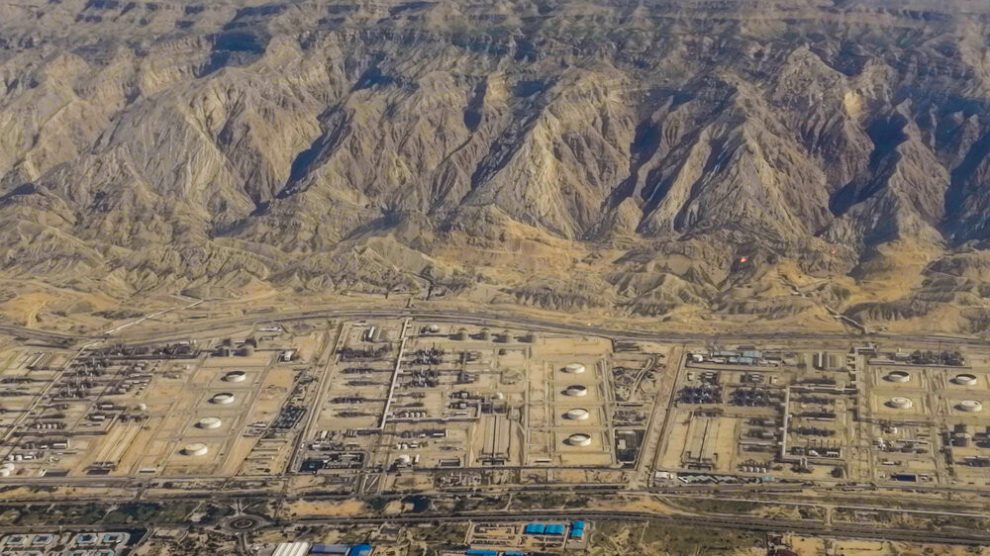
- The focus: diversifying Italy’s energy imports — especially gas and oil — while exploring cooperation on renewables and green hydrogen.
The big picture: Italy is accelerating efforts to reduce its dependence on Russian gas while transitioning toward more sustainable energy sources.
- The Gulf states, meanwhile, are pursuing their own diversification strategies and expanding their global economic and geopolitical footprint.
- The convergence creates space for deeper cooperation not only on energy, but also on defense and counterterrorism — long-standing pillars of Italy-Gulf relations.
Zoom in: Italian officials say the mission aims to “strengthen relations” and “reaffirm support” for Gulf partners amid Iranian attacks.
- The goal: consolidate what is increasingly described as a strategic partnership between Italy and the region.
By the numbers:
- In 2024, natural gas accounted for 42% of Italy’s energy consumption, highlighting its vulnerability to external shocks.
- This exposure has intensified Rome’s urgency to diversify supply chains and partnerships.
Between the lines: Italy is not starting from scratch.
- In January 2025, Rome and Saudi Arabia signed a five-year memorandum of understanding covering hydrogen, renewables, and carbon capture.
- One month later, Italy and the UAE sealed five strategic agreements spanning energy, technology, defense, and industrial cooperation.
Context: The geopolitical environment has shifted dramatically with the escalation of Iran-Israel-U.S. tensions in 2025–2026.
- The Gulf has returned to the center of global strategic calculations — not only as an energy hub, but as a security theater.
The bottom line: Meloni’s visit marks a qualitative step forward. By becoming the first Western leader on the ground after the outbreak of the conflict, Italy is signaling a more assertive role in the Gulf — one that blends energy security with strategic positioning in an increasingly volatile region.