
What’s new: Italy is urging the EU to fast-track key elements of its industrial strategy, warning that current timelines risk missing a rapidly shifting global landscape.
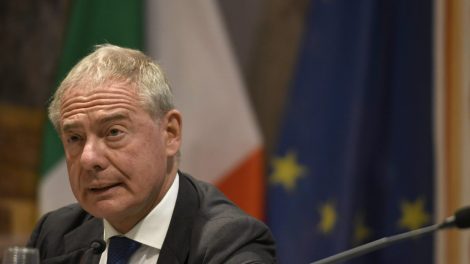
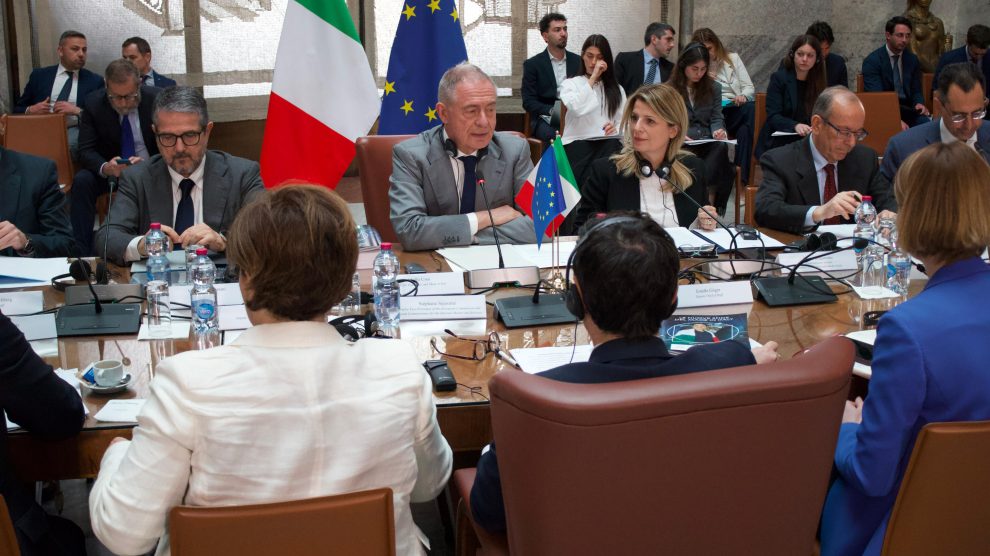
Driving the news: During a meeting in Rome, Industry and Made in Italy (MIMIT) Minister Adolfo Urso pressed EU Commission Executive Vice-President Stéphane Séjourné to accelerate implementation of the Industrial Accelerator Act (IAA).
Why it matters: Italy is aligning with Brussels on industrial policy — but wants speed over sequencing. Rome sees delays as a strategic risk amid geopolitical instability, supply chain fragmentation and intensifying global competition.
Zoom in:
- Urso backed the IAA’s core goals — protecting strategic sectors and strengthening European value chains.
- But he warned that waiting until 2029 to introduce “Made in Europe” and low-carbon requirements is “not sustainable.”
- Italy plans to push in the EU Council to bring timelines forward.
Key quote:
- Minister Urso: Europe “must act now, not when it is too late,” citing the risk that global conditions could deteriorate within three years.
Between the lines: Italy supports the Commission’s “Made in Europe” approach — but with flexibility:
- Gradual rollout;
- Focus on strategic sectors;
- Avoid rigid rules that could disrupt real industrial processes.
The EU angle: VP Séjourné welcomed Italy’s stance, framing Rome as a central industrial player and key ally in advancing:
- Single market integration;
- The “28th regime” for business;
- Upcoming public procurement reform.
On carbon policy (ETS):
- Italy is signaling caution ahead of the broader ETS reform expected this summer.
- Immediate focus: benchmark revisions, which determine free emissions allowances.
- Rome backs industry calls to freeze benchmarks at 2025 levels to shield energy-intensive sectors from sudden cost increases.
Energy = competitiveness: Both sides converged on a pragmatic line:
- Energy policy is economic policy;
- EU competitiveness requires energy sovereignty;
- Support for a balanced mix, including renewables and next-generation nuclear.
On trade & competition: Italy supports the EU move to introduce a €3 fee on low-value imports from outside the bloc starting July 1:
- Seen as a first step against dumping;
- Rome wants a broader, coordinated EU framework to ensure fair competition.
The bottom line: Italy is fully aligned with the EU’s industrial agenda — but is pushing Brussels to move faster, stay flexible and protect its industrial base in the face of mounting global pressure.
(Photo: MIMIT)