An “itinerant” festival, with its location kept secret until the very last moment, bringing to Italy content traceable to the Russia Today ecosystem. Written this way, it reads: the Kremlin.
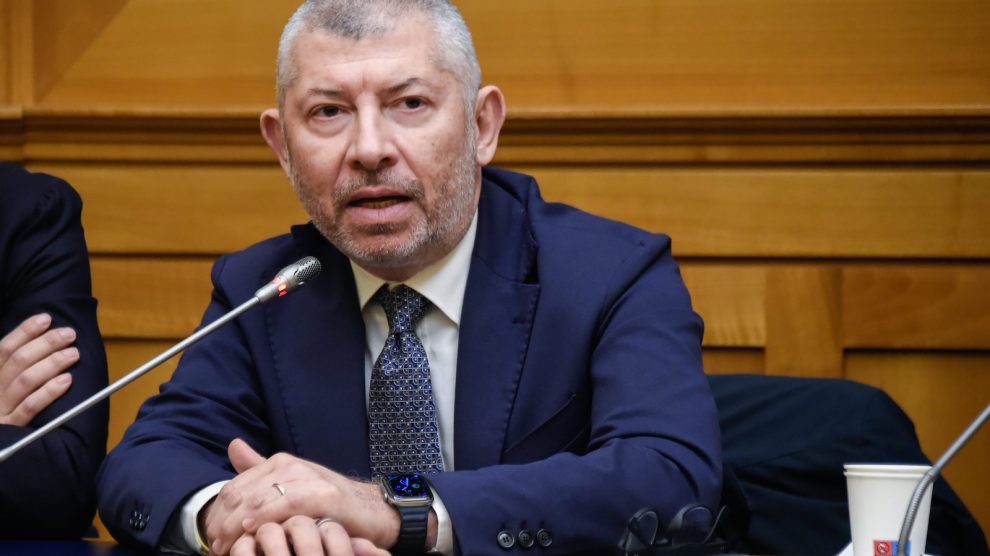
This is the case raised by Ivan Scalfarotto, senator of Italia Viva and the party’s foreign affairs spokesperson, who has submitted a parliamentary question to the government requesting checks on an event scheduled for April 11–12 in the Bologna area.
At stake is an issue that goes well beyond the event itself: the permeability of Italy’s public discourse to Russian propaganda and the broader confrontation between democratic models.
Q: Senator Scalfarotto, starting from the facts: why does this itinerant festival—and the Bologna event in particular—concern you so much?
A: Because it shows anomalous and opaque features. It is a publicly advertised event, yet organized in a way that reveals the location only at the last moment and only to registered participants.
- This is a typical method used by propaganda circuits seeking to evade scrutiny and institutional oversight. Moreover, we are dealing with content linked to Russia Today, which is sanctioned by the European Union and included on its blacklist.
Q: You explicitly speak of propaganda. What leads you to that conclusion?
A: The content and the context. The program includes documentaries and speakers that closely reproduce the Kremlin’s narrative, particularly on the war in Ukraine and the role of the West.
- This is not media pluralism, but a structured operation aimed at spreading a one-sided view aligned with Russian interests.
Q: Is there also a public security issue, given that you addressed your question to the Interior Ministry?
A: There is certainly an issue of transparency and compliance with the rules. When organizing a public event, authorities must know where and how it takes place.
- It is legitimate to ask whether public security authorities have been informed and whether they are able to monitor what happens. Secrecy—or even just opacity—is never a good sign.
Q: You have directly called on the government.
A: I am asking the government to verify whether there are any elements of illegality and whether European regulations are being respected.
- I am also asking whether it is aware of the location where the event will be held and, if so, whether it considers it appropriate to inform citizens. Transparency is an essential element in a democracy.
Q: Is this Bologna event just a symptom of something broader? Is Russian propaganda still so pervasive in Italy, in your view?
A: Absolutely. Russian propaganda in Italy is pervasive and taps into pre-existing cultural and political currents that have historically been critical of the West and the United States.
- This makes our country particularly exposed. It is no coincidence that Russia sees Italy as a potential weak point within the front of liberal democracies.
Q: How much does the clash between models of state weigh in this context?
A: It weighs heavily. This is not just a war between Russia and Ukraine, but a confrontation between two visions of the world: on one side, liberal democracy, the rule of law, and individual freedoms; on the other, an authoritarian model that tends to compress rights and pluralism. Ukraine has clearly chosen its side, and that is one of the reasons it is under attack.
Q: You mentioned a double standard in the Italian public debate. What do you mean?
A: There is a tendency to be extremely critical of Western democracies, highlighting every contradiction, while being far more indulgent toward authoritarian regimes such as Iran, China, or Turkey.
- This imbalance ends up fueling narratives hostile to the West and indirectly supports the propaganda of those who seek to weaken it.
Q: Given this context, what is the main risk you see?
A: The risk is the normalization of narratives that delegitimize liberal democracy and make alternative models based on authoritarianism and control appear acceptable.
- If the nature of these operations is not recognized, they end up being absorbed. And for a country like Italy, this becomes a political and cultural issue even before it is a security one.