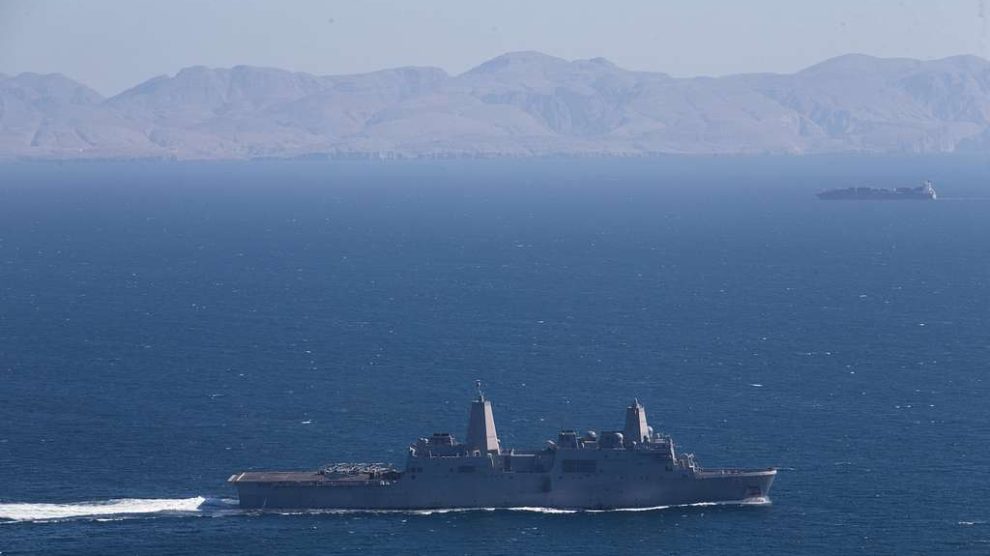
The move. The draft agreement circulating in recent hours outlines an immediate stabilisation of hostilities, the reopening of the Strait of Hormuz, and a framework for renewed negotiations over Iran’s nuclear program.
- Lesser describes the development as “overall a positive thing,” arguing that ending active conflict and restoring freedom of navigation would benefit regional and global stability. However, he cautions that the most contentious issues – including Iran’s nuclear ambitions, ballistic missile program, and regional proxy network – remain largely unresolved.
- While the agreement establishes a political framework, many operational details, including maritime security arrangements and future nuclear commitments, have yet to be negotiated.
Why it matters. For Israel, the draft falls well short of its strategic objectives.
- Lesser argues that the Iranian regime appears to have emerged politically intact despite suffering significant military and leadership losses. From Jerusalem’s perspective, neither Tehran’s nuclear infrastructure nor its missile capabilities have been decisively addressed.
- Equally uncertain is the fate of Iran’s stockpile of highly enriched uranium. Although negotiations are expected to continue, the agreement provides little clarity on verification mechanisms or long-term restrictions.
Strategic convergence. The political incentives behind the agreement differ sharply among its stakeholders.
- For President Donald Trump, the deal offers an opportunity to claim that he has ended a costly and unpopular regional conflict ahead of the U.S. midterm elections. Presenting the agreement as a diplomatic success could help shift domestic attention away from the military campaign itself.
- Israel, by contrast, is likely to view the outcome with scepticism across much of its political spectrum, given that the agreement leaves untouched what it considers existential threats.
The bigger picture. Lesser believes Europe could assume a more prominent operational role in the post-conflict phase, particularly in securing maritime traffic through the Persian Gulf.
- While Washington will remain indispensable as the ultimate security guarantor, European naval forces possess specialised capabilities – especially mine-countermeasure assets – that could prove particularly valuable if hostilities remain limited.
- A European-led maritime security effort would also allow the United States to reduce its direct operational burden without abandoning the region entirely.
Political fault lines. The draft reportedly includes the prospect of substantial sanctions relief and a reconstruction package worth up to $300 billion for Iran.
- Lesser remains sceptical. He doubts Washington intends to finance such a package directly, suggesting instead that the proposal likely envisions reopening Iran to foreign investment if progress is achieved on the nuclear file.
- More fundamentally, he notes that the emerging framework resembles the logic of the 2015 Joint Comprehensive Plan of Action (JCPOA), raising inevitable questions about whether years of confrontation ultimately produced a substantially different outcome.
What it signals. Rather than ending the Iranian crisis, the agreement may simply transform it.
- Lesser argues that, absent political change inside Iran, the region is more likely to shift from open military confrontation to a renewed period of strategic competition resembling the “Cold War” that characterised previous decades.
- At the same time, a calmer Gulf would allow Western governments to refocus on Europe. With the G7 reaffirming support for Ukraine, attention is expected to shift back to the challenge posed by Russia ahead of the NATO summit in Ankara, where allied unity, military assistance to Kyiv, and the future U.S. role in European security will again dominate the agenda.