The US-Iran ceasefire is nearing collapse three weeks after it was sealed, the core tension is over Hormuz, as neither side has a better option than the diplomatic track they are putting at risk.
Why it matters: The Strait has become the operational test of the ceasefire. For Trump, reopening Hormuz is central to the Memorandum of Understanding. For Iran, keeping leverage over the waterway is the last major pressure tool before any broader deal on economic relief.
- That gap is now driving the most dangerous US-Iran escalation since the April ceasefire.
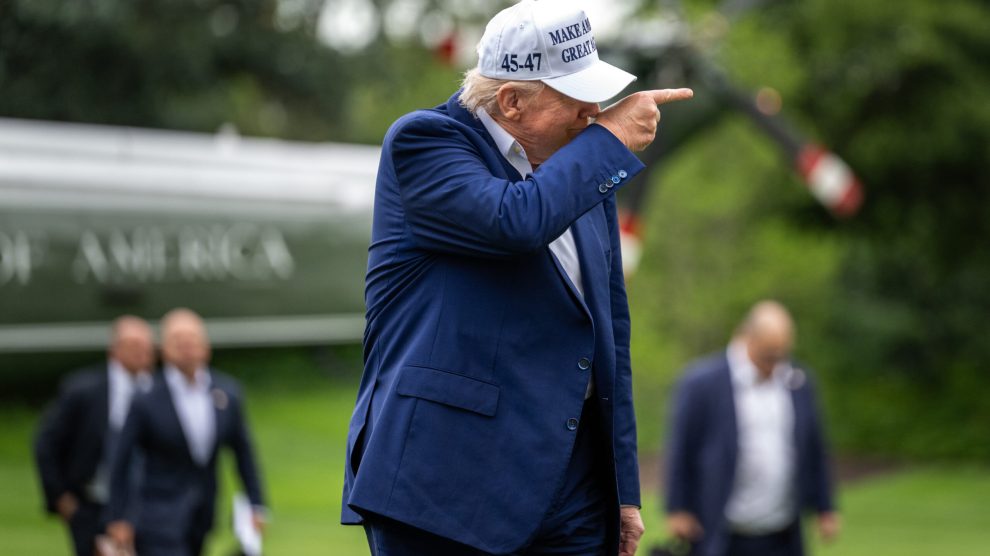
Driving the news: Trump said at the NATO summit in Ankara on Wednesday that the ceasefire was “over.” “As far as I’m concerned, it’s over,” he told reporters, after calling Iran’s leaders “scum” and “sick people.”
- Hours later, the US launched a new round of strikes on Iran after Trump said American forces would “hit them hard again tonight.”
- US Central Command said the strikes targeted 90 Iranian military sites, including air defense systems and military logistics infrastructure along Iran’s coastline. Explosions were reported in Bandar Abbas, Sirik, Jask, Konarak and Chabahar — all coastal locations linked to the Strait of Hormuz or the Gulf of Oman.
- Trump later wrote on Truth Social: “This is in retribution for yesterday’s bombing of ships by Iran. If it happens again, it will get much worse!”
The response: Iran answered with strikes on US military bases in Kuwait and Bahrain. Gulf states reported explosions, missile interceptions and security alerts.
- The Islamic Revolutionary Guard Corps called the retaliation the “first phase of the punitive response against the American treaty-breakers.”
- But the key message came from Mohammad Bagher Ghalibaf, Iran’s parliamentary speaker and chief negotiator with the US. “If you strike, you’ll get hit,” he wrote on X, adding that the Strait of Hormuz would reopen only under Iranian arrangements — not “American threats.”
The big picture: That is the real issue now. “Three weeks in, the Memorandum of Understanding (MOU) looks incredibly fragile,” says Ellie Geranmayeh, Deputy Programme Director and Senior Policy Fellow for MENA at the European Council on Foreign Relations. “The two sides have escalated to the biggest shoot out since they reached their shaky ceasefire in April.”
- The immediate crisis is being driven less by the nuclear file, even if Trump again raised the issue in his comments to reporters, than by a question Washington and Tehran left unresolved: how the Strait of Hormuz operates during the 60-day MoU window.
The strategic shift: Iran has long had the military capability to disrupt traffic through the world’s most important energy chokepoint. Until now, however, Tehran had largely kept that capability in reserve, preserving ambiguity over whether it would actually seek to exercise direct control over Hormuz.
- The confrontation with the US has changed that dynamic. By attacking commercial shipping and insisting that the Strait will reopen only under Iranian arrangements, Tehran is turning a latent threat into an operational instrument of strategic pressure.
The key point: Iran’s leverage over Hormuz is no longer based simply on its ability to close the Strait. It is increasingly based on its attempt to determine the conditions under which the Strait remains open.
- That distinction matters. Accepting a transit regime controlled or approved by Tehran would risk turning Iran’s wartime coercion into a de facto recognized role in governing the world’s most important energy chokepoint.
Between the lines: That shift helps explain why Tehran considers Hormuz not only a military asset, but its central bargaining chip in negotiations with Washington.
- “The core tension currently is not about Iran’s nuclear program, but how exactly the Strait of Hormuz operates during the 60-day MoU window,” Geranmayeh says. “Iran does not want to cede its leverage over the Strait – its weapon of mass disruption – before a broader deal is reached on US economic relief.”
- That is why Tehran rejected the US-backed southern route through Omani waters, which would allow ships to bypass Iranian-controlled waters. According to Geranmayeh, Tehran has sought to assert its position by reportedly attacking four ships this week.
In other words: If international shipping can bypass Iranian-controlled waters, Tehran loses much of the leverage it has gained from the confrontation. If Washington accepts an Iranian-controlled transit regime, it risks legitimizing the very strategic advantage it is now using military force to dismantle.
The US calculation: Washington is trying to reimpose deterrence. The latest US strikes were not only retaliation for Iranian attacks on shipping. They were also a signal that Iran cannot turn Hormuz into an accepted zone of coercive control.
- Geranmayeh says the broad-scale strikes inside Iran were also intended to deter future Iranian attacks in the Strait.
- But Washington faces a second problem: forcing the Strait open is one thing; accepting its reopening under Iranian terms would risk validating the new coercive reality the US strikes are intended to reverse.
- “For Trump, the reopening of the Strait is at the heart of the MoU, and without it, he will be under immense pressure by Republican hawks to resume war with Iran,” Geranmayeh says.
The paradox: Both sides are escalating because neither has a better option. Trump cannot easily accept Iranian control over Hormuz without looking as if the ceasefire failed. Iran cannot surrender its leverage before securing economic relief.
- But a full return to war would carry heavy military, political and energy-market costs for both sides. Yet, as Geranmayeh notes, neither Tehran nor Washington currently has a better option than the diplomatic track paved by the MoU.
The flaw in the deal: The problem was built into the MoU. The agreement froze the war without defining the rules of the ceasefire’s most sensitive operational theatre: the Strait of Hormuz.
- “The two sides should have come up with a mutually acceptable protocol for the Strait before they signed the MoU,” Geranmayeh says. “The longer the absence of such an understanding continues, the more deadlocked the Strait becomes, and the more likely that Washington and Tehran return to full blown war.”
What we’re watching: The next diplomatic effort will have to focus less on the nuclear file and more on a temporary mechanism for shipping through Hormuz.
- Geranmayeh says mediation should now seek a temporary transit route through the Strait for the coming weeks, until a more permanent solution backed by regional actors can be found.
- One option would be “a joint Omani-Iranian control centre that gives security permission for ships to transit through either the northern or southern routes.”
The bottom line: The ceasefire is not collapsing because diplomacy has disappeared. It is collapsing because the MoU left Hormuz unresolved.
- Washington sees reopening the Strait as a test of whether Iran is complying. Tehran increasingly sees controlling the terms of that reopening as the leverage that makes negotiations worthwhile.
- The deeper risk is that the confrontation has turned a long-standing Iranian threat into a new operational reality. Tehran’s ability to disrupt Hormuz was once a deterrent largely kept in reserve. Washington must now prevent Iran from converting that capability into an accepted role in determining how the world’s most important energy chokepoint operates.
- That means the fate of the ceasefire may depend less on centrifuges than on who gets to decide how ships cross the Strait of Hormuz.