
“The fact that the negotiations are taking place in Rome is very important and shows how central Italy has become to peace efforts in the Middle East.” With these words, Foreign Minister Antonio Tajani highlighted Italy’s role ahead of the new round of talks between Israel and Lebanon, scheduled – behind closed doors – for July 14-15 in the Italian capital.
Speaking in Brussels on the sidelines of the Foreign Affairs Council, Tajani said he had just spoken with the Israeli and Lebanese negotiators to encourage them to reach an agreement. That effort has been complicated by the effective resumption of armed confrontation between the United States and Iran. “It is important to continue working so that a genuine ceasefire can be achieved and, ultimately, peace can be reached in Lebanon,” the minister said, recalling that he had offered Italy’s support to Lebanese President Joseph Aoun, Parliament Speaker Nabih Berri and Prime Minister Nawaf Salam.
The Rome meeting represents one of the few diplomatic channels still open in a region once again facing growing instability. The new round of talks was announced by Israeli Ambassador to the United States Yechiel Leiter during an event at the Council on Foreign Relations in Washington. The negotiations, which will again take place at ambassadorial level, follow the 14-point agreement signed in Washington on June 26. Leiter also announced that Aoun will meet US President Donald Trump on July 21.
The diplomatic sequence points to an effort to consolidate the ceasefire and address security issues along the Israeli-Lebanese border. But the talks will take place as renewed tensions between the United States and Iran threaten to reshape the regional balance once again and narrow the space for keeping the Lebanese dossier separate from the broader competition between Washington and Tehran.
- The discussions will focus on implementing the “pilot zones” in southern Lebanon, areas still under Israeli control. These zones will gradually be handed over to the Lebanese Armed Forces (LAF) as agreed in recent talks in Washington. Three separate bodies — a technical, a security, and a military commission — will oversee the process, examining the transfer of control and the implementation of Lebanon’s plan to disarm Hezbollah, which is backed by Iran.
- Israel’s ambassador to Washington, Yechiel Leiter, will represent Israel in Rome, while Lebanon’s delegation includes Ambassador to the US Nada Hamadeh Mouawad and Simon Karam, a former Lebanese ambassador to Washington. The US delegation is led by Dan Holler, a State Department adviser and acting director of the Office of Policy Planning.
- Unlike the previous round of talks that ended with the framework agreement, only civilian officials are expected to attend the Rome meeting, with no military representatives, according to an Israeli source. This makes a detailed discussion of the Israeli withdrawal or the deployment of the Lebanese Armed Forces to southern Lebanon less likely.
Hormuz returns to the center of the regional confrontation. “After several weeks in which space appeared to have opened for de-escalation between the United States and Iran, the new ‘incidents’ in the Strait of Hormuz are seriously endangering the fragile truce between Washington and Tehran, reviving a dynamic of direct confrontation that could undermine the limited diplomatic progress achieved in recent weeks,” Giuseppe Dentice of the Mediterranean Observatory (OSMED) at the San Pio V Institute for Political Studies said.
- Attacks on commercial shipping and the subsequent multi-stage US military response, together with the renewed disruption at Hormuz, have plunged into crisis the memorandum that established the truce roughly a month ago and returned the Persian Gulf to the center of regional strategic competition.
- “Hormuz is now the main source of instability. More than a complete closure of the Strait, the risk is a strategy of controlled instability: selective attacks against maritime traffic, rising insurance premiums, slower commercial flows and the growing militarization of the area,” Dentice said. “It is a calibrated form of pressure that allows Tehran to preserve significant negotiating leverage without crossing the threshold into an open regional conflict.”
The consequences of the escalation, however, extend well beyond the Gulf. The renewed tensions have pushed maritime security and the protection of energy routes to the center of the NATO summit in Ankara, which had initially been focused primarily on strengthening the eastern flank and implementing new defense commitments.
- France and the United Kingdom are promoting a possible multinational initiative to guarantee freedom of navigation through Hormuz, while other allies, including Italy, are seeking to avoid direct involvement in the confrontation between the United States and Iran.
Keeping Lebanon on a separate diplomatic track. It is against this backdrop that the Rome talks will take place. The problem is that the Lebanese front has never been entirely separate from the broader competition involving Israel, the United States and Iran. Beirut is seeking to consolidate an autonomous negotiating channel, while Tehran continues to maintain close relations with Hezbollah and its political allies in Lebanon.
- “A resumption of hostilities in the Gulf could also jeopardize the delicate talks between Israel and Lebanon, which are being hosted at a time when the negotiations represent one of the few diplomatic channels still open and are aimed at consolidating the ceasefire and addressing security issues along the ‘new’ Israeli-Lebanese border,” Dentice explained.
- The issue therefore also concerns the Lebanese government’s ability to retain political control over the negotiating process. Authorities in Beirut have reportedly intensified contacts with Washington in an effort to prevent Lebanon from being included in the negotiations between the United States and Iran. Tehran, by contrast, continues to view the Lebanese front as part of a broader regional balance in which Hezbollah represents both political and strategic leverage.
Aoun’s position illustrates how narrow the room for maneuver has become. While Lebanon is participating in talks with Israel and the president is preparing to meet Trump, Aoun has ruled out a meeting with Israeli Prime Minister Benjamin Netanyahu as long as Israeli attacks continue. In an interview with the Lebanese newspaper An-Nahar, the president said he was unwilling to compromise over the south of the country.
- Beirut is therefore seeking to negotiate with Israel without turning the dialogue into political normalization, strengthen state authority and, at the same time, prevent the country’s future from becoming a variable in the negotiations between Washington and Tehran. It is an already difficult balance that further regional escalation would make even more precarious.
- According to Dentice, a resumption of hostilities in the Gulf would strengthen Hezbollah’s position, narrow the margins for compromise and make it more difficult to transform the technical dialogue into a stable political process.
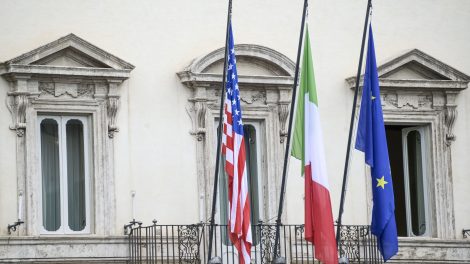
Rome’s role goes beyond hosting the talks. This is where Italy’s role acquires broader significance. Although the talks will take place at the US Embassy on Via Veneto rather than in Italian government offices, this does not mean that Rome will merely provide a logistical venue for the negotiations.
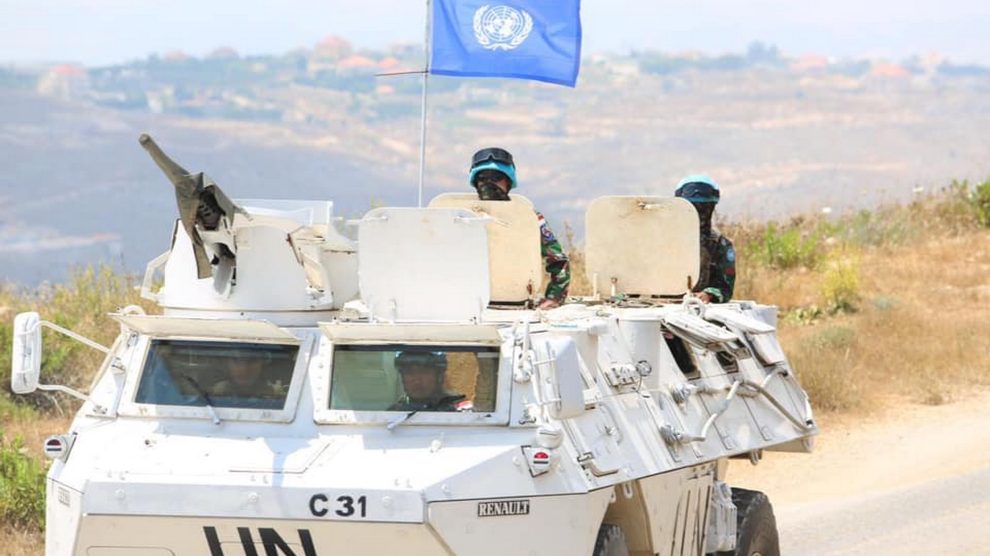
- Italy is part of a diplomatic process increasingly linking the stabilization of the Levant to the security balance in the Gulf. It is also worth recalling that Italy led the United Nations Interim Force in Lebanon, UNIFIL, for several years, making it a longstanding contributor to one of the main international stabilization mechanisms along the border between Lebanon and Israel.
- “Rome is confirming its position as one of the few European actors capable of maintaining credible channels with Israel, Lebanon, the United States and Arab partners and, through this initiative, is seeking to reaffirm its role as a facilitator of dialogue at a time when the stabilization of the Levant and security in the Gulf are becoming increasingly interdependent,” Dentice said.
The bottom line: “If the Hormuz crisis worsens, Italy’s ability to promote multilevel diplomatic initiatives could help prevent the region’s two main fronts of tension from converging into a single escalation,” Dentice concluded.
- Beyond the immediate outcome of the negotiations, this is what is at stake in the Rome talks. Israel and Lebanon will discuss the ceasefire, border security and the future of relations between the two countries. But the negotiations will also test whether an autonomous diplomatic space can be preserved for Lebanon as the confrontation between the United States and Iran once again threatens to merge the Gulf and the Levant into a single regional crisis.