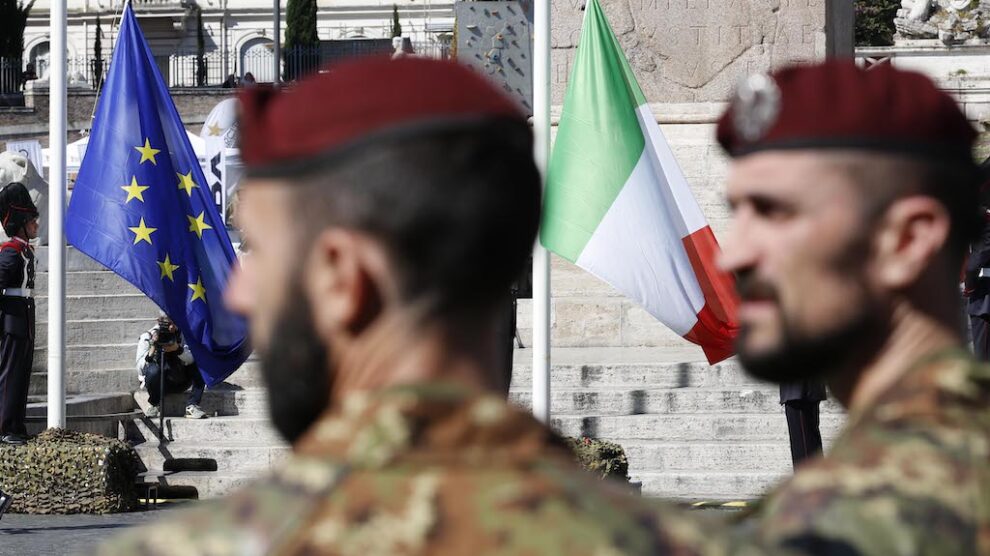
Italians trust their Armed Forces, but that trust does not automatically translate into support for rearmament, deterrence or international missions. This is what emerges from a YouGov survey conducted for the University of Genoa as part of a research project examining the relationship between Italians and the defence sector.
The figures illustrate the gap: 67.5% express a great deal or a fair amount of trust in the Armed Forces, but only 35.2% believe they are capable of defending Italy against external threats, and even fewer support an increase in military spending.
- For Fabrizio Coticchia, Professor of Political Science at the University of Genoa, and Matteo Mazziotti di Celso, a researcher at the IMT School for Advanced Studies Lucca, the findings are unsurprising. Rather, they reflect thirty years of political narratives surrounding defence, compounded by a public debate focused almost exclusively on spending at the expense of discussing why a military instrument is necessary.
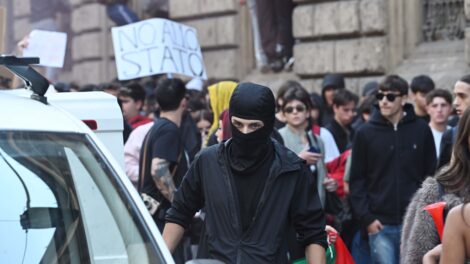
Military spending and conscription remain divisive. Is Italy a pacifist country? To some extent. “Italians are certainly pacifists, in the sense that they are critical of increases in military spending,” Coticchia explains. Indeed, 28.2% of respondents would like to increase spending, 33.9% would reduce it and 25.7% would leave it unchanged. Those who favour an increase would prefer to finance it through debt rather than new taxes or cuts to welfare. Similar findings emerge when it comes to personal risk. In the event of an attack on Italy, 31% say they would fight, while 52.6% say they would not. The overall picture, Coticchia summarises, is one of “reluctance both to spend more and to fight”.
- Another emblematic case concerns the reintroduction of conscription. Respondents are divided almost equally, with 45.2% in favour and 46.8% opposed. But the picture changes considerably when age is taken into account. “Support is much higher among people of a certain age than among younger people,” Coticchia points out. Among 18-to-24-year-olds, only 22.1% support conscription, compared with 56.9% among those aged 45 to 54. In other words, those most supportive of bringing back compulsory military service are largely those who would not be called up if it were reintroduced.
Political affiliations and attitudes. Defence is no longer a bipartisan issue. “There is now considerable division over defence,” Mazziotti di Celso observes, describing this as a “fairly new” development in Italy. Age matters, but political affiliation matters even more. Consistent with the academic literature, voters tend to adopt the positions of the party with which they identify most closely. On increasing military spending, for example, support stands at 51.5% among voters close to Brothers of Italy, 48% among Forza Italia supporters, 32% among League voters and 26.8% among Democratic Party voters. Among supporters of the Five Star Movement (M5S) and the Greens and Left Alliance (AVS), the prevailing preference is to reduce spending. On foreign policy, 27.8% want Italy to act independently, while 24.3% favour European defence.
- There are also surprises within the political camps. The Five Star Movement is closer to the League in its preference for an autonomous foreign policy, while the Democratic Party and the left look towards the European Union and the United Nations. The European ReArm Europe plan has failed to convince either the radical right or the traditionally pro-European left: 44.6% oppose it, compared with 28% in favour. And it is precisely among League voters, who are among the strongest supporters of using the military for domestic security, that willingness to fight in the event of an attack on the country is lowest, at 22.5%.
- Populism, meanwhile, matters less than might be expected. “There isn’t a major difference between populists and non-populists,” Coticchia says, emphasising that the left-right divide remains more significant. Perceptions of threats follow similar lines. Climate change ranks first (37.5%, particularly among younger and left-wing respondents), followed by irregular immigration (32.5%, especially among older and right-wing respondents). Russian aggressiveness stands at 19.8%, although 50.5% of respondents consider an attack against Europe likely. “It is not true that this threat does not exist,” Coticchia stresses, “although it remains to be understood what kind of threat it is, whether hybrid or otherwise. There is considerable confusion about this.”
Comparing Italian public opinion with the rest of Europe. Compared with public opinion elsewhere in Europe, the differences are few but clear. On trust in the Armed Forces and support for conscription, Italy is broadly in line with other countries. Reluctance to fight is not an Italian exception either, apart from countries such as Turkey and those in Scandinavia and the Baltics.
- The greatest divergence concerns military spending. “Italy is much more opposed to increasing military spending than other countries, even Spain,” Coticchia explains, noting that Madrid, despite opposing the target of 5% of GDP, has increased military expenditure more than Rome over the past year.
- Another striking feature is the gap between Italy’s activism abroad and domestic support for multinational operations. “Italy seeks to increase its credibility abroad by saying yes to requests from NATO and the European Union, but at the domestic level there is an effort to conceal or dilute this kind of information.” This may be understandable in electoral terms, Coticchia acknowledges, but it is “completely counterproductive when it comes to developing a defence culture and defence policy. Greater transparency is needed, but that transparency carries a political cost that parties do not currently seem willing to pay.”
How Italians perceive the military. The high level of trust expressed in the Armed Forces needs to be understood, Mazziotti di Celso explains. Italians see the military as “a harmless institution, not dangerous to society and made up of honest people”.
- This perception stems not only from possible friendships or family ties with military personnel, but also from the visible benefits of their activities at home. Tasks such as disaster relief (82.2%), support for police forces (67%) and Operation Strade Sicure — which 77.7% want at least to maintain — enjoy the greatest approval. Peacekeeping and overseas missions, more traditionally military activities, receive support from only 45.8%. In Mazziotti di Celso’s words: “Italians are fond of their Armed Forces, but apparently they must not be ‘too armed’ in the tasks they perform.”
- The same mechanism helps explain why very different threats, from the climate crisis to Russia, end up being grouped under a single umbrella. “The ‘enemy’ has never been mentioned in our military operations, even though our Armed Forces have been involved in several combat engagements,” Coticchia points out, “from Afghanistan to Mogadishu.”
Why it matters: Over the years, Italy, like NATO and the EU, has adopted the logic of crisis management rather than defence against a traditional adversary, not only in doctrinal terms but also in its public communication. This, Coticchia and Mazziotti explain, has increasingly contributed to associating the Armed Forces with tasks that do not directly fall within the remit of defence.
- The researchers cite, for example, the deployment of military personnel to manage migration flows. “Is this a military problem? Absolutely not,” Coticchia observes, “and yet it has happened since the 1990s, under governments of different political orientations, starting with the crisis in Albania.”
- Complicating matters further is public communication that is often unclear, lacking in detail and too frequently left to the reading of bureaucratic documents alone, making it difficult even for specialists to assess ongoing initiatives and activities. Task Force Arabia is a case in point. The problem is that such forms of communicative reticence themselves fuel public suspicion, triggering a cycle of mutual misunderstanding that helps explain the apparently paradoxical findings of the YouGov survey.
Building a defence culture, together. Italians, then, trust their Armed Forces but prefer them when they perform policing duties. They consider external threats real but do not want to increase military spending. Meanwhile, the country still lacks an informed public debate on defence, one that continues to give greater prominence to commentators than to those with direct expertise in the field.
- How can this paradox be overcome? Not through initiatives in schools, which, according to Coticchia, risk producing the opposite reaction and conveying the wrong message. What is needed instead is a transparent debate, even if it comes at a political cost: “If, as a country, we want to make sound, structured choices, those choices must be legitimate, and legitimacy comes from sharing information and transparency.”
- According to the researchers, the way forward lies in achieving a qualitative improvement in communication, as the foreign affairs and intelligence sectors have already done. Defence, Coticchia says, “should do much more in this regard, seriously involving academia, civil society and even those who oppose it.”
The bottom line: Mazziotti di Celso calls for greater understanding of the military on the part of the public. Military personnel need to become accustomed to interacting with civil society, yet they fear encountering a hostile environment.
- For this reason, he concludes, responsibility for making progress lies with both sides: “The Armed Forces need to open up more to civil society, interact more, say yes instead of no, and take risks.” At the same time, “civil society must make an effort to understand”, avoiding ideologically driven judgements and preconceived positions.