
Dante, Cicero and Seneca still have something to say to today’s world, but rediscovering them requires commitment, study and a willingness not to take the heritage of classical civilisation for granted.
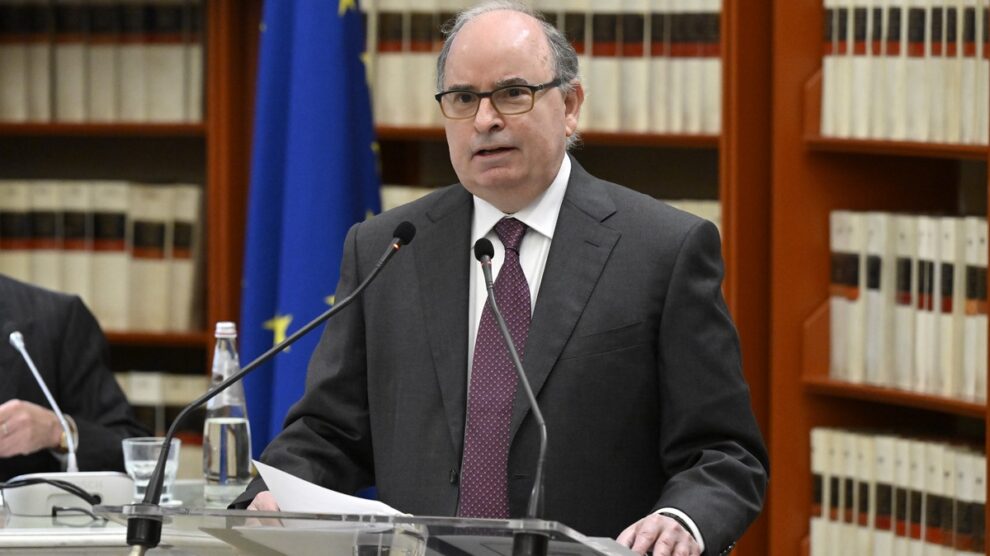
This is the conviction of Michael McDonald, President of the National Endowment for the Humanities. In an era dominated by social media and new technologies, McDonald sees education as the only way to preserve the legacy of the great authors of the past.
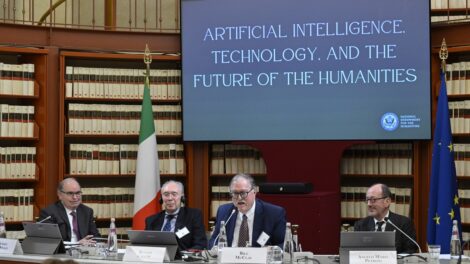
Here is what he told Decode39 on the sidelines of the event “Classical Foundations and Moral Authority”, held on 9 November at Palazzo San Macuto.
Q: We have talked about great figures of antiquity, and we will continue to do so. What did these authors have that is missing today? What did they give the world that we now need to recover?
A: I believe they gave us a sense of our humanity, of what makes us human. And that is why they endure. Italo Calvino tried to define what a classic book, a classic author, a classic philosopher is: something that stands the test of centuries, that has something both ancient and new to tell us about our present condition.
- So when we talk about Dante, Cicero and the other great figures, we are talking about something that is part of our being human, in both the spiritual and material dimensions. We must not forget them, because they are our ancestors, those who left us everything we have today. Unfortunately, there is a tendency to ignore this great civilisation and all the heritage that belongs to us. We must make the effort to study, to go deeper, to try to live up to them, so to speak.
Q: How can we, however, avoid simply looking back at them with regret and instead use them as a source of inspiration to move forward?
A: Through education, dedication and the effort never to take them for granted, using them as inspiration. There is a phrase attributed to the composer Gustav Mahler: tradition is not the worship of ashes, but the passing on of fire.
- We must find inspiration, just as happened here during the Renaissance, after the so-called Dark Ages when these authors had been partly forgotten. If we cannot draw inspiration from the great figures of the past, we are lost, but this requires effort. Unfortunately, with new technologies, we tend to waste our time playing video games. Instead, we have all this beauty that can inspire us, but it takes commitment, it takes an education capable of instilling in students the desire to explore things more deeply.
Q: You have anticipated my next question. Today it is much more difficult to pass on the values of Seneca or Cicero to a generation born with social media, but it can still be done. What advice would you give to those who must carry on this battle for the future?
A: The willingness to work and to learn: that is the only answer I can give. It takes commitment, and it is not easy. That is why we are losing, little by little, all this greatness. But we must fight to carry it forward. I have no other answers: it is not simple, it is not easy.
Q: If you could choose one book, one text among the great classics to give to every politician today, which would it be?
A: This is perhaps the most difficult question. Perhaps our Declaration of Independence. This year marks its 250th anniversary, and it has been a moment of reflection for all Americans on how we came into being. Everything is contained in those few words, the rights that come from God and how to preserve them. So that is my answer.