The FTA has become part of a broader geopolitical strategy, not just a commercial exercise.
Why it matters: The EU aims to diversify supply chains and strengthen its Indo-Pacific pillar. India seeks investment, regulated access to the European market, and greater strategic autonomy.
The backdrop: The past five years have reshaped the relationship: Ukraine, the pandemic, and de-risking from China have turned the India–EU partnership into a strategic necessity.
- A senior European diplomatic source describes “a long and complex path” that has produced a dialogue ecosystem “much more incisive and effective” than before.
- Global crises have accelerated “the process of building the FTAs.”
- The operational goal is to reach an agreement or a mature draft by 2025. “I am convinced we will succeed,” the source says.
State of play: Both sides want to anchor the relationship in rules, sovereignty, and the peaceful resolution of disputes.
- The platform extends from global dossiers (great-power competition, the Global South, terrorism) to the economic dimension.
- A clear link has emerged between trade openness, supply-chain security, and industrial resilience.
According to the discussions in Brussels and information gathered by Decode39, he FTA fits into a broader architecture that includes:
- The investment protection agreement;
- Geographical Indications;
- The Trade and Technology Council.
Between the lines: Strategic convergence does not mean easier negotiations:
- Tariffs, standards, and intellectual property remain the toughest issues.
- The required compromises are not yet finalized.
- But political will is stronger now than in previous negotiation cycles.
The strategic layer: Talks also addressed maritime security, cyber, space, defence, and humanitarian cooperation.
- During the Foreign Policy and Security Consultations and the Strategic Partnership Review, last week, both sides reiterated their shared reference to a “free, open, inclusive and prosperous Indo-Pacific” — placing the FTA within a wider geopolitical frame that connects Europe to the Indo-Pacific via the Indo-Mediterranean.
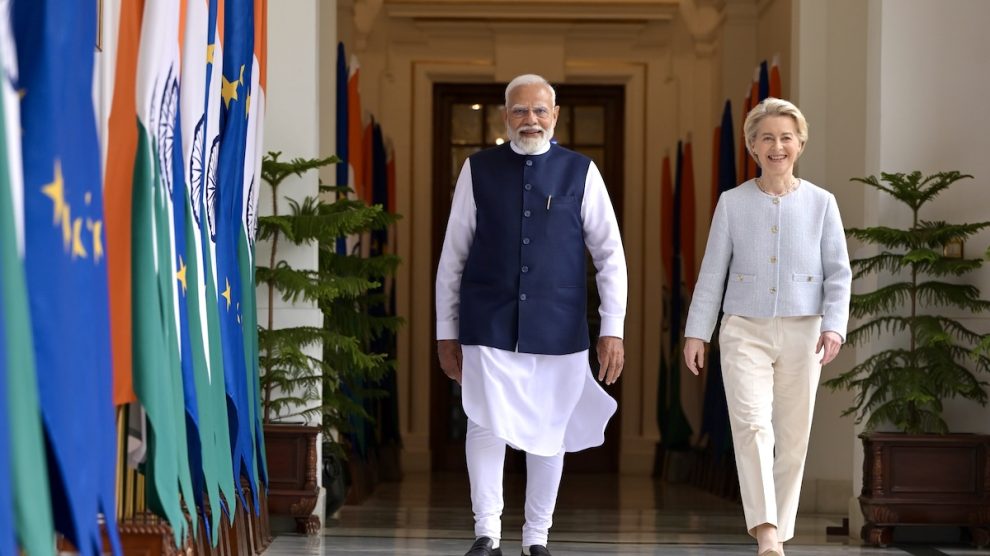
- The upcoming Joint EU–India Strategic Agenda, expected at the New Delhi summit, will set priorities and translate political coordination into operational tools.
What’s next: The political window is now.
- The risk is that negotiations could stretch out with upcoming electoral cycles and a volatile international environment.
- For Brussels and New Delhi, the opportunity is rare: strategic convergence is stronger than at any point in recent years.
- Turning it into a signed agreement is the real test.
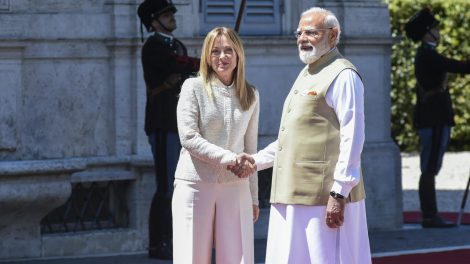
- Italian Prime Minister Giorgia Meloni is a key voice to push the swift conclusion of the EU–India Free Trade Agreement (FTA), viewing it as crucial for Italian and European geopolitical balance and economic relations.