

These dynamics were at the center of the Master Class “Underwater Ecosystems and Industrial Applications,” hosted by Luiss Guido Carli University and organized by the Med-Or Italian Foundation, in collaboration with Fincantieri. The event brought together industrial, energy, infrastructure and academic stakeholders to examine the strategic implications of the underwater domain.
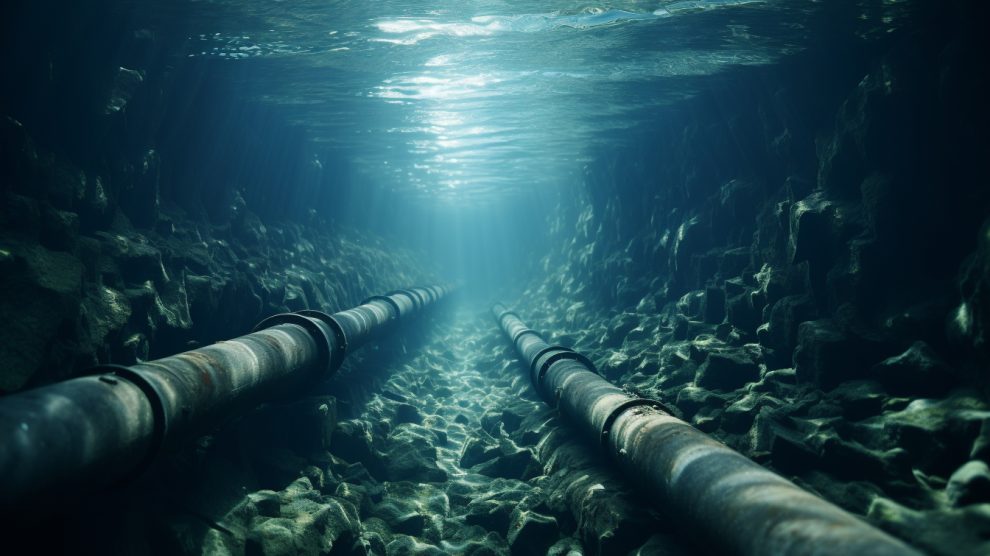
The big picture: Unlike terrestrial infrastructure, underwater systems are difficult and costly to repair. A damaged subsea cable, pipeline or power link can require specialized vessels, complex operations and weeks of intervention, with costs reaching tens of millions of euros. This asymmetry increases the strategic value of underwater infrastructure as both an economic enabler and a potential point of disruption.
What’s driving the risk: Subsea internet cables carry the vast majority of global data traffic, including financial flows where latency directly affects market performance. Offshore pipelines and power links are equally critical to national energy security.
- Accidental damage remains common, but the broader geopolitical environment has heightened awareness of deliberate interference, making resilience and protection increasingly urgent.
The industrial response: Advanced underwater technologies now allow for layered protection strategies, from reducing acoustic detectability and creating decoys to deploying integrated surveillance and response systems.
- In this context, Italy’s industrial capabilities—particularly those developed by Fincantieri and its underwater ecosystem—stand out as enablers of integrated, scalable and dual-use solutions that serve both civilian and defense needs.
Public-private cooperation: The protection of underwater infrastructure requires close coordination between industry, governments and naval forces.
- Agreements and operational cooperation with national navies, including monitoring and response to suspicious activities, are emerging as key tools to enhance situational awareness and deterrence in the subsea domain.
Regulation and diplomacy: Operating across international waters and multiple jurisdictions adds a layer of regulatory complexity.
- Divergent national rules and varying levels of openness to security technologies complicate protection efforts, reinforcing the importance of European initiatives, NATO frameworks and coordinated diplomatic engagement.
Who was involved:
- Gabriele Maria Cafaro, Executive Vice President Underwater, Fincantieri;
- Andrea Savino, Vice President Unconventional Underwater Solutions, Fincantieri;
- Matteo Marchiori, CEO, IDS – Ingegneria dei Sistemi (Fincantieri Group);
- Alfio Rapisarda, Head of Global Security, Eni;
- Fabio Panunzi Capuano, Vice President Business Development & Corporate Diplomacy, Sparkle;
- Massimo Ilariucci, Head of Security, Terna;
- Aldo Sandulli, Full Professor of Administrative Law and Coordinator of the LOTUS Observatory – Law of the Underwater and Space, Luiss Guido Carli.
- Giancarlo Loquenzi, Journalist, Rai (moderator);
The bottom line: Underwater infrastructure is no longer a niche technical issue. It is a strategic asset whose protection directly affects economic stability, energy security and data sovereignty.
- Industrial capabilities, combined with public-private cooperation and international coordination, are becoming essential pillars of economic resilience below the surface.