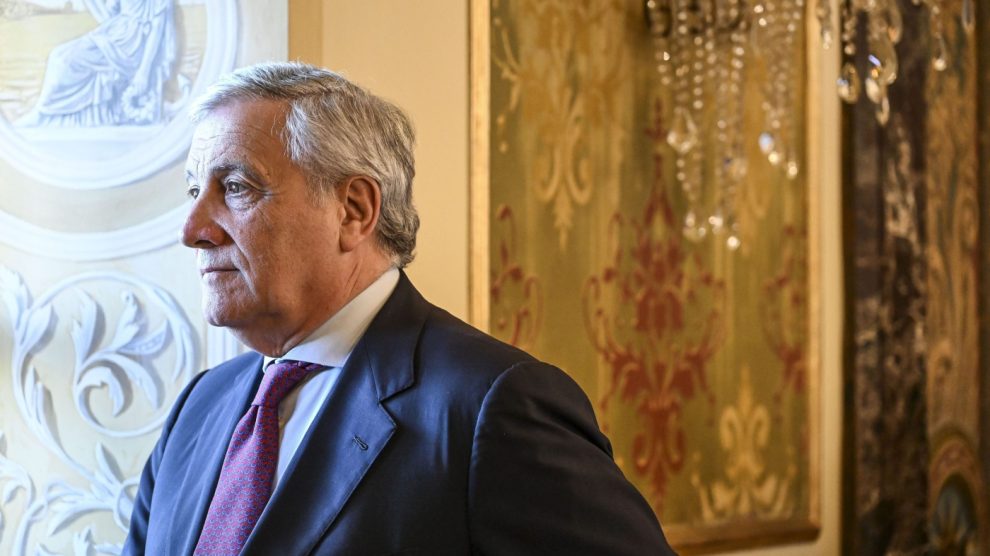
Against this delicate backdrop of regional tension, Italy’s foreign minister and deputy prime minister Antonio Tajani has reiterated the primacy of international law and the pre-eminence of diplomacy as the core tools for resolving disputes.
Italy’s position: Rome also stresses the importance of cooperation among states to counter drug trafficking and protect human lives, advancing a concept of regional security that goes beyond the purely military dimension.
- Italy’s stance takes shape at a time of renewed instability, in which great-power competition risks narrowing the space for political mediation and multilateral engagement.
- Minister Tajani’s message therefore carries broader political weight, signalling Rome’s interest in maintaining an approach grounded in shared rules and international responsibility.
U.S. activity in the region: Amid rising tensions between Washington and Caracas, Venezuelan President Nicolás Maduro said he was “ready” to discuss counter-narcotics cooperation, oil and economic agreements with the United States, in an interview with state broadcaster VTV. His remarks came as Washington stepped up pressure on Venezuela, including through the deployment of warships in the Caribbean.
- Maduro pointed to Venezuela’s willingness to cooperate on drug trafficking and to reopen the door to U.S. energy investments, citing the precedent of cooperation with Chevron and referring more broadly to potential economic development agreements.
- He also recalled a phone call with U.S. President Donald Trump in November, which he described as “very respectful,” while acknowledging that subsequent developments had not been positive.
The China factor. On the other side of the equation, China continues to strengthen its projection in Latin America as part of a long-term strategy. Beijing frames its engagement as solidarity with the Global South and interprets regional developments as part of a broader rebalancing of international power.
- Through infrastructure investments, access to energy and mineral resources, and active local diplomacy, China aims to consolidate its role as a strategic alternative to the United States.
- China’s expanding footprint is helping to turn Latin America into a space of structural competition among major powers, with direct implications for regional stability and economic and security balances.
- According to an analysis by the Center for Strategic and International Studies (CSIS):
- great-power competition in the region is “only just beginning”;
- Beijing seeks to position itself as a systemic alternative to Washington.
The big picture: Amid the interplay of military pressure, tactical openings and economic penetration, Italy’s approach seeks to reaffirm a multilateral framework based on international law, cooperation and human security.
- Rome’s posture is also underpinned by long-standing cultural, historical and people-to-people ties with Latin America, which give Italy a distinct role and credibility in the region.
- In a region increasingly shaped by geopolitical rivalry, the challenge will be to preserve space for dialogue and stability without reducing Latin America to yet another arena of global power confrontation.