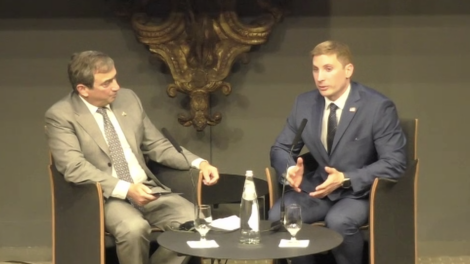
“Count on us. Count on the Italian Government.” With these words, Italy’s foreign minister closed his remarks at the Critical Minerals Summit in Washington, signalling Rome’s ambition to play a concrete role as Western partners move to secure supply chains and cut strategic dependencies on China.
The message landed as the European Union accelerates work on a long-discussed but increasingly urgent priority: building strategic reserves of critical raw materials to shield its economy, defence sector and energy transition from external shocks.
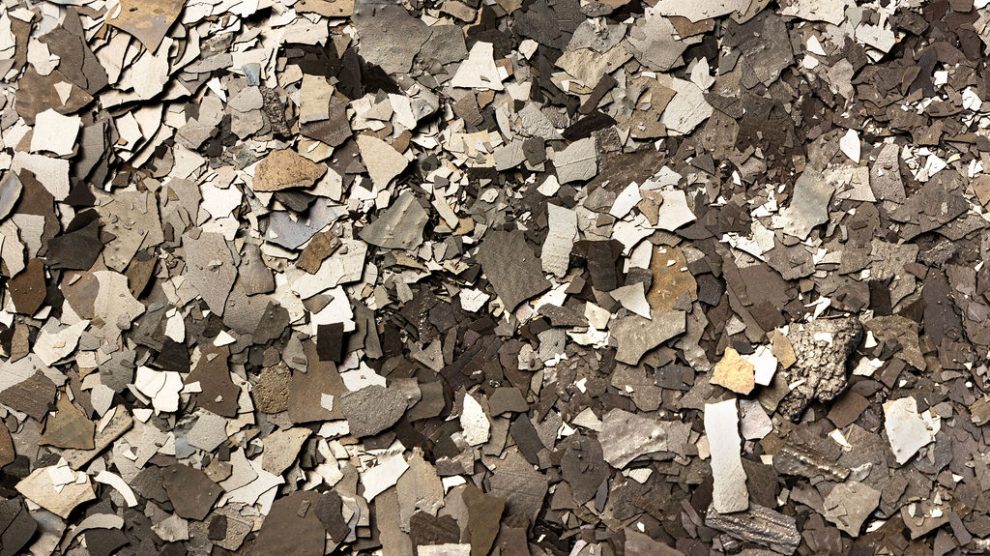
Decoding the news: Critical minerals have become a frontline issue of economic security. From advanced manufacturing to defence systems and clean energy, access to a narrow set of raw materials now underpins industrial competitiveness and political autonomy. Europe’s exposure — and China’s leverage — have turned stockpiling, diversification and industrial cooperation into strategic imperatives.
What’s happening: The EU is pushing ahead with plans to establish a coordinated system for stockpiling critical raw materials, with Italy, France and Germany expected to take leading roles as Brussels seeks to reduce reliance on China.
- The initiative builds on RESourceEU, a framework unveiled in December aimed at strengthening Europe’s access to key raw materials through joint reserves, tighter coordination among member states and possible restrictions on exports of reusable metal scrap and rare-earth waste.
- While operational details remain under discussion, the direction is clear: strategic reserves are emerging as one of the few immediately available tools to cushion Europe against supply disruptions.
- The sense of urgency has grown since Beijing introduced export controls on several critical inputs — including gallium, germanium and heavy rare earths — measures that have already rippled through global supply chains and exposed Europe’s limited refining and processing capacity.
Defined roles in the bigger picture. Within this broader strategic shift, responsibilities inside the EU framework are beginning to take shape.
- France is expected to focus on financing mechanisms for joint purchases, Germany on sourcing and supplier relations, while Italy would take the lead on storage — a technically complex but strategically essential function.
- The push for stockpiling reflects a wider change in European thinking: critical minerals are no longer treated as a narrow industrial issue, but as a core component of foreign policy, economic security and alignment with partners – a shift that increasingly intersects with parallel U.S. efforts, including the VAULT initiative launched under President Donald Trump to strengthen strategic control over critical resources.
Italy’s playbook. Rome’s approach to critical minerals follows a multi-layered playbook that combines industrial capacity, foreign policy and strategic partnerships:
- Industrial and economic security first: Rome frames critical raw materials as a core pillar of national competitiveness, with direct spillovers across manufacturing, defence, energy and the green transition.
- Cooperation over isolation: The priority is political and economic coordination among allies to avoid new strategic dependencies and structural vulnerabilities, rather than inward-looking solutions.
- Value-chain strength, not just access: Italy emphasizes industrial cooperation to expand extraction, refining, recycling and reuse capacities, with recycling identified as a sector of established Italian expertise.
- Stockpiling as a strategic function: Long-term storage and reserve management are treated as essential components of resilience — technically complex, but critical to cushioning shocks and protecting industry.
- A global sourcing strategy: Critical minerals are embedded in a broader foreign-policy outlook stretching from the Arctic to Africa, with an emphasis on responsible sourcing, infrastructure and investment.
- Africa as a strategic partner: Through initiatives such as the Mattei Plan and corridor projects, Rome links resource access to development, sustainability and long-term political partnerships.
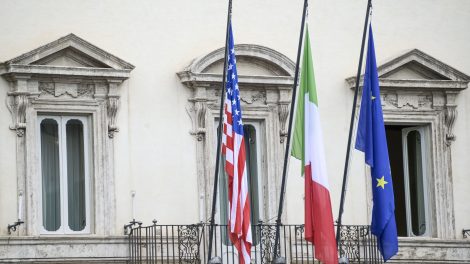
- Transatlantic and allied convergence: Italy situates its strategy firmly within a transatlantic framework, working with the United States and like-minded partners across Europe and Asia to align security, industrial and climate objectives.
- Emerging domains: Beyond land-based resources, Rome is exploring opportunities linked to marine resources and space-related activities, including the recovery and reuse of high-value materials.
What we’re watching: The challenge now is execution. Translating political consensus into functioning reserves will require funding, coordination and speed — all in short supply when 27 member states are involved.
- Still, the direction is set. As strategic competition over resources intensifies, Europe is moving from recognition to action. Italy, by volunteering to anchor some of the most tangible pieces of this effort, is signalling that it intends to be part of the solution — not just the debate.