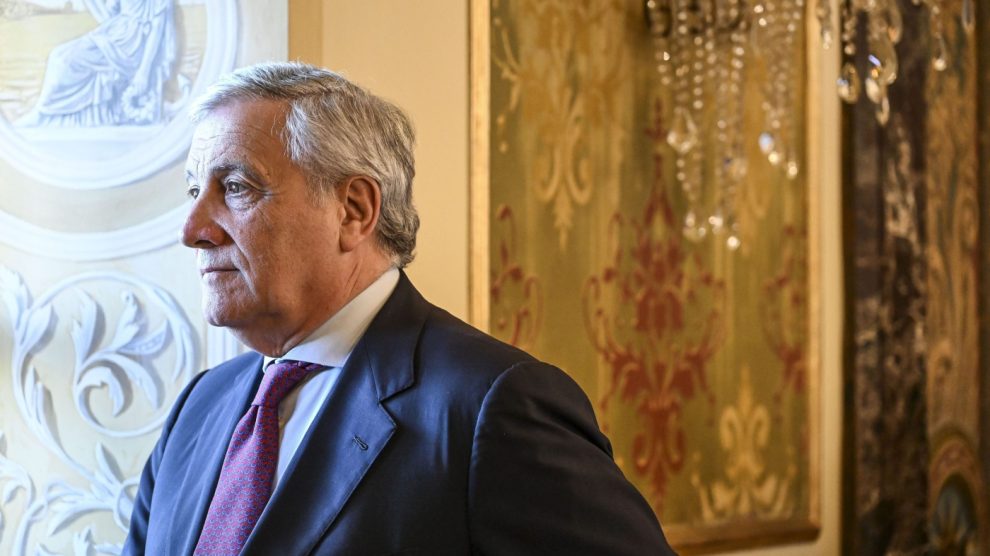
Decoding the news: Italy’s Foreign Minister Antonio Tajani’s dense Munich agenda highlights Italy’s attempt to position itself as a bridge actor across multiple dossiers — from Ukraine to the Middle East — while tying security policy to Europe’s competitiveness and migration management.
- The mission comes ahead of key EU meetings in March and amid renewed diplomatic movement on Iran and Gaza.
Ukraine talks and Euro-Atlantic unity: Tajani is in Germany for the 62nd Munich Security Conference, where Ukraine tops the agenda of high-level meetings among Western allies.
- He is expected to reaffirm Italy’s backing for a U.S. initiative promoting trilateral negotiations, stressing that Euro-Atlantic unity remains essential to achieving a “just peace” and ensuring long-term security for both Kyiv and Europe as the fourth anniversary of Russia’s full-scale invasion approaches.
Openness to Iran diplomacy: Beyond Ukraine, the Italian Foreign Minister will voice support for ongoing diplomatic efforts with Iran following recent U.S.–Iran talks in Oman, signalling Rome’s willingness to facilitate further negotiations thanks to its contacts with key regional partners.
Gaza security and training mission: The minister will also address the situation in Gaza, emphasising that security conditions on the ground are a prerequisite for the success of any peace plan.
- Italy is preparing to deploy Carabinieri trainers to Jordan to train an initial group of 50 Palestinian security officials intended for future deployment in Gaza.
- Tajani is also expected to reiterate concerns over Israel’s expansion of control in the West Bank, warning it could undermine prospects for stability and a two-state solution.
Europe’s defence and competitiveness agenda: Munich will also serve as a coordination platform for broader European priorities, including defence, economic security, and energy policy, as leaders prepare for an informal summit on European competitiveness and a European Council meeting in March.
Migration and organised crime: On migration, Tajani will co-chair a roundtable with U.K. Home Secretary Yvette Cooper focused on innovative approaches to counter irregular migration and the criminal networks that facilitate it — a theme increasingly linked to European security debates.
G7 and E5 coordination: The Italian minister will additionally participate in an in-person meeting of G7 foreign ministers — the first under France’s presidency — and in a gathering of the “E5” group (Italy, France, Germany, Poland and the U.K.), a strategic forum aimed at strengthening European defence cooperation and addressing common security challenges.
Italy’s broader diplomatic positioning: Taken together, the meetings underscore Italy’s effort to play a more active diplomatic role across transatlantic and Middle Eastern files while aligning security policy with Europe’s economic and industrial agenda.