More than 400 policymakers, technology executives, academics and public officials gathered in Washington on June 3 for the second annual AI Honors gala organized by the Washington AI Network.
Presented as “Washington’s only black-tie gala dedicated to artificial intelligence,” the event brought together representatives from government, industry and academia to honor individuals helping shape the future of the technology.
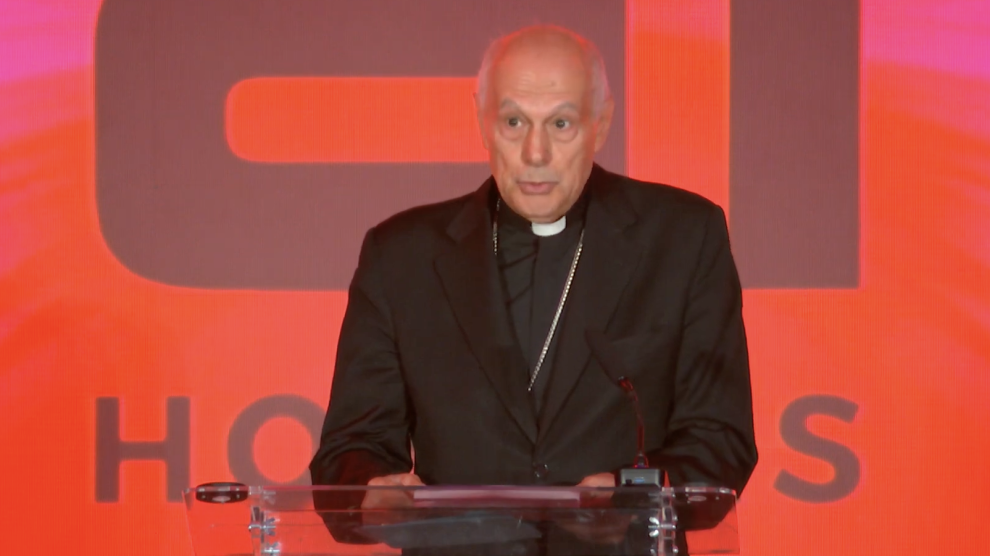
The Vatican delve into the conversation. Against this backdrop, the presence of Archbishop Gabriele Caccia, who only weeks ago assumed his role as Apostolic Nuncio to the United States, underscored how artificial intelligence has become a subject that extends well beyond technology companies, research labs and government agencies. It is increasingly seen as a matter with social, cultural and human implications—and one in which the Vatican intends to have a voice.
- Caccia used the occasion to present one of the emerging priorities of Pope Leo XIV’s pontificate: ensuring that the development of artificial intelligence remains anchored to human dignity and directed toward the common good.
- At the center of his remarks was Magnifica Humanitas, Pope Leo XIV’s first encyclical, published on May 15. Bringing this document before an audience largely focused on innovation, technology policy and the future of artificial intelligence signaled the Holy See’s intention to participate in a debate that is becoming increasingly broad in both scope and relevance.
From Rerum Novarum to artificial intelligence. One of the central themes of the Archbishop’s speech was the relationship between major technological transformations and their social and ethical consequences. Drawing on the legacy of Pope Leo XIII’s Rerum Novarum, published in 1891 amid the upheavals of the Industrial Revolution, Caccia highlighted several parallels with the challenges posed today by artificial intelligence.
- If the Industrial Revolution forced societies to confront questions surrounding labor, capital and social justice, the AI revolution is raising new questions about the role of the individual, responsibility and the relationship between human beings and technology. In both cases, the central issue is not innovation itself, but how societies choose to govern its consequences.
- For the Vatican, the comparison is not merely historical. It reflects the belief that technological change inevitably raises broader questions about the organization of society and the protection of human dignity. Just as the Church sought to engage with the social transformations of the industrial age, it now seeks to contribute to the debate surrounding artificial intelligence.
A debate that needs more than technology. The Archbishop also emphasized that artificial intelligence requires the contribution of a broad range of actors and cannot be guided by a single community of experts.
- “This gathering itself represents something that Pope Leo calls for in his recent encyclical entitled Magnifica Humanitas, a shared document involving many sectors of society,” Caccia said. “The future of this technology cannot be guided by one field alone. It needs science and policy, business and public service, ethics and faith.”
- The remark helps explain the Holy See’s presence at AI Honors. From the Vatican’s perspective, artificial intelligence is not simply a technological issue but a societal one, with implications that extend across politics, economics, education, culture, human relationships and conflict.
Human dignity as a guiding principle. For that reason, Caccia’s message focused on the principles that should accompany technological development, moving beyond outdated and simplistic critiques of innovation.
- “From the beginning, at every stage, the development and application of artificial intelligence must be guided by the dignity of the human person and by the common good of the human family,” he said.
- The themes of dignity, responsibility and human development have become increasingly central to the Holy See’s reflections on emerging technologies. Magnifica Humanitas seeks to place those concerns alongside discussions of innovation and economic opportunity.
The bottom line: In a debate often dominated by competitiveness, regulation and strategic advantage, Caccia’s intervention focused on the purposes that should guide technological development. By bringing the message of Magnifica Humanitas to one of Washington’s leading AI gatherings, he signaled the Church’s intention to contribute to a discussion that is increasingly shaping politics, economics and public life.