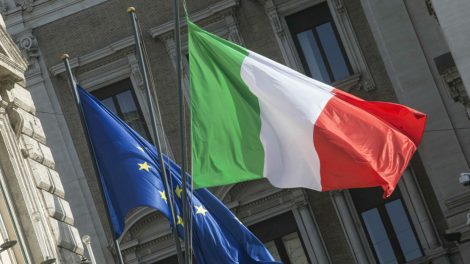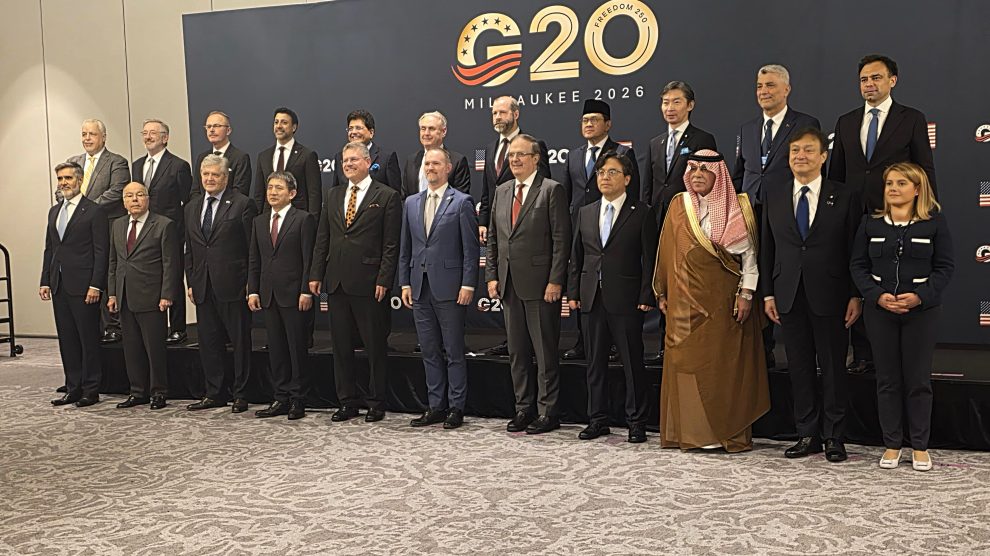
ROME — Italy used the G20 Trade Ministerial in Milwaukee to back stronger defenses against trade distortions while making the case for dialogue and negotiated solutions to mounting tensions in global commerce.
Undersecretary for Foreign Affairs Maria Tripodi, attending on behalf of Foreign Minister Antonio Tajani, represented Italy at the two-day gathering under the U.S. G20 presidency.
Her message: Rome supports action against coercive trade practices, structural overcapacity and forced labor — but wants those challenges addressed through cooperation and, where possible, consensus.
- “Our preferred option is, as always, dialogue with our counterparts, aimed at finding and reaching concrete solutions,” Tripodi said.
Why it matters: The Italian position comes as the Trump administration is seeking to reshape global trade around what U.S. Trade Representative Jamieson Greer has described as “fair, reciprocal, and balanced trade.”
- For Italy, the debate also has a direct European industrial dimension: Tripodi called for stronger EU trade-defense instruments to mitigate the impact of structural overcapacity on European industry.
- The Milwaukee talks put some of the most contentious questions in global commerce on the same table: coercive trade in agricultural products, excess production capacity, forced labor and the future of the Most-Favored Nation principle.
The big picture: The G20 meeting unfolded against the backdrop of President Donald Trump’s second-term tariff policies, which have forced companies to adjust to a changing landscape for imports and exports.
- Trade and the effect of tariffs on affordability have also become issues in the U.S. midterm election debate, even though the G20 gathering itself is not a campaign event.
Zoom in: Italy’s line. Tripodi backed proposals to counter the coercive use of trade and strengthen efforts to remove forced labor from global value chains. But structural overcapacity emerged as a particularly significant issue for Italy’s industrial interests.
- Tripodi argued that EU trade policy needs stronger trade-defense instruments to cushion the effects of excess capacity on European industry.
- At the same time, Italy stressed the importance of consensual responses to global challenges — framing cooperation and effectiveness as complementary rather than competing objectives.
The Milwaukee agenda. The ministerial brought representatives of the world’s largest economies together for closed-door discussions at Milwaukee’s Pfister Hotel.
- The agenda closely reflected priorities previously laid out by Greer: forced labor, the future of the MFN principle, the weaponization of food trade and structural excess capacity and production.
- In announcing the meeting, Greer had argued that Trump’s tariff program was “actively rebalancing global trade” after decades of policies that Washington considers damaging to American workers and businesses.
Between the lines: Italy’s intervention places Rome inside the push to confront distortions in global trade while emphasizing a method based on negotiation.
- That distinction is visible in Tripodi’s two-track message: strengthen Europe’s ability to defend its industrial base, while continuing to seek negotiated and consensual solutions with trading partners.
- In Milwaukee, where tariffs are not an abstract debate but an immediate issue for major Wisconsin companies, that balance gave Italy’s message a concrete setting.
What we’re watching: The key question after Milwaukee is how the principles discussed at the G20 — particularly on overcapacity, coercive trade and MFN treatment — translate into policy.
- For Italy, the European dimension will be central: Tripodi’s intervention explicitly linked global overcapacity to the need to reinforce EU trade defenses, while keeping dialogue open as Rome’s preferred route to “concrete solutions.”