
The European Commission has selected five Italian projects under the Critical Raw Materials Act (CRMA), highlighting Italy’s growing role in securing strategic supply chains through recycling, processing and industrial cooperation.
Why it matters: Europe’s efforts to reduce dependence on foreign suppliers, particularly China, increasingly depend on its ability to recover and process critical materials at home. Italy’s industrial expertise could become an important asset in that transition.
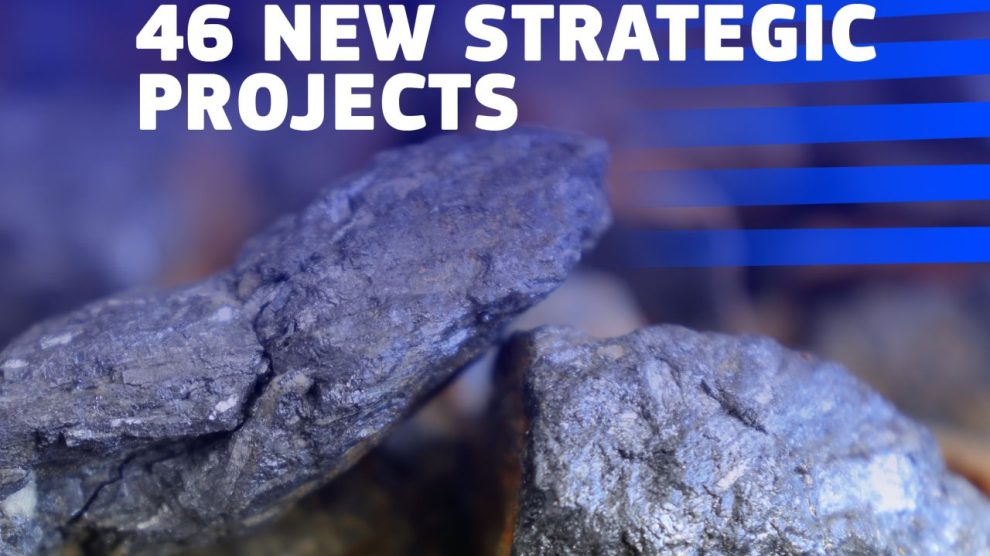
Driving the news: The European Commission has announced 46 new strategic projects across 16 EU member states, expanding its efforts to secure the raw materials needed for clean technologies, advanced manufacturing and defence.
- Five projects are based in Italy, focusing primarily on recycling and processing rather than extraction.
- They cover materials essential to batteries, renewable energy, advanced industrial applications and military production.
- Their selection reflects Italy’s potential contribution to Europe’s emerging critical raw materials ecosystem.
The five Italian projects
- 9PV-up — 9-Tech: Recycling aluminium, copper and silicon metal from end-of-life photovoltaic panels, connecting circular economy technologies with energy supply chain resilience.
- Alkeemia PureGraph — Alkeemia S.p.A.: Processing high-purity graphite for batteries, a strategically important material in energy storage supply chains.
- ReSuPLIR — Italrecycling & Investment: Recovering and processing platinum, iridium and ruthenium, critical platinum-group metals used in advanced industrial applications.
- REW-ITA Green Hub — OMCD TEK HUB: Recycling copper, cobalt and tungsten, materials relevant to high-tech manufacturing and strategic industries.
- CRM4Defence — Leonardo: A multinational initiative involving Italy, Poland, France and the United Kingdom to recycle aluminium, magnesium and titanium metal for defence-related industrial supply chains.
The bigger picture: The EU’s Critical Raw Materials Act sets ambitious benchmarks for 2030: domestic extraction capacity equivalent to at least 10% of annual consumption, 40% for processing and 25% for recycling of strategic raw materials.
- The latest selection brings the EU’s portfolio to 106 strategic projects, including initiatives identified within the bloc and in partner countries.
- Strategic status can facilitate permitting procedures and access to financing opportunities, although it does not automatically guarantee funding or project completion.
- Brussels is seeking to diversify supply chains and reduce exposure to concentrated foreign production and processing capacity.
The Italian angle: Italy’s contribution reflects the strengths of its manufacturing economy. Rather than competing primarily in mineral extraction, Italian companies can leverage existing industrial capabilities in material recovery, refining and specialised processing.
- This matters for an economy deeply integrated into European automotive, aerospace, energy and defence value chains, where access to critical materials increasingly affects industrial competitiveness.
Zoom in — defence: Leonardo’s CRM4Defence stands out for its cross-border dimension.
- The involvement of Poland, France and the United Kingdom connects raw material recovery with European defence-industrial cooperation.
- Aluminium, magnesium and titanium are important inputs for aerospace and defence manufacturing.
- The project illustrates how critical minerals policy is becoming intertwined with Europe’s broader defence readiness and industrial security agenda.
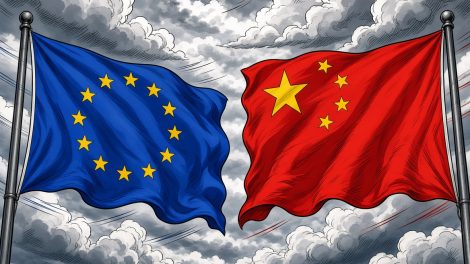
The China factor: Europe’s dependence on Chinese processing and refining capacity remains a central concern for policymakers. Expanding domestic recycling and processing offers one way to mitigate those vulnerabilities without abandoning international trade.
- For Italy, this creates an opportunity to strengthen its position within European strategic supply chains while contributing to the EU’s wider economic security objectives.
Bottom line: Italy’s five projects illustrate how recycling and processing are becoming strategic industrial capabilities. The next test will be turning EU recognition into operational capacity, investment and reliable supply chains — reinforcing Italy’s role in Europe’s pursuit of greater industrial resilience.