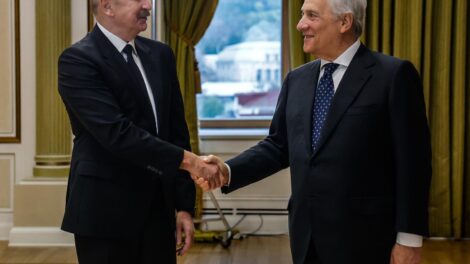

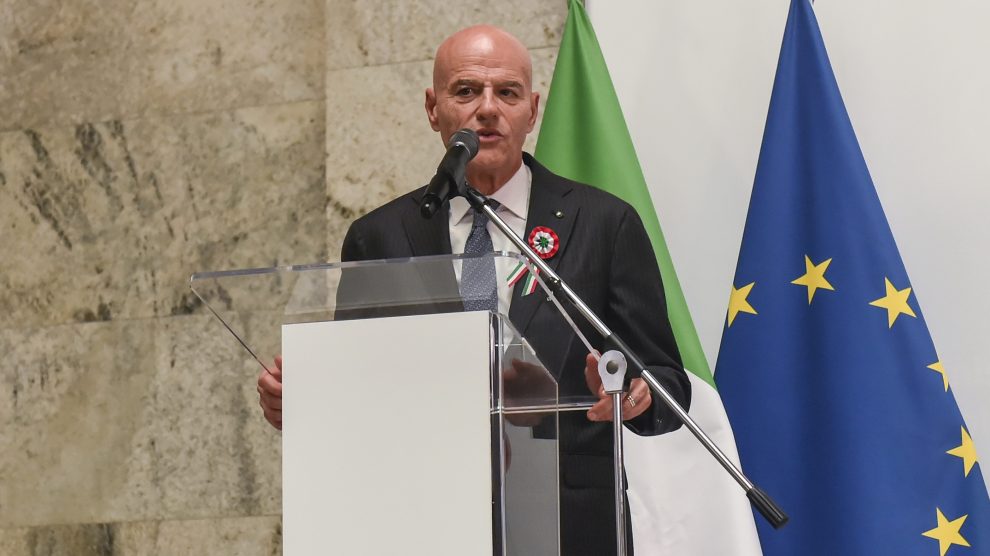
Eni CEO Claudio Descalzi has warned that Europe faces a particularly challenging winter for energy supplies, as geopolitical instability, disruptions to maritime traffic and uncertainty surrounding gas availability put pressure on international markets.
For European policymakers, securing supplies while containing energy costs is becoming increasingly intertwined with industrial competitiveness and strategic autonomy.
While Italy’s storage levels provide a degree of reassurance, the wider European situation remains more complicated.
Why it matters: Energy security is increasingly a question of European economic and industrial security. The availability of supplies at competitive prices affects manufacturing capacity, investment decisions and Europe’s ability to sustain its ambitions in strategic sectors.
- The current geopolitical environment also highlights the importance of integrating energy policy with foreign and security policy.
The big picture: Since Russia’s full-scale invasion of Ukraine, Europe has fundamentally restructured its energy supply architecture, reducing its reliance on Russian pipeline gas and increasing its dependence on liquefied natural gas (LNG).
- This transformation has improved diversification but also increased Europe’s exposure to global market fluctuations and disruptions along maritime routes.
- Competition for LNG supplies means that developments in geographically distant markets can have immediate consequences for European consumers and industries.
The maritime dimension. Descalzi highlighted the difficulties affecting maritime transport through the Strait of Hormuz, where persistent security risks are complicating the movement of commercial vessels and energy supplies.
- Disruptions in the Gulf have consequences that extend well beyond countries directly dependent on Middle Eastern energy imports. Reduced availability of LNG on international markets increases competition among buyers, with potential repercussions for European prices.
- The vulnerability of maritime trade is also a central consideration in the strategic transformation of the Eastern Mediterranean, where energy resources, infrastructure development and geopolitical competition increasingly overlap.
Italy’s position. Italy enters the winter with approximately 10 billion cubic metres of gas in storage, according to Descalzi. Current reserves provide a margin of security, although weather conditions and consumption patterns will influence the country’s ability to navigate the coming months.
- Italy’s diversified supply architecture and geographical position in the Mediterranean remain important strategic assets.
- Nevertheless, adequate national reserves cannot fully insulate Italian households and companies from price pressures originating in international energy markets.
The industrial challenge. Descalzi also drew attention to the difficulties facing Europe’s refining sector, where rising costs and structural competitiveness challenges require a broader policy response.
- The issue extends beyond individual energy companies. Refining capacity, access to affordable energy and the resilience of industrial supply chains are essential components of Europe’s ability to maintain a competitive manufacturing base.
- European policymakers must therefore address the relationship between regulatory frameworks, investment incentives and the preservation of strategic industrial capabilities.
- The challenge resembles the one confronting Europe’s broader defence and industrial ambitions: financial commitments alone cannot compensate for structural weaknesses in productive capacity.
The bottom line. Europe’s energy diversification has reduced its exposure to Russia while creating a more geographically distributed set of dependencies. Managing these vulnerabilities requires sustained investment in infrastructure, reliable international partnerships and greater attention to maritime security.
- For Italy, the Mediterranean dimension of this challenge reinforces the strategic importance of connecting energy diplomacy, industrial policy and regional security within a coherent national approach.